



A Strategic Shift at the Top
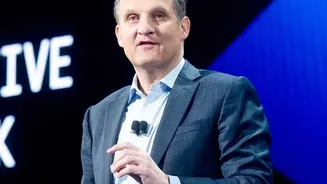
Meta is preparing for a significant transition at the helm of its technology infrastructure. Santosh Janardhan, a veteran who has led the company's infrastructure since joining in 2009, is set to step down in early 2027. He will be succeeded by David
Brown, a former senior vice president from Amazon Web Services (AWS) who was strategically recruited in July 2026. This move is widely seen as a deliberate choice to bring in expertise from the world of hyperscale cloud computing as Meta pivots its entire architecture to be AI-first. Brown will not only oversee infrastructure but also serve as the chief technology officer of Meta Compute, the internal initiative responsible for managing the company's vast computing resources. The appointment of a cloud veteran signals that Meta is rethinking its infrastructure for the demanding new era of generative AI.
The Soaring Cost of AI Ambition
This leadership change occurs as Meta undertakes an unprecedented spending spree on AI. The company has forecast capital expenditures for 2026 to be between $135 billion and $145 billion, with the vast majority allocated to building data centres, acquiring servers, and networking equipment. This level of investment is so immense that it contributed to a negative free cash flow of $2.12 billion in the third quarter, prompting a ratings agency to lower its outlook on the company's credit. Investors are watching closely to see if these massive outlays can be converted into tangible returns. The spending reflects a core belief within Meta: to lead in AI, it must own and control the physical foundation that powers it, from the buildings to the chips inside them.
Data Centres on a Gigawatt Scale
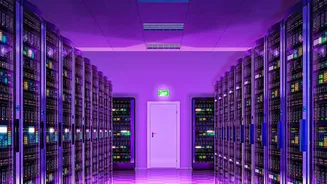
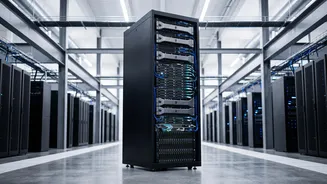
The term 'data centre' doesn't quite capture the scale of what Meta is building. The company is now planning infrastructure in terms of gigawatts—a unit of power typically used for city-level electrical grids. For example, a planned project in Louisiana is being expanded from an already massive 2 gigawatts to 5 gigawatts of computing capacity. This represents a fundamental shift in strategy. Instead of building facilities incrementally as demand grows, Meta is planning multi-year, multi-building campuses designed to absorb several generations of AI hardware. This approach treats the data centre itself as a core product, allowing engineers to co-design hardware and software for maximum performance and efficiency, reducing reliance on third parties and insulating the company from supply chain volatility.
The Custom Chip Gambit: Meet MTIA
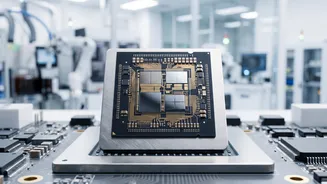
A crucial part of Meta's strategy is reducing its dependence on external chip suppliers like Nvidia. To achieve this, the company is aggressively developing its own family of custom AI chips, known as the Meta Training and Inference Accelerator (MTIA). These chips are specifically designed to run the recommendation and ranking models that power feeds on Facebook and Instagram, as well as new generative AI features. Meta has announced an ambitious roadmap to release four new generations of MTIA chips within the next two years—a development cycle much faster than the industry standard. While these custom chips are intended to complement, not entirely replace, processors from vendors like Nvidia and AMD, they represent a significant move toward controlling the full AI stack and optimising for cost and efficiency.
What It Means for Users in India
For the hundreds of millions of people in India using WhatsApp, Instagram, and Facebook, this infrastructure push is not just an abstract corporate strategy. It's the engine that will power increasingly sophisticated AI features directly within the apps they use daily. India has already become Meta's largest market for its new Meta AI assistant, which is integrated into chats and search. The massive compute capacity being built will enable more advanced AI recommendations, superior content generation tools like the 'imagine' feature for creating images from text, and smarter business assistants for customer service on WhatsApp. Over 50% of the content seen on Instagram is already recommended by AI, and this trend will only accelerate as Meta's new data centres and custom chips come online.