




On October 31, 2005, the Sawai Mansingh Stadium in Jaipur was the epicentre of a cricketing storm. It was the day a long-haired, audacious wicketkeeper-batsman didn't just win a match, he heralded the dawn of a new, fearless era for India.
The Stage for a Chase
The stage was
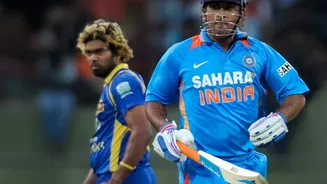
perfectly set for a classic ODI encounter. Sri Lanka, batting first in the third match of the seven-game series, posted a daunting total of 298 for 4. The innings was built around a masterful unbeaten 138 from their own gifted wicketkeeper-batsman, Kumar Sangakkara, with Mahela Jayawardene contributing a crucial 71. In an era where chasing a target of nearly 300 was a monumental task, the pressure was firmly on India to keep their series lead intact. The chase began on the worst possible note when Sachin Tendulkar was dismissed in the very first over, silencing the expectant crowd and putting India on the back foot immediately.
A Captain's Gamble, A Blazing Arrival
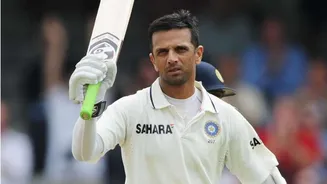
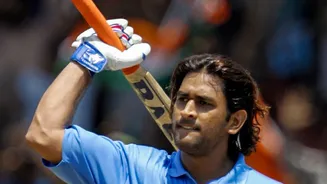
Instead of a seasoned batsman, out walked a 24-year-old Mahendra Singh Dhoni, promoted to number three by captain Rahul Dravid. Dhoni had shown flashes of his destructive potential earlier that year with a brilliant 148 against Pakistan, but consistency was still elusive. This promotion was a bold, strategic move to counter-attack and wrest back momentum. What followed was not just an acceleration; it was a complete demolition of the Sri Lankan bowling attack. Dhoni unleashed a level of power-hitting that was simply breathtaking, combining brute force with remarkable hand-eye coordination. He brought up his century in a blistering 85 balls.
An Onslaught for the Ages
Dhoni's innings was a spectacle of dominance. He remained unbeaten on 183 from just 145 deliveries, an innings studded with 15 fours and an incredible 10 sixes. He took on Sri Lanka's best, including the legendary Muttiah Muralitharan, with utter disdain. The ball repeatedly sailed into the Jaipur stands, with commentator Ravi Shastri famously describing the assault as 'early Diwali fireworks'. Even as he battled cramps towards the end of the chase, his resolve never wavered. He fittingly hit the winning runs with his tenth six, carrying India to a comprehensive six-wicket victory with 23 balls to spare.
More Than Just a Score
The knock of 183 was more than just a career-best score for Dhoni; it was a record-breaking feat. It surpassed Adam Gilchrist's 172 to become the highest individual score by a wicketkeeper-batsman in ODI history, a record that still stands. To put his dominance into perspective, the next highest score in the Indian innings was Virender Sehwag's 39. This single innings demonstrated that Dhoni wasn't just a lower order slogger but a man who could construct and finish a high pressure chase almost single handedly. It was the moment that the legend of Dhoni the finisher was truly born.
The Dawn of the Dhoni Era
This innings in Jaipur is widely seen as the pivot point in Dhoni's career and, by extension, in modern Indian cricket. While his 148 against Pakistan announced his talent, the 183 against Sri Lanka cemented his status as a match winner of rare calibre. It gave him the unshakable confidence and the team the belief that no target was beyond reach. This performance solidified his place in the side and set him on the path to becoming 'Captain Cool', the man who would lead India to triumphs in the T20 World Cup, the ODI World Cup, and the Champions Trophy. The raw power seen in Jaipur would later be honed into the calculated finishing that made him one of the greatest white ball captains and players the game has ever seen.