




An Eclipse During the Day
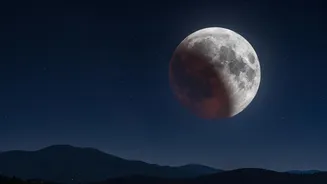
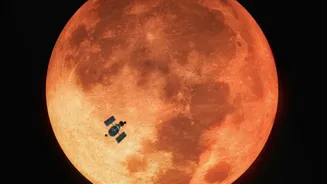
On Friday, August 28, 2026, the world will witness a significant partial lunar eclipse. During its peak, the Earth's dark central shadow, the umbra, will cover nearly 96% of the Moon's surface, leaving just a sliver of the lunar disc untouched. This will create
a dramatic celestial sight, with the eclipsed portion of the Moon potentially glowing with a reddish hue. However, skywatchers in India will miss out on a direct view. The entire eclipse, which unfolds between approximately 6:53 AM and 12:32 PM Indian Standard Time (IST), occurs after the Moon has set and during broad daylight across the subcontinent. As a result, the event will be entirely invisible from anywhere in India.
How to Join the Global Viewing Party
Just because the eclipse is not visible in our skies doesn't mean you have to miss it. Several astronomy platforms and observatories around the world will be hosting free live webcasts of the event. This allows you to follow the eclipse in real time from the comfort of your home. Prominent astronomy websites like Timeanddate.com and The Virtual Telescope Project are known for their excellent live feeds. Major public observatories, such as the Griffith Observatory in Los Angeles, are also expected to stream the event. These streams provide a fantastic opportunity to see the eclipse through high-powered telescopes, offering a view that is often more detailed than what one might see with the naked eye.
Understanding the Celestial Mechanics
A lunar eclipse happens when the Sun, Earth, and Moon align perfectly, with the Earth positioned directly in the middle. This alignment causes our planet to cast a shadow on the Moon. The Earth's shadow has two parts: a faint, outer shadow called the penumbra, and a dark, inner shadow called the umbra. While passing through the penumbra only causes a subtle dimming that's hard to notice, an entry into the umbra is far more dramatic. In this partial eclipse, the Moon will dive deep into the umbra but not completely, so it won't be a total lunar eclipse. The reddish colour, often called a 'Blood Moon', happens because sunlight filters through Earth's atmosphere, which scatters blue light but bends red light onto the lunar surface.
A Note on Raksha Bandhan
This particular lunar eclipse coincides with the festival of Raksha Bandhan on August 28, 2026. In Hindu tradition, a period called Sutak Kaal is often observed during eclipses, involving restrictions on eating and other activities. However, it is important to note that these customs are only applicable in regions where the eclipse is actually visible. Since the eclipse will not be visible anywhere in India, Sutak Kaal will not be observed. All rituals, celebrations, and daily activities, including tying rakhi, can proceed as planned without any cause for concern related to the eclipse.
Looking Ahead: Future Eclipses for India
While this global event is a miss for local viewing, Indian skywatchers have other celestial appointments to look forward to. The next lunar eclipse visible from India will be a penumbral one on February 20, 2027, where the Moon will pass through Earth's faint outer shadow, causing a slight dimming. For those awaiting a more dramatic show, mark your calendars for December 31, 2028. On that night, a total lunar eclipse will be visible from India, offering the magnificent sight of the full Moon turning a deep, coppery red as it passes completely through Earth's shadow. This will be a prime opportunity for stargazers across the country to witness one of the sky's most beautiful phenomena firsthand.