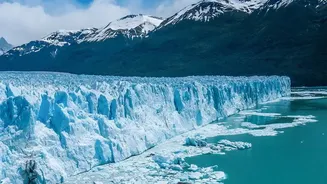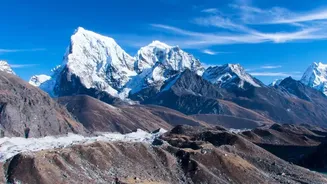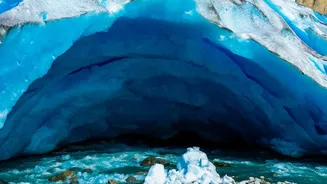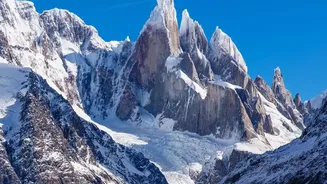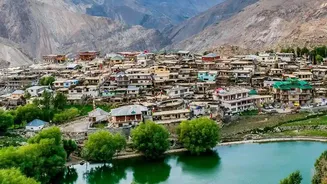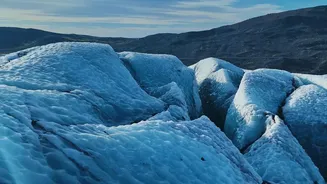




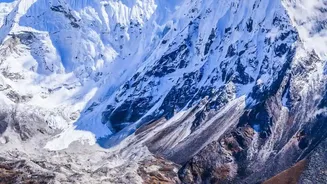
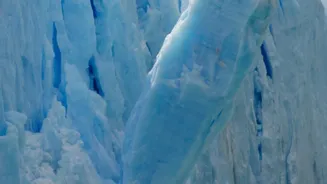
The Himalayas are warming faster than the global average, and recent United Nations-backed reports deliver a stark warning: the region's glaciers are melting at an accelerated rate, creating a severe and growing threat of catastrophic floods.
The Cryosphere in Crisis
Several reports
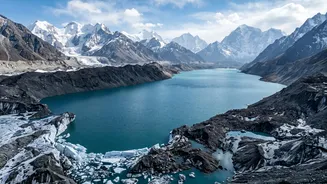
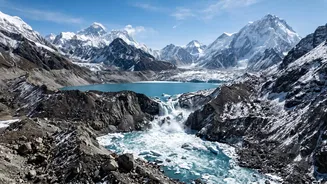
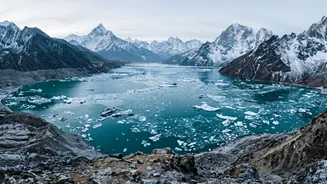
released in early November 2026 ahead of the upcoming COP31 climate conference paint a grim picture of the world's frozen regions, or cryosphere. Jointly published by the UN Environment Programme (UNEP) and the International Cryosphere Climate Initiative (ICCI), the findings highlight that mountain regions like the Hindu Kush Himalaya (HKH) are warming significantly faster than the global average. This accelerated warming is causing glaciers to retreat and thin at an alarming pace. One report notes that ice loss rates in the Himalayas have doubled since the year 2000. This rapid melt is leading to the formation and expansion of thousands of glacial lakes, held back only by unstable natural dams of rock and soil.
The Science of a GLOF
When these natural dams fail, the result is a Glacial Lake Outburst Flood, or GLOF. These are not ordinary floods; they are sudden, violent torrents of water, ice, and debris that can devastate everything in their path. A GLOF can be triggered by a number of events, including rock or ice avalanches plunging into a lake, which displaces a massive volume of water and causes the natural dam to break. Heavy rainfall during monsoon season can also fill a lake beyond its capacity, leading to a breach. The resulting flood wave moves with incredible speed and force, destroying villages, roads, bridges, and critical infrastructure like hydropower plants miles downstream. The 2013 Kedarnath tragedy in Uttarakhand, which killed over 6,000 people, was the result of a GLOF from the Chorabari glacial lake.
India's Extreme Vulnerability
The Hindu Kush Himalaya region spans eight countries, but a pre-publication UN-led study reveals a harrowing statistic: India has suffered the highest number of deaths from GLOFs between 1835 and 2025, with a toll of 6,119. This is despite having fewer recorded GLOF events than China or Pakistan, indicating the extreme vulnerability of downstream communities in states like Uttarakhand, Himachal Pradesh, and Sikkim. The South Lhonak Lake GLOF in Sikkim in October 2023 serves as a recent, tragic reminder of this danger. Researchers have identified over 400 potentially dangerous glacial lakes across the HKH region, with millions of people living in the potential flood paths. One analysis found that over 2 million people in the northwestern Indian Himalayas alone could be at risk.
A Future of Escalating Risk
Scientists warn that the frequency of GLOF events is increasing, driven by climate change. The number of GLOF events per decade in the Himalayas is now nearly five times higher than it was before 1950. Even if the world manages to limit global warming to the Paris Agreement's 1.5°C target, reports suggest that around one-third of the glacier ice in the HKH could still disappear. This 'committed loss' means that the risk of GLOFs will continue to grow for decades to come, regardless of immediate climate action. The reports stress that temporarily 'overshooting' the 1.5°C target could trigger irreversible changes, locking in even more catastrophic ice loss and further escalating flood risks for the two billion people who depend on the water from Asia's 'water towers'.
The Urgent Need for Action
The warnings from the UN and associated climate bodies are a clear call for immediate and coordinated action. Experts are pushing for greater investment in climate adaptation strategies. This includes the development and implementation of robust early warning systems for communities living downstream of these dangerous lakes. Technical solutions, such as carefully lowering the water levels in the most threatening lakes, can also help mitigate the risk. However, a critical data gap remains. Of the thousands of glaciers in the region, very few are monitored to global standards, making it difficult to predict which ones pose the most immediate threat. The recent reports emphasise that strengthening regional cooperation, sharing data, and scaling up monitoring are essential to protect lives and livelihoods from this unfolding crisis.