




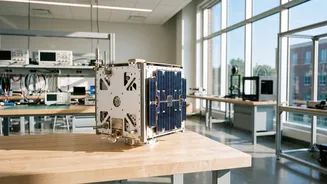

A Universe of New Players
For decades, the Indian Space Research Organisation (ISRO) was the sole custodian of India's space ambitions. But a seismic shift is underway. Since the government opened the sector to private participation in 2020, India's space ecosystem has exploded.
The number of registered space startups has surged from just one in 2014 to nearly 440 by August 2026. This transformation is no accident; it’s the result of a deliberate strategy to create a vibrant, multi-layered ecosystem where government and private enterprise work in tandem. The goal is to move beyond ISRO being the builder of everything and transition it into a role focused on research and deep-space exploration, while private firms handle manufacturing and commercial launches.
The Policy Powering the Launch
The fuel for this private-sector boom is policy. The Indian Space Policy of 2023 was a landmark document that clearly defined roles and encouraged private enterprise across the entire value chain. A key institution created in this new landscape is the Indian National Space Promotion and Authorisation Centre (IN-SPACe). Think of IN-SPACe as a single-window agency or a friendly mission control for private companies. It's designed to help startups and established firms navigate regulations, use ISRO's world-class testing facilities, and get the authorisations needed to build and launch rockets and satellites. Working alongside it is NewSpace India Limited (NSIL), ISRO's commercial arm, which focuses on marketing Indian space capabilities to the world and managing commercial contracts. Together, these bodies have created a launchpad for private ambition.
Meet the Trailblazers
A handful of startups have emerged as the early stars of India's private space race. Hyderabad-based Skyroot Aerospace made history in July 2026 by becoming the first Indian private company to launch an orbital-class rocket, the Vikram-1. This successful launch made India only the third country, after the US and China, with private orbital launch capability. Close behind is Chennai-based Agnikul Cosmos, which has pioneered the world's first single-piece 3D-printed rocket engine, the Agnilet. The company successfully launched its suborbital demonstrator rocket, Agnibaan SOrTeD, from its own private launchpad at Sriharikota. These companies are not just building rockets; they are building a reputation for innovation and cost-effective engineering.
An Entire Ecosystem Takes Flight
The new space economy isn't just about launch vehicles. A whole ecosystem of companies is building out different parts of the value chain. Bengaluru's Pixxel is focused on building constellations of hyperspectral imaging satellites to provide valuable Earth observation data. Dhruva Space, one of the older private players, offers full-stack satellite solutions, from design and manufacturing to mission operations. Others, like Bellatrix Aerospace and Manastu Space, are developing critical propulsion systems that will power satellites in orbit. This diversification shows the growing maturity of the sector, moving from reliance on a single national agency to a network of specialized firms driving innovation in their respective niches.
The Economic Countdown
The stakes are enormous. As of 2026, India's space economy is valued at around $9 billion, but projections suggest it could skyrocket to between $40 and $45 billion within the next decade. This growth is attracting serious investment, with private funding jumping from about $100 million in 2021-22 to over $618 million by March 2026. By offering reliable and cost-effective launch services, India aims to capture a much larger slice of the global satellite launch market. The 'Make in India' initiative gets a cosmic boost as private companies are now not just suppliers but designers and manufacturers of entire space systems, promising to create high-skilled jobs and cementing India's status as a major player in the global space industry.