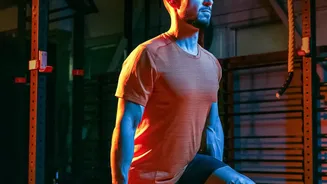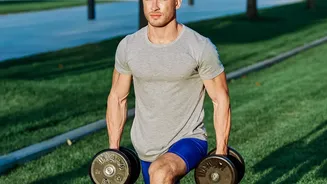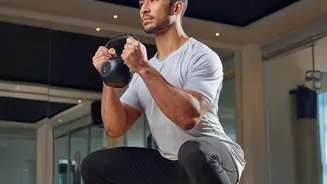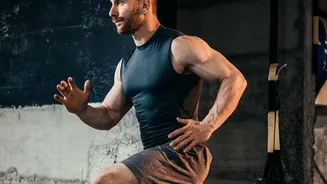


Squats and lunges are foundational for building powerful thighs, but fear of knee pain holds many back. The good news is that these exercises aren't inherently bad for your knees; poor form is the real culprit. Here’s what you need to know.
Why These Exercises Are Worth It
Squats and
lunges are hailed as kings of lower-body training for a reason. They are compound movements, meaning they work multiple muscle groups at once, making them highly efficient. Primarily, they target the quadriceps (front of thighs), hamstrings (back of thighs), and glutes. This comprehensive muscle activation not only builds visible strength and tone but also enhances your functional fitness—the strength you use for daily activities like climbing stairs or lifting heavy objects. Stronger leg muscles also act as crucial shock absorbers and stabilisers for the knee joint, potentially reducing the risk of injury when performed correctly.
The Golden Rule: Form Over Everything
Before even attempting a squat or lunge, it's vital to understand that proper technique is more important than how much weight you lift or how many reps you do. Many knee issues arise from performing the movements incorrectly, which places unnecessary stress on the joint. Common culprits include letting the knees collapse inward, leaning the torso too far forward, or progressing the weight or volume too quickly. The goal should always be to master the movement with your own body weight first. Focus on slow, controlled motions, ensuring the right muscles are engaged before even considering adding dumbbells or barbells.
Mastering the Squat for Knee Health
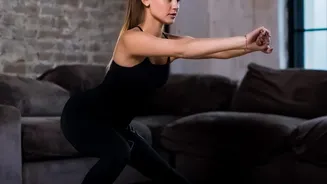
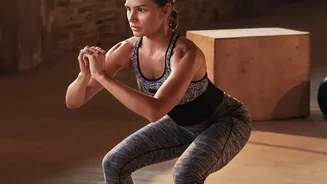
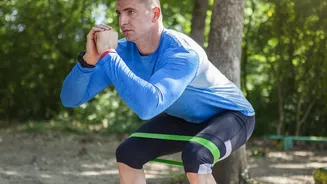
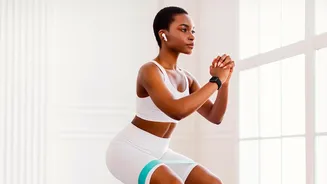
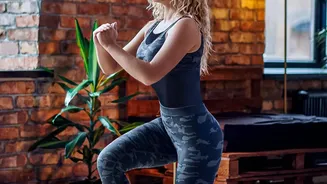
To perform a knee-friendly squat, start with your feet slightly wider than shoulder-width apart, with your toes pointing slightly outward. As you lower, think about pushing your hips back as if you're sitting in a chair. Keep your chest up and your back straight. It's crucial to keep your weight in your mid-foot and heels, not on your toes. A common myth is that your knees should never go past your toes, but this depends on individual body proportions. A better rule is to ensure your knees track in line with your feet and do not collapse inward—a common error called knee valgus. Only squat as deep as you can while maintaining good form and without pain.
Perfecting the Lunge without Pain
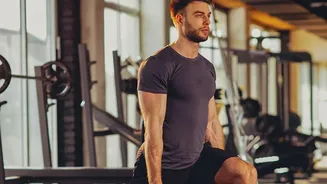
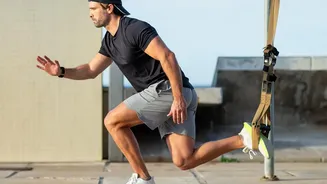
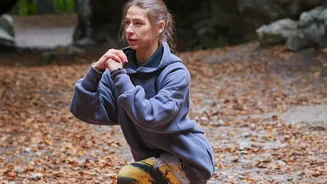
Lunges are a unilateral exercise, working one leg at a time, which is excellent for correcting muscle imbalances. For a safe lunge, step one foot forward or backward into a split stance. Lower your hips until both knees are bent at approximately a 90-degree angle. Your front knee should be aligned directly over your ankle, not drifting far past your toes, and your back knee should hover just above the floor. Keep your torso upright and your core engaged to maintain balance and stability. A common mistake is taking too long or too short a step, which can throw off your alignment and stress the front knee. If forward lunges cause discomfort, try reverse lunges, which are often gentler on the knees.
Common Mistakes and How to Fix Them
The most frequent error in both exercises is allowing the knees to cave inward. This often stems from weak hip muscles. To combat this, consciously push your knees out so they align with your second or third toe. Another issue is leaning too far forward, which transfers pressure from your glutes and hamstrings to your quads and knees. Focus on keeping your chest lifted and core braced. Finally, avoid relying on momentum. Each repetition should be controlled, especially the lowering phase, to maximize muscle engagement and minimize joint stress.
Smart Modifications for Sensitive Knees
If you still experience discomfort, there are several effective modifications. Try reducing your range of motion; a shallower squat or lunge can still be very effective. You can perform squats to a box or chair to ensure you don't go too deep. For lunges, static or split squats (where your feet remain in place) reduce the challenge on balance and can be easier to control. Wall sits are another excellent, low-impact alternative that builds quad and glute strength without bending the joint under a heavy load. The key is to find a variation that allows you to train without pain.