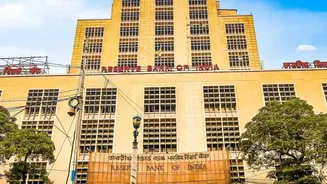







Watching your home loan EMI is a common source of anxiety, and it's easy to blame rising prices. But while inflation gets the headlines, it’s not the direct cause of your repayment changes. The real power lies with the RBI.
Inflation: The Symptom, Not the Cause
First, let's clear up a common
misconception. Inflation itself doesn't automatically trigger a change in your Equated Monthly Instalment (EMI). Think of inflation—the rate at which prices for goods and services rise—as a crucial data point that the Reserve Bank of India (RBI) monitors very closely. When inflation is high, the cost of living goes up, and the RBI’s primary mandate is to maintain price stability in the economy. To do this, it uses several tools to either encourage or discourage spending. So, while a rising inflation rate is often followed by a rise in loan interest rates, it's not a direct cause-and-effect relationship. Instead, inflation is the economic fever that prompts the doctor—the RBI—to act.
The RBI and Its Master Tool: The Repo Rate
The main instrument the RBI uses to manage the economy is the 'repo rate'. In simple terms, the repo rate is the interest rate at which the RBI lends money to commercial banks. When the RBI wants to curb inflation and reduce the amount of money circulating, it increases the repo rate. This makes borrowing more expensive for banks like SBI, HDFC Bank, or ICICI Bank. Conversely, to stimulate economic growth, the RBI might lower the repo rate, making it cheaper for banks to borrow funds. These decisions are made by the RBI's Monetary Policy Committee (MPC), which meets regularly to assess economic conditions, including but not limited to inflation.
How Banks React to the RBI's Signal
When the RBI changes the repo rate, it directly impacts the cost of funds for all commercial banks. If the repo rate goes up, banks have to pay more to borrow from the central bank. To protect their own profit margins, they pass this increased cost on to consumers in the form of higher interest rates on loans, including home loans, car loans, and personal loans. If the repo rate goes down, banks' borrowing costs decrease, and competition often encourages them to pass on the benefit to customers through lower lending rates to attract more borrowers. This process is known as monetary policy transmission—the mechanism through which RBI's policy decisions translate into the interest rates that you, the borrower, actually pay.
The Key Difference: MCLR vs. EBLR Loans
Not all home loans are affected equally or at the same speed. The impact on your EMI depends heavily on the benchmark your loan is linked to. Since 2019, new floating rate loans are linked to an External Benchmark Lending Rate (EBLR), which is most often the RBI's repo rate. EBLR-linked loans are very transparent and transmit RBI's rate changes quickly—usually within three months. If the RBI cuts the repo rate, you'll see the benefit faster. But if it raises the rate, your EMI will also go up sooner. Many older loans are linked to the Marginal Cost of Funds based Lending Rate (MCLR). This is an internal benchmark set by the bank based on its own cost of funds. MCLR-based loans have a slower transmission, with interest rates typically resetting every six or twelve months. This means you might be shielded from sudden rate hikes for a while, but you also won't benefit as quickly from rate cuts.
So, What Really Changes Your EMI?
Ultimately, your home loan EMI changes when your bank adjusts its lending rate. For the vast majority of floating-rate home loans today, this adjustment is a direct reaction to a change in the RBI's repo rate. The chain of events is clear: the RBI observes economic indicators like inflation and growth, decides to adjust the repo rate, and banks then update their EBLR or, more slowly, their MCLR. It's the bank's action, prompted by the RBI's decision, that alters your interest burden. Therefore, instead of just watching inflation figures, a savvy home loan borrower should pay close attention to the RBI's monetary policy announcements. These decisions are the true signal for whether your home loan repayments are likely to go up or down in the near future.