
The Allure of Martian Water
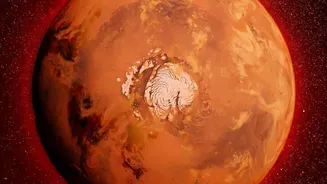
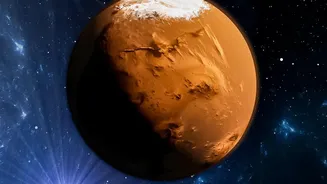
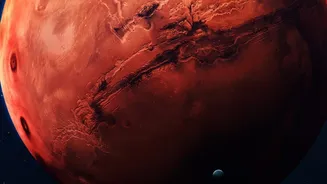
For decades, the guiding principle of Mars exploration has been to "follow the water." It's a sensible strategy. Water is the cornerstone of life as we know it, and finding it—whether as ice in polar caps, locked in minerals, or as suspected deep underground
reservoirs—is a monumental achievement. Recent analyses of old rover data continue to bolster the theory that Mars was once a much wetter planet, with evidence suggesting significant areas may have been covered by water. This quest is about more than just quenching the thirst of future astronauts. It's about finding a key ingredient for producing rocket fuel on-site and, most tantalizingly, searching for signs of ancient microbial life. Finding water is the first step in proving that a human presence on Mars is even possible, turning a science fiction dream into a tangible engineering problem.
Water is Necessary, but Not Sufficient
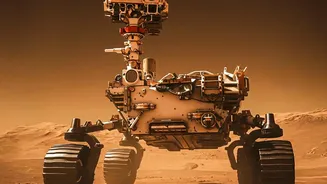
But finding water is only the first part of the survival equation. The bigger question isn't just about arriving on Mars, but about staying there. Long-term human missions or settlements are impractical if every calorie consumed has to be launched from Earth. This is where the concept of in-situ resource utilization (ISRU) becomes critical. ISRU is the practice of living off the land, using local materials to generate essentials like oxygen, fuel, and, crucially, food. While NASA's MOXIE experiment has successfully demonstrated oxygen production from the Martian atmosphere, turning Martian soil and ice into a farm is an exponentially harder problem. Water is an input, but the process of agriculture is a complex biological and technological system that we have yet to master in an alien environment.
The Ultimate Agri-Tech Challenge
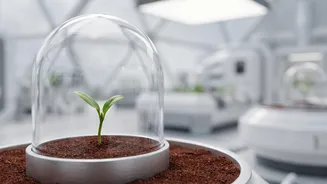
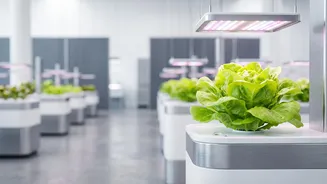
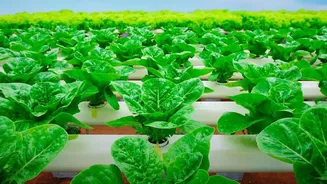
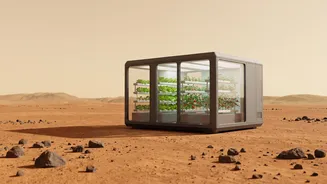
Growing food on Mars presents a formidable list of challenges. The planet's soil, or regolith, is toxic and lacks the organic matter and nutrients essential for crops. Mars has a thin atmosphere that offers little protection from harmful cosmic radiation. It's also incredibly cold, with average temperatures hovering around -65°C. Furthermore, frequent dust storms can block sunlight for extended periods, making photosynthesis difficult. To overcome this, future Martian farmers will need to operate within highly advanced, pressurised greenhouses. They'll likely rely on soilless growing techniques like hydroponics (using nutrient-rich water) or aeroponics. Every drop of water, every watt of energy, and every nutrient will need to be meticulously managed and recycled in a closed-loop system, a feat of engineering far beyond traditional farming.
More Than Just a Salad Bar
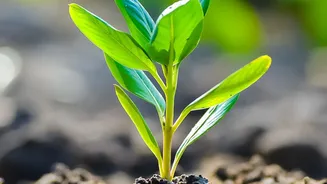
The importance of Martian agriculture extends beyond basic nutrition. A bioregenerative life support system, where plants are part of the habitat, serves multiple functions. Plants would be a vital source of oxygen and could help scrub carbon dioxide from the air, reducing the reliance on mechanical systems. Fresh food would also provide essential micronutrients that are hard to preserve in pre-packaged meals. And the psychological benefit for astronauts cannot be overstated. The act of gardening and having access to fresh, living food could be a crucial morale booster during long, isolated missions in a sterile environment. Successfully growing food is the tipping point that transforms a temporary outpost into a self-sustaining settlement.
Earthly Benefits of Martian Gardens
The incredible thing about solving problems for space is that the solutions often have profound impacts back on Earth. The push for space agriculture is already accelerating innovation in terrestrial farming. The technologies being developed for Mars—such as vertical farming, advanced LED lighting, hyper-efficient water recycling, and AI-driven crop monitoring—are directly applicable to challenges here at home. As Earth faces a growing population and the impacts of climate change on traditional agriculture, these controlled environment agriculture (CEA) techniques can help us grow more food with fewer resources, even in urban centres or arid regions. Innovations from NASA research are already foundational to a burgeoning CEA industry aimed at making farming more sustainable and resilient. In this sense, learning to farm on Mars is also a critical investment in the future of food security on our own planet.