



What Are Stellar Nurseries?
Stellar nurseries are vast, beautiful clouds of cold gas and dust floating in space. They are the birthplaces of stars. For a long time, these regions have been mysterious to astronomers because the very dust that fuels star creation also acts as a thick
shroud, blocking visible light and hiding the action within. Think of it like trying to see inside a dense fog; you know something is there, but the details are completely obscured. Iconic regions like the Carina Nebula and the Orion Nebula are famous examples of these cosmic cradles, where thousands of stars are being born. These nurseries are not just birthing individual stars; they are forging entire solar systems, and understanding them is key to understanding our own origins.
Webb's Infrared Superpower
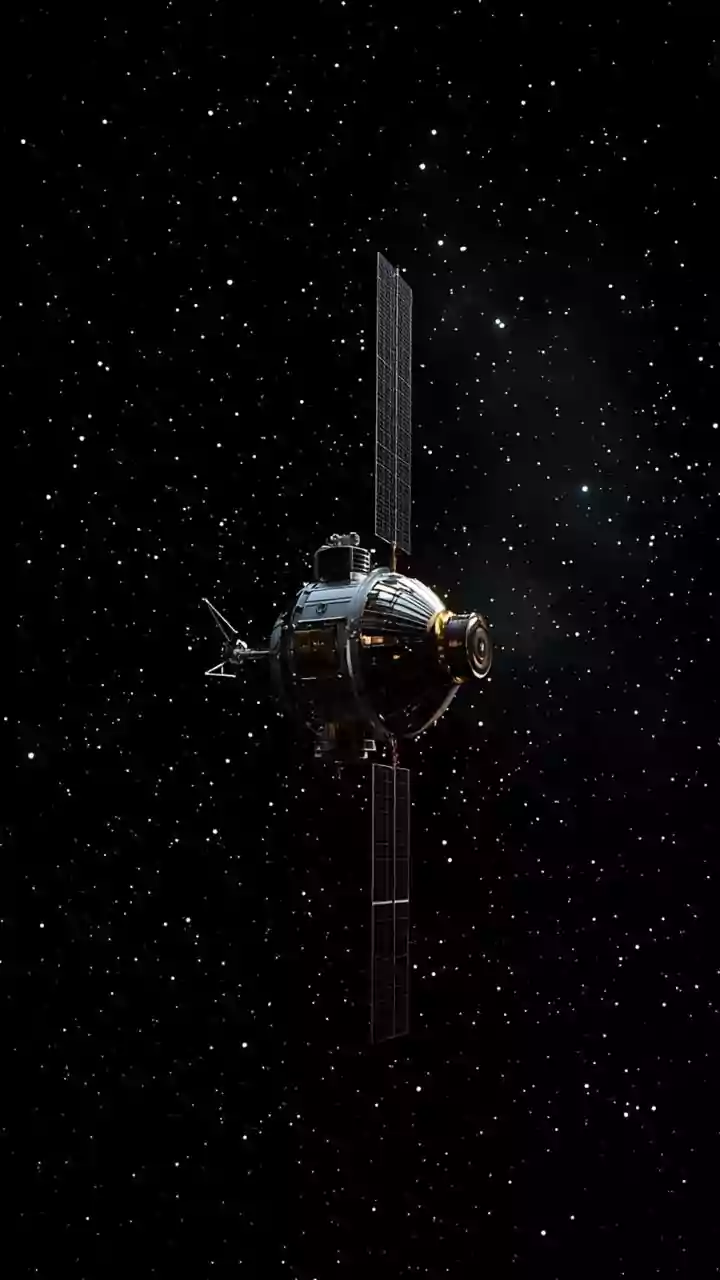
This is where the James Webb Space Telescope changes the game. Unlike the Hubble Space Telescope, which primarily sees in visible and ultraviolet light, JWST is designed to see the universe in infrared. Infrared light has a longer wavelength that can penetrate through the thick clouds of cosmic dust that hide stellar nurseries. This allows Webb to see the faint heat signatures of newborn stars, known as protostars, that are still gathering mass from their dusty cocoons. It’s like having thermal goggles that can see the warmth of a person through a wall of smoke. This capability allows astronomers to witness the earliest, most elusive stages of star formation in breathtaking detail for the first time.
Revealing the 'Cosmic Cliffs'
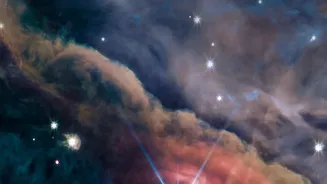
One of the most spectacular images from Webb showcasing this power is of the 'Cosmic Cliffs' in the Carina Nebula. What looks like a craggy mountain range on a moonlit night is actually the edge of a giant, gaseous cavity sculpted by intense ultraviolet radiation and powerful winds from massive, young stars located just out of the frame. The image reveals hundreds of previously hidden stars and even protostellar jets—enormous plumes of gas and dust shooting out from some of the infant stars. These jets are a crucial part of the star formation process, and Webb’s ability to capture them so clearly is providing a wealth of new data for scientists studying how stars grow and interact with their environment.
From Baby Stars to Infant Planets
Webb's discoveries go beyond just stars. Its incredible sensitivity is uncovering the secrets of planetary formation as well. In a star-forming region called NGC 1333, Webb spotted several free-floating objects with masses similar to Jupiter. These objects are not orbiting a star, but they formed through similar processes. One of the tiniest of these infant worlds was even found to be surrounded by a dusty disk—the kind of disk from which moons and planets form. This suggests that the processes that create stars and planets can happen at different scales throughout the universe, providing clues to how our own solar system may have taken shape from a similar disk of material billions of years ago. It helps scientists probe the very limits of the star formation process.
A New Chapter in Cosmic History
Each new image from the James Webb Space Telescope is not just a pretty picture; it is a new page in our cosmic history book. By studying stellar nurseries in our own galaxy, like Sagittarius B2 near the Milky Way's center, astronomers can get a proxy for what conditions were like in the early universe when star formation was at its peak. Observations of the Tarantula Nebula are similarly interesting because its chemical composition resembles that of star-forming regions from the universe's 'cosmic noon'. These insights are helping to refine our models of how the first stars and galaxies came into being. Webb is not just showing us where stars are born; it's revealing the fundamental mechanics of cosmic creation, connecting our own existence to the grand, unfolding story of the universe.