





A New Philosophy: From Frugal to Formidable
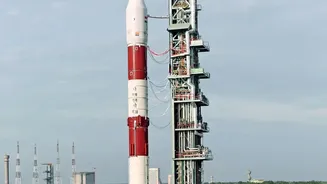
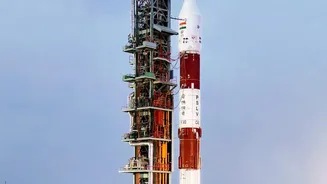
ISRO's legacy was built on a foundation of frugal innovation. Its workhorse rockets like the PSLV delivered communication and earth observation satellites that directly served India's developmental needs, from weather forecasting to disaster management.
While missions like Chandrayaan and the Mars Orbiter Mission (Mangalyaan) captured global attention for their stunning success on shoestring budgets, the core philosophy remained application-driven. This new chapter marks a significant pivot. The focus is expanding to include high-stakes, capability-demonstrating projects that position India not just as a service provider, but as a major spacefaring power. This involves developing cutting-edge technologies, undertaking complex scientific exploration, and, most visibly, sending Indians into space.
The Human Element: Gaganyaan and a Home in the Sky
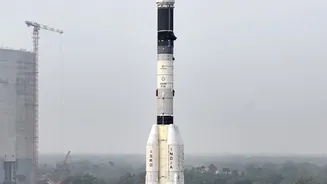
The cornerstone of this new ambition is the Gaganyaan programme, India's first human spaceflight mission. The goal is to send a crew of three astronauts into a 400 km orbit for three days and bring them back safely. After a series of crucial qualification tests on the crew module in mid-2026, the programme is advancing towards its first uncrewed test flights. The first uncrewed mission, G1, is planned for the latter half of 2026 to validate all systems before a crewed launch follows. But Gaganyaan is just the beginning. The long-term vision includes establishing the Bharatiya Antariksha Station (BAS), India's own modular space station. Work on the first module has already begun, with a target launch in 2028 and plans for the station to be fully operational by 2035. This will enable long-duration human presence in space, facilitating advanced microgravity research.
Opening the Cosmos: The Private Sector Revolution
Perhaps the most transformative shift is not in technology, but in policy. The Indian Space Policy 2023 has officially opened the doors for private companies to participate across the entire space value chain. ISRO is transitioning into a role focused on research and development and deep space missions, while routine activities like satellite manufacturing and launches are being handed over to commercial entities. This new ecosystem is facilitated by IN-SPACe, a single-window agency to promote and authorise private space activities, and NewSpace India Limited (NSIL), ISRO's commercial arm. The results are already showing. India's space economy, valued at over $8 billion, is projected to hit $44 billion by 2033. The number of space startups has skyrocketed, with companies like Skyroot Aerospace already achieving milestones like the successful orbital launch of the Vikram-1 rocket in July 2026.
Beyond the Moon: To Venus and Back
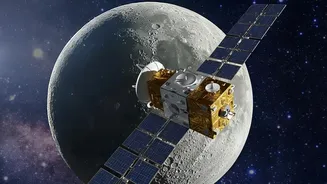
While human spaceflight grabs headlines, ISRO's scientific ambitions are also expanding. After the historic landing near the Moon's south pole, the agency is setting its sights on our other planetary neighbours. The Shukrayaan mission, India's first orbiter to Venus, is formally approved and scheduled for launch in March 2028. This mission will study the Venusian surface and atmosphere, looking for clues about its geological and volcanic activity. Further down the line, a lunar polar exploration mission in collaboration with Japan (LUPEX) and a follow-up Mars lander mission are also in the works, demonstrating a sustained commitment to interplanetary science. These missions are crucial for building scientific knowledge and showcasing India's deep space capabilities.
The Game Changer: Reusable Launch Vehicles
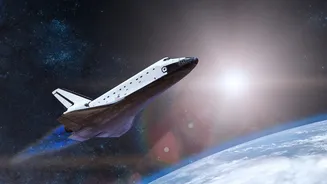
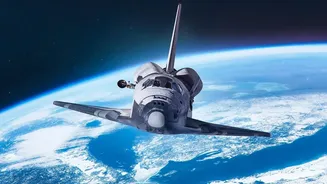
Underpinning all these ambitions is the quest for low-cost access to space. ISRO is making significant strides in developing its own Reusable Launch Vehicle (RLV), named 'Pushpak'. Unlike expendable rockets, the RLV is a winged vehicle designed to take off vertically and land horizontally on a runway, much like an aircraft. ISRO has already successfully conducted a series of landing experiments, demonstrating the vehicle's autonomous navigation and landing capabilities. The goal is to drastically reduce the cost of launching payloads, with some estimates aiming to cut it by an order of magnitude. A successful RLV would make India's launch services among the most competitive globally and provide the frequent, affordable launch capability needed to build a space station and sustain a large-scale space program.