



Why Fruit, Why Now?
The urban gardening boom is no longer just about a bit of green. A confluence of factors has ripened the desire for something more substantial. The push for healthier, organic lifestyles and a closer connection to our food sources is a major driver. Knowing
exactly where your food comes from—free of pesticides and long-distance shipping—is a powerful motivator. Add to this the sheer joy and stress relief that gardening provides, and it's easy to see why so many are taking it up. But the biggest game-changer has been the development of new plant varieties. Plant breeders have focused on creating dwarf and compact fruit trees that don't just survive but thrive in containers. These aren't sad, miniature versions; they are genetically designed to stay small while producing full-sized, delicious fruit, making the balcony orchard a delicious reality.
Meet the Balcony-Sized Orchard
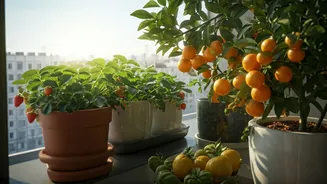
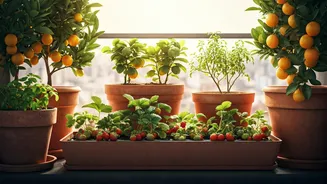
The key to this fruity revolution lies in 'dwarf' and 'columnar' trees. These plants are often grafted onto a rootstock that naturally limits their size, so they won't outgrow their pots. This means you can grow a surprising variety in a space you might have thought was only good for a drying rack. Dwarf citrus trees, like the popular Meyer Lemon or a fragrant Kaffir lime, are perennial favourites, bringing glossy leaves and year-round interest. In India, compact varieties of mango like Amrapali and Mallika, as well as guava and chiku (sapota), are now perfectly suited for pot culture. Figs are another star performer, as they are surprisingly low-maintenance and can produce two crops a year. Even apples are possible now, with 'columnar' varieties that grow straight up like a pillar, taking up very little horizontal space.
Your Guide to Getting Started
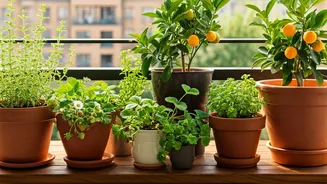
Starting your own container orchard is easier than you think. The first step is the pot. Go for a large container, at least 15-20 gallons (around 45-50 cm in diameter), to give the roots enough room. Good drainage is non-negotiable, so make sure your pot has holes at the bottom. Next is the soil. Avoid using heavy garden soil, which compacts easily in pots and can lead to waterlogged roots. Instead, choose a high-quality potting mix, ideally one formulated for containers, which will provide the right balance of drainage and aeration. Finally, consider the sun. Most fruit trees need at least six to eight hours of direct sunlight each day to produce a good harvest, so place your pot in the sunniest spot on your balcony or terrace.
Easy Fruits for a First Harvest
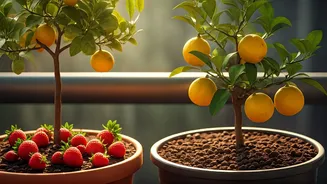
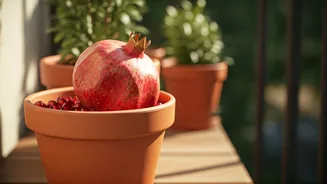
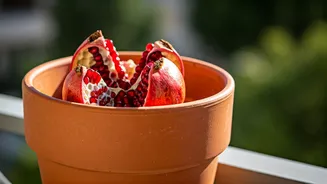
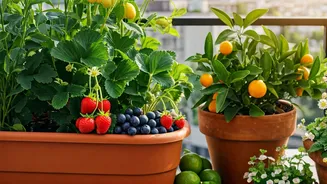
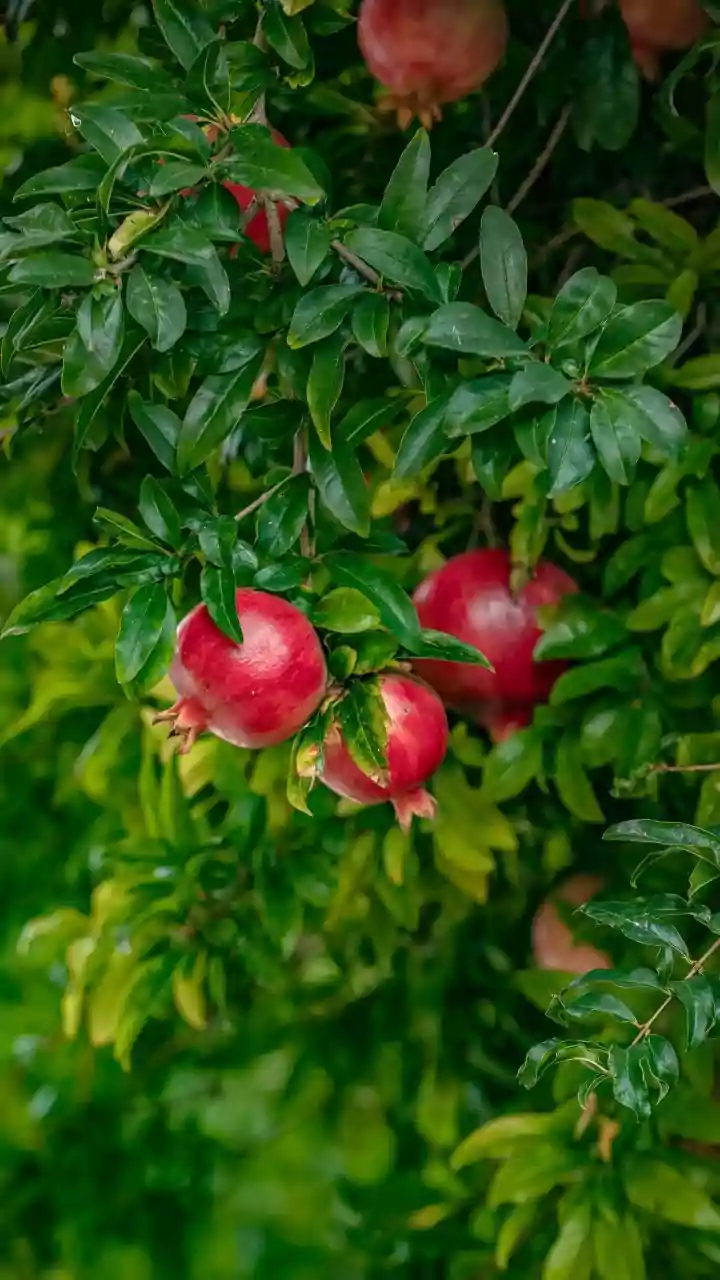
If you're a beginner, it's best to start with forgiving plants to build your confidence. Dwarf citrus trees like lemons and kumquats are an excellent choice as they are relatively easy to care for and look beautiful. Figs, particularly varieties like 'Brown Turkey' or 'Petite Negra', are incredibly rewarding, often producing fruit in their first year. Berries are another fantastic option. Strawberries can be grown in hanging baskets, while compact blueberry varieties thrive in pots, provided you use acidic soil. For those in warmer climates, a dwarf pomegranate ('Anar') is a tough plant that handles heat well. Each of these options provides the satisfaction of a real harvest without requiring an expert's touch, proving that a fruitful garden is within reach, no matter how small your space.