

What Exactly Is Cold-Pressed Oil?
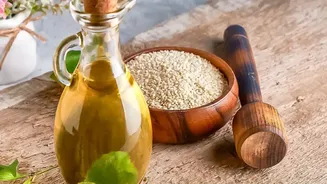
Known traditionally as 'marachekku' or 'ghani' oil, cold-pressed sesame oil is extracted by mechanically pressing sesame seeds at low temperatures without using heat or chemicals. This gentle method ensures that the oil's natural goodness remains intact.
In contrast, refined oils undergo high-heat processing and chemical treatments to increase shelf life and create a neutral taste. While this makes them stable for high-heat frying, the process strips away many of the beneficial nutrients, flavours, and aromas that make the original oil so valuable.
A Superior Nutritional Profile
The primary advantage of cold-pressing is the preservation of nutrients. Cold-pressed sesame oil is a rich source of heart-healthy polyunsaturated and monounsaturated fats. It is also packed with Vitamin E and powerful antioxidants like sesamol and sesaminol. These antioxidants are crucial as they help combat cellular damage caused by free radicals, which can lead to inflammation and chronic diseases. The refining process, however, significantly reduces the concentration of these valuable compounds.
Flavour That Transforms a Dish
Beyond nutrition, cold-pressed sesame oil offers a distinct, nutty, and earthy flavour that is central to many authentic Indian recipes. Refined sesame oil is intentionally made to be bland and flavourless, but the robust character of cold-pressed oil, known as 'nalla ennai' or 'gingelly oil' in South India, is celebrated. It adds a layer of complexity to dishes that a neutral oil simply cannot replicate, making it indispensable for recipes like puliyodarai (tamarind rice), various kuzhambu, and pickles.
Best Ways to Use It in Indian Kitchens
To get the most out of its nutritive value and flavour, it’s important to use cold-pressed sesame oil correctly. With a medium smoke point of around 177°C (350°F), it's not ideal for deep-frying. Instead, it shines in low to medium-heat applications. Use it for tempering spices ('tadka') for dals and chutneys, where the spices are briefly fried to release their aromas before being added to the dish. It is excellent for light sautéing of vegetables and as a base for marinades. One of its most popular uses is raw, drizzled over hot idlis or mixed with 'podi' (gunpowder) as a flavourful dip.
Preserving Nutrients During Cooking
While cold-pressing retains nutrients, cooking methods matter. To preserve the oil's health benefits, avoid heating it to its smoke point. Using it for tempering is a quick process that doesn't typically overheat the oil. When sautéing, maintain a medium flame. The antioxidants in sesame oil, particularly sesamol and sesamin, are remarkably heat-stable compared to those in other oils, meaning it retains more of its protective benefits even during cooking. For maximum nutritional benefit, using it as a finishing oil or in dressings for salads allows you to enjoy its properties in their purest form.