

The Promise of Seven Worlds
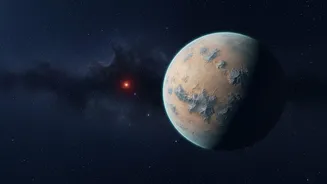
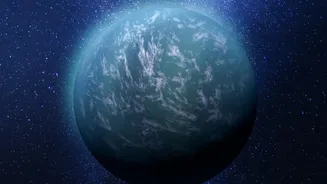
Located just 40 light-years away, the TRAPPIST-1 system is a remarkable cosmic discovery. It features seven rocky, Earth-sized planets orbiting a small, cool red dwarf star. At least three of these planets orbit within the star’s ‘habitable zone,’ a region
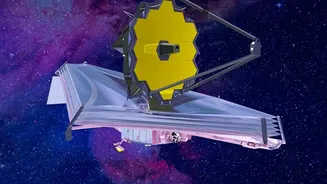
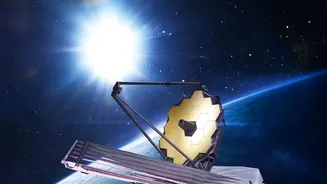
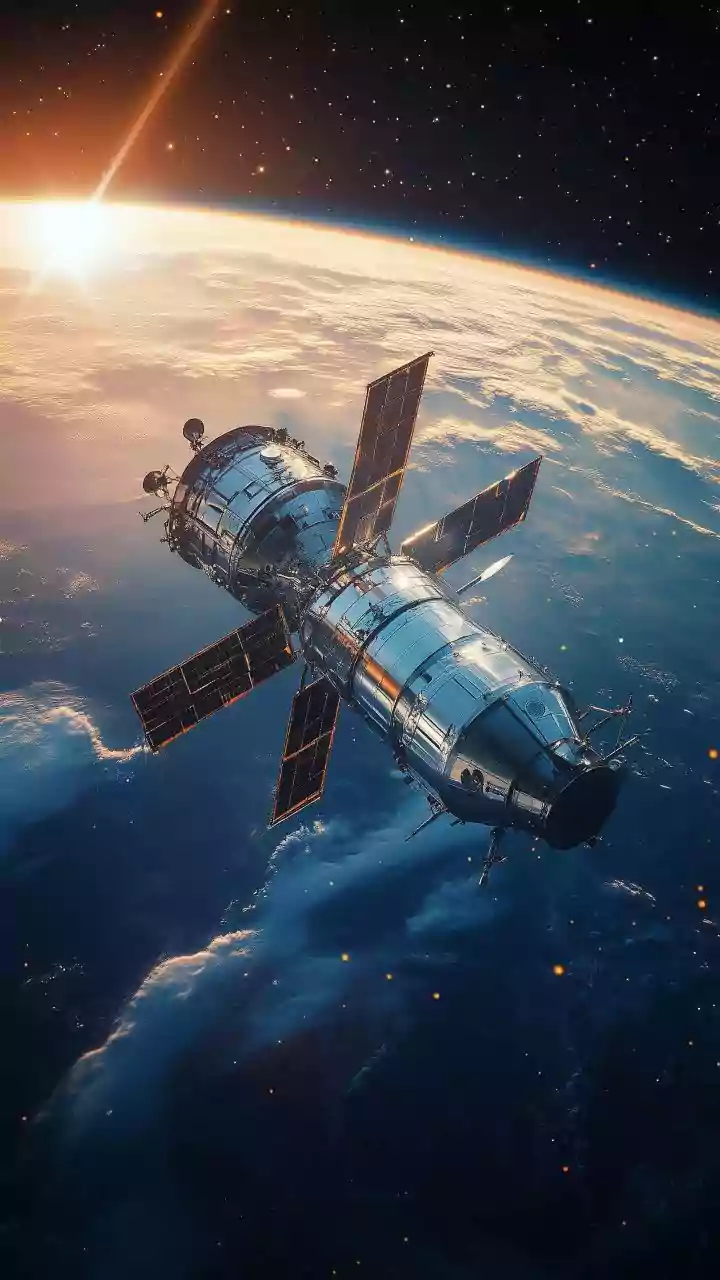
where temperatures could theoretically allow for liquid water on the surface, a key ingredient for life as we know it. Ever since their discovery, these seven worlds have represented one of our best opportunities to search for atmospheres on planets outside our solar system and ask the ultimate question: could another planet host life? With the unprecedented power of the James Webb Space Telescope, scientists finally have a tool capable of peering into these alien skies.
How Webb Searches for Alien Air
JWST doesn't see atmospheres directly. Instead, it uses a clever technique. As a planet passes in front of its star, a tiny fraction of starlight filters through the planet’s atmosphere, if one exists. Different gas molecules absorb specific wavelengths of light, leaving a unique chemical fingerprint that the telescope can read. Another method involves measuring the heat emitted from the planet itself. A world with a thick, heat-trapping atmosphere will be significantly warmer than a bare rock. By using its sensitive infrared instruments, JWST can take the temperature of these distant worlds and infer the presence, or absence, of an atmospheric blanket.
A Surprising Verdict on a 'Venus Twin'
One of the first planets to get a detailed look was TRAPPIST-1c. Because it is similar in size to Venus and receives a comparable amount of radiation from its star, many astronomers expected it might have a thick, dense atmosphere rich in carbon dioxide, just like Venus. However, JWST's observations delivered a major surprise. The data showed that the planet is far cooler than a Venus-like world would be, effectively ruling out a thick carbon dioxide atmosphere. The findings suggest that TRAPPIST-1c is either a bare rock with no significant atmosphere at all, or it has an incredibly thin one—far from the dense, carbon-rich blanket some had hoped to find.
A Complicated and Evolving Picture
This trend of missing atmospheres has been a recurring theme in the initial JWST findings. Observations of the innermost planet, TRAPPIST-1b, and the habitable-zone planet TRAPPIST-1d also suggest they lack substantial atmospheres. The intense radiation from the young red dwarf star may have stripped these worlds of their gaseous envelopes billions of years ago. However, the story is still unfolding. More recent analysis of TRAPPIST-1b suggests that it could, against expectations, have a carbon dioxide atmosphere, or alternatively, be a world covered in fresh volcanic rock. This highlights just how challenging these observations are, with different analytical methods sometimes pointing to different conclusions.
The Ongoing Quest for Habitable Worlds
The focus is now shifting to the outer planets, particularly TRAPPIST-1e, which orbits squarely in the habitable zone. Here too, the initial results have ruled out a thick, hydrogen-based atmosphere, and there is no strong evidence for a CO2-dominated one either. However, the data does not yet exclude the possibility of a different kind of atmosphere—perhaps one rich in nitrogen, similar to Earth's, or even one with hints of methane, like Saturn's moon Titan. For now, the scenarios of TRAPPIST-1e being a bare rock or having a secondary atmosphere are both still on the table, awaiting more data from further observations.