





The Anatomy of the Price Shock
While not a single coordinated announcement, a wave of price adjustments is hitting the Indian logistics sector. Industry executives have been anticipating that prolonged pressure from high fuel prices could push last-mile delivery rates up by 10-20%.
This coincides with a significant, concrete change from a foundational player: India Post revised its parcel and Speed Post tariffs, effective August 1, 2026. The government-run service, a critical artery for e-commerce, introduced new pricing slabs for both retail and corporate customers, alongside a new last-mile service for bulk clients. These moves, while seemingly administrative, are a clear signal that the underlying costs of delivery have reached a point where they can no longer be fully absorbed by providers. This follows general price increases of 8-12% by major private couriers earlier in the year, which were attributed to inflation and rising operational expenses.
Why Now? The Forces Driving Costs
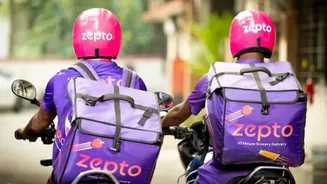
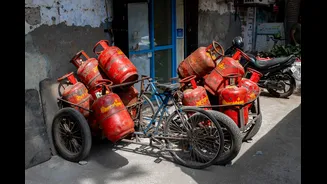
The current rate hikes are not happening in a vacuum. They are the result of multiple compounding pressures that have been building for years. Fuel prices remain a primary culprit; as India imports the vast majority of its crude oil, global price swings translate directly into higher operating costs for the trucks and two-wheelers that form the backbone of last-mile delivery. Recent hikes have put immediate pressure on the thin margins of delivery platforms. At the same time, customer expectations have skyrocketed. The rise of quick commerce has trained shoppers in metro areas to expect deliveries in minutes, not days. This demand for speed requires a dense network of dark stores and a large fleet of riders, massively increasing the cost per order. This is layered on top of India's unique on-ground challenges, including poor road infrastructure in many areas, low population density in rural zones, and a high percentage of non-standard, landmark-based addresses that make automated routing difficult and failed deliveries common. Finally, new regulations, including an 18% GST on delivery fees and updated labour codes, have added a fresh layer of compliance costs.
The Ripple Effect on Retailers and Shoppers
For the thousands of small businesses and D2C brands that rely on third-party logistics, these rate increases are a direct hit to profitability. Last-mile delivery already accounts for over half of total shipping costs, making any increase difficult to absorb. The pressure is forcing a difficult choice: absorb the cost and accept lower margins, or pass it on to customers and risk losing sales. For consumers, the era of heavily subsidised delivery is visibly ending. Platforms that once used free and ultra-fast shipping as a primary marketing tool are now systematically introducing and increasing 'platform fees' or 'handling charges'. Zomato, Swiggy, and Myntra have all raised these ancillary fees in the past year. Many are also raising the minimum order value required to qualify for free delivery. What was once an invisible part of the purchase is now an itemised cost, forcing shoppers to re-evaluate whether the convenience of instant delivery is worth the explicit price tag.
Innovating the Final Journey
The logistics industry is not standing still. The cost pressure is accelerating a wave of innovation aimed at making the last mile more efficient. Technology is at the forefront, with AI-powered route optimisation software becoming essential for planning the most efficient delivery sequences to reduce fuel consumption and transit times. Many companies are also aggressively transitioning their fleets to electric vehicles (EVs), which offer significantly lower running costs per kilometre compared to petrol-based two-wheelers. To meet the demand for speed in dense urban areas, operators are investing in micro-fulfilment centres and dark stores located within residential neighbourhoods, shortening the final leg of the journey. In semi-urban and rural areas, some companies are forging partnerships with local kirana stores, using them as hyperlocal delivery hubs and leveraging their intimate knowledge of the community to ensure successful deliveries.