






Reading the Rainbow of Distant Worlds
To understand a planet hundreds of light-years away, you can't just send a probe. Instead, scientists use a clever technique called transmission spectroscopy. When an exoplanet passes in front of its star from our point of view, a tiny fraction of the
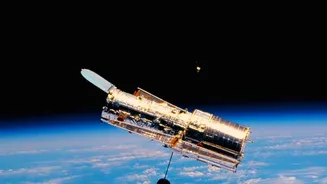
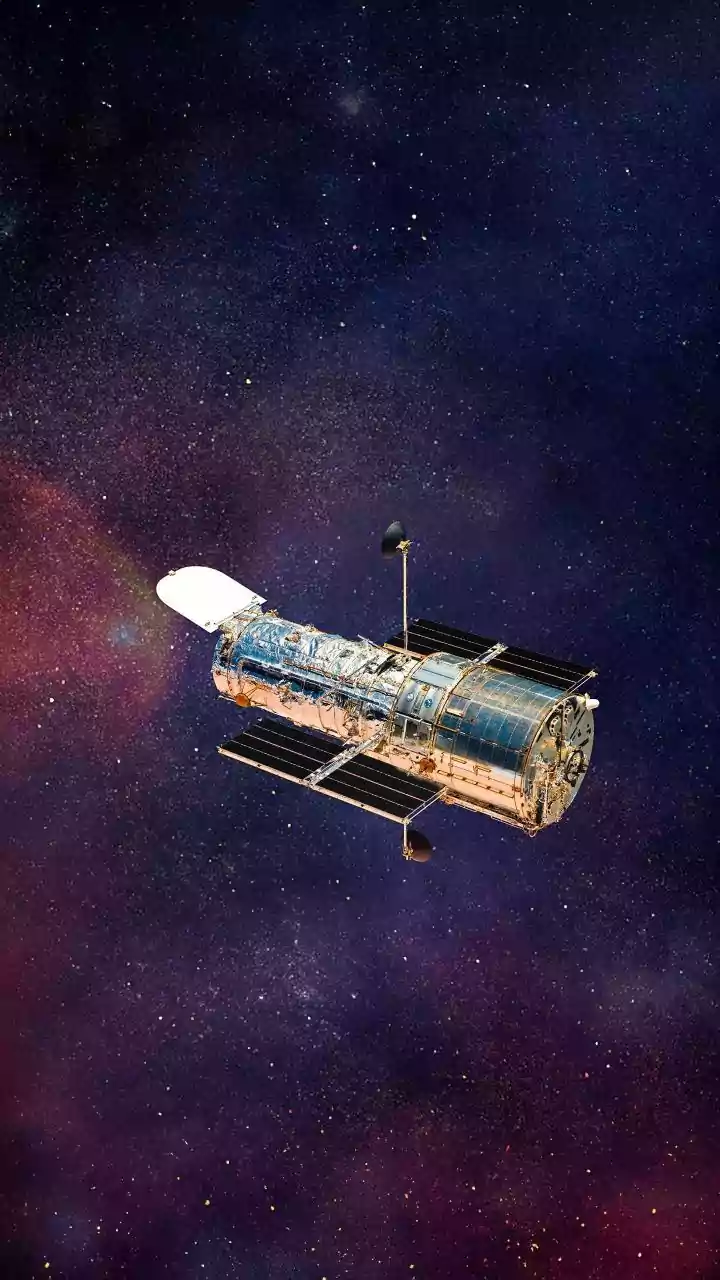
starlight filters through the planet's atmosphere. Instruments like those on the James Webb Space Telescope (JWST) can 'read' this light. Different gases absorb specific colours, or wavelengths, of light. By seeing which colours are missing, astronomers can identify the chemical 'fingerprints' of molecules like carbon dioxide and methane. It's a powerful way to take the atmospheric pulse of a world we can never visit.
Carbon Dioxide: The Planetary Blueprint
Carbon dioxide (CO2) is more than just a gas; it's a fundamental building block. Detecting its presence in an exoplanet's atmosphere tells scientists something crucial about how that planet was born. Understanding the composition of a planet's atmosphere helps reveal its origin story and subsequent evolution. Specifically, the amount of CO2 can provide hints about the balance of solid versus gaseous material that came together to form the planet in the first place. A strong, clear signal of CO2, like the one first definitively detected on exoplanet WASP-39 b by the JWST, serves as a baseline for understanding the planet's overall chemistry and opens the door to finding other key molecules.
Methane: A Sign of Activity
Methane (CH4) tells a different, more dynamic story. While it can be produced by geological processes, it is also famously associated with biological activity on Earth. Finding methane on a potentially habitable planet is therefore an exciting discovery for scientists searching for life elsewhere. Recent investigations of the exoplanet K2-18 b, for instance, revealed both methane and carbon dioxide. The abundance of these two gases, combined with a shortage of ammonia, supports the idea that K2-18 b could be a 'Hycean' world—a planet with a water ocean under a hydrogen-rich atmosphere. While methane alone isn't proof of life, its presence strongly suggests complex chemical or geological processes are at play, making that planet a high-priority target for further study.
The Carbon-to-Oxygen Ratio: The Real Clue
The true detective work begins when scientists compare the amounts of different molecules. The ratio of carbon to oxygen atoms, inferred by measuring gases like methane, water, and carbon dioxide, is a particularly powerful clue. This ratio is believed to change depending on where in a solar system a planet forms. Planets that form farther away from their star, where it's colder, may accumulate more icy materials, leading to a different atmospheric composition than planets that form closer in. By measuring this ratio, astronomers can start to piece together whether a planet formed in its current location or migrated inward from the colder, outer regions of its solar system over billions of years. This provides deep insight into the chaotic dance of planetary formation.
Putting the Pieces Together
No single gas tells the whole story. The simultaneous detection of both CO2 and CH4, especially in the absence of other molecules like carbon monoxide (CO), can be a particularly compelling sign. This specific combination can suggest an atmospheric disequilibrium—a state that is hard to maintain through geology alone and might point toward biological processes churning away on the surface. On Earth, for example, life consumes CO, so its absence alongside methane is considered a potential biosignature. These atmospheric profiles help scientists move beyond just finding planets to truly characterising them, sorting them into categories, and deciding which ones deserve a closer look in the ongoing quest to find another Earth-like world.