





The Gentle Art of the Ghani
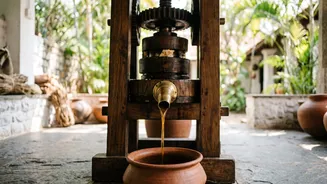
Before steel mills and chemical solvents became the norm, oil extraction was a simple, mechanical process. In South India, this was the job of the 'chekku' or 'ghani'. At its core, a ghani is a large mortar-and-pestle system, traditionally crafted from
wood. Oilseeds, like sesame, are placed into the wooden mortar, and a large, heavy pestle rotates slowly inside, crushing the seeds. Historically, this pestle was turned by a bullock walking in a slow, steady circle, though today, many ghanis use a motor calibrated to the same low speed. The key to this method is its deliberate slowness. The slow, grinding pressure coaxes the oil from the seeds without generating significant friction heat.
Sesame Oil’s Antioxidant Treasures
Sesame oil isn't just a cooking fat; it's a reservoir of powerful bioactive compounds. Its claim to fame lies in a group of antioxidants known as lignans, specifically sesamin and sesamolin. These compounds, along with another potent antioxidant called sesamol, are responsible for many of sesame oil's celebrated health benefits. Antioxidants are our body's defence force against 'free radicals'—unstable molecules that cause cell damage, inflammation, and can contribute to chronic diseases. The lignans in sesame oil have been studied for their role in protecting the heart, supporting liver function, and fighting inflammation.
Why Heat is the Enemy of Nutrients
Modern oil extraction methods are designed for speed and maximum yield, and this almost always involves high heat. In commercial processing, seeds are often subjected to temperatures well above 100°C, and sometimes even treated with chemical solvents like hexane to extract every last drop of oil. While efficient, this process is destructive. High temperatures cause the delicate chemical structures of vitamins, fatty acids, and antioxidants to break down through a process called thermal oxidation. This not only strips the oil of its nutritional value but can also create harmful compounds. The natural flavour, aroma, and colour are also bleached and deodorised away, resulting in a bland, neutral oil.
Cold-Pressing: The Nutrient Shield
This is where the wooden ghani proves its superiority. The term 'cold-pressing' refers to extracting oil at a low temperature, typically below 40-50°C. The wooden construction of a traditional ghani is a natural insulator and absorbs friction heat, ensuring the temperature of the oil being pressed remains low. By avoiding high heat, the process preserves the integrity of the valuable antioxidants like sesamol and sesamin. These compounds, which are sensitive to heat, remain intact, along with other nutrients like Vitamin E and essential fatty acids. The resulting oil is not only nutritionally richer but also retains the authentic, nutty flavour and aroma of the sesame seeds.
Making an Informed Choice
The difference between a vibrant, nutrient-rich oil and a highly processed one is significant. When you see 'refined' on a label, it's a sign that the oil has undergone high-heat and often chemical treatment. In contrast, oils labelled 'cold-pressed', 'wood-pressed', or 'ghani/chekku-pressed' signal a return to these gentler, traditional methods. While the yield is lower and the process is slower, making these oils more expensive, the payoff comes in the form of superior nutritional quality and flavour. Choosing a wooden-ghani pressed sesame oil is a conscious decision to prioritise the natural, potent goodness that the seed has to offer.