




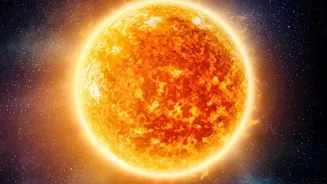
The Sun’s Violent Temper
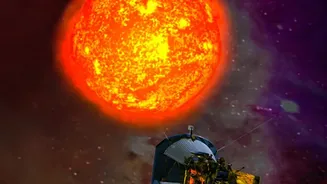
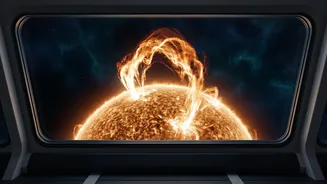
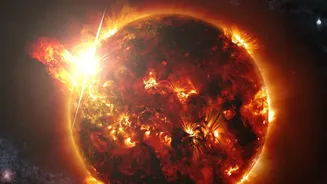
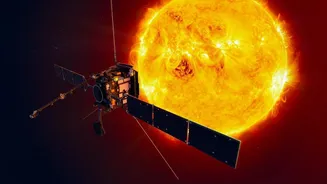
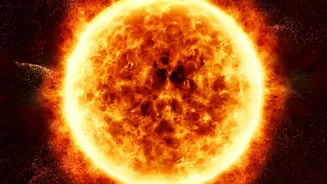
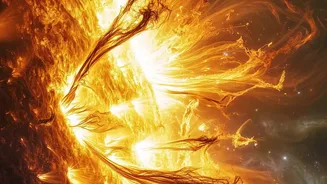
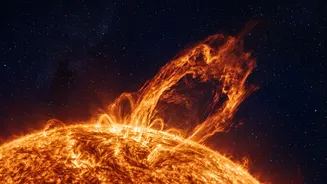
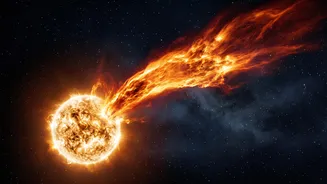
The Sun, our life-giving star, has a turbulent side. It constantly releases a stream of charged particles called the solar wind. Sometimes, it unleashes much more violent outbursts: solar flares, which are intense bursts of radiation, and coronal mass
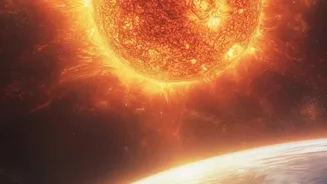
ejections (CMEs), which are massive clouds of solar plasma and magnetic fields hurtling through space. While solar flares can reach Earth in about eight minutes and disrupt radio communications, the primary threat to our infrastructure comes from CMEs. These slower-moving clouds can take one to three days to arrive, but when they slam into Earth's magnetic field, they can trigger powerful geomagnetic storms. It is these storms that have the potential to cause widespread chaos.
A Modern World’s Achilles’ Heel
Our dependence on electricity and technology makes us uniquely vulnerable. A severe geomagnetic storm can induce powerful electrical currents in long conductors like power lines and undersea internet cables. These currents could overwhelm and damage large transformers, leading to cascading power grid failures and blackouts that might last for weeks or even months. The last truly massive solar storm to hit Earth was the Carrington Event in 1859. It set telegraph stations on fire and created auroras so bright people could read newspapers at night. If an event of that magnitude occurred today, the consequences would be catastrophic, potentially causing trillions of dollars in economic damage and crippling the systems that underpin modern society, from banking to navigation.
Enter AI: The New Space Weather Forecaster
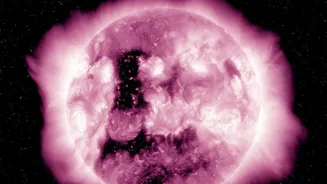
Predicting when and where a geomagnetic storm will hit is key to mitigating the damage. This is where artificial intelligence comes in. Scientists are now using AI models to analyze vast amounts of data from NASA's solar observatories, learning to spot the subtle signs of an impending eruption. One such pioneering model, known as DAGGER (Deep Learning Geomagnetic Perturbation), can analyze solar wind data and predict the location and severity of a geomagnetic disturbance on Earth with about 30 minutes of advance warning. While this doesn't sound like much time, it can be just enough for authorities to take protective measures. Other AI models are being developed to forecast the emergence of storm-causing active regions on the Sun up to 12 hours before they appear.
From Prediction to Protection
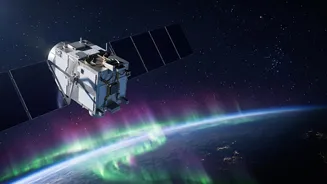
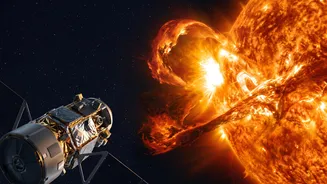
AI’s role doesn’t end with forecasting. That crucial 30-minute warning provided by models like DAGGER could allow power grid operators to reconfigure their systems, take vulnerable transformers offline, and prepare for the surge, potentially preventing widespread blackouts. Similarly, satellite operators could have enough time to put their spacecraft into a protective safe mode, shielding their sensitive electronics from damaging charged particles. While a direct hit from a Carrington-level event would still cause significant disruption, AI-powered predictions turn the scenario from an unavoidable catastrophe into a manageable crisis. It offers a fighting chance to protect the vital infrastructure that powers our daily lives.
What This Means For The Average User
While an individual can't stop a solar storm, it's important to understand the threat and the progress being made. Your personal electronics, like a smartphone or laptop, are generally too small to be directly damaged by induced currents unless they're plugged into a wall outlet during a power surge. The larger risk is the loss of the services you rely on: electricity, internet, GPS, and communications. The work to build a more resilient planet is happening at the level of government agencies like NASA and private industry, who are increasingly using AI as a critical defensive shield. As our world becomes more connected and the Sun enters more active periods of its 11-year cycle, this technological race against time is more important than ever.