



An Aging Icon's Final Orbit
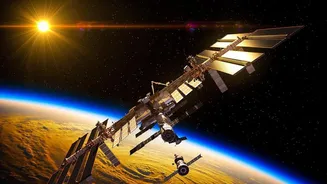
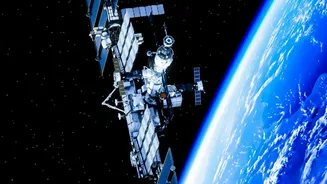
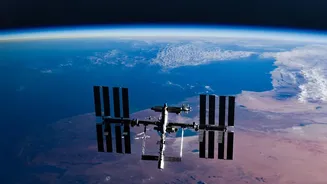
The International Space Station is arguably one of humanity's greatest engineering achievements, a 450-tonne symbol of global cooperation that has been continuously inhabited since 2000. It has hosted over 3,000 experiments, leading to breakthroughs in medicine,
materials science, and our understanding of life in microgravity. But after three decades of service, the station is showing its age. Rising maintenance costs, structural fatigue from thermal cycling and micrometeoroid impacts, and the sheer expense of running the orbiting lab—estimated at over $3 billion annually for NASA alone—make its continued operation unsustainable. As a result, NASA and its partners have scheduled the ISS for a controlled deorbit into a remote part of the Pacific Ocean around 2030, marking the end of a remarkable chapter in space exploration.
The Rise of Commercial Pioneers
The retirement of the ISS will not leave a void in low-Earth orbit (LEO). Instead, it's the catalyst for a major strategic shift. Under its Commercial LEO Destinations (CLD) program, NASA is actively funding and partnering with private companies to develop a new generation of space stations. The goal is to ensure there is no gap in America's ability to live and work in space. Several key players have emerged. Axiom Space is developing Axiom Station, a modular habitat whose first components are scheduled for launch by 2028. A joint venture including Blue Origin and Sierra Space is planning Orbital Reef, envisioned as a 'mixed-use business park' in space. And Starlab, from a Voyager Space and Airbus-led team, is designed as a dedicated science and research outpost.
The Compelling Business Case
The primary driver behind this transition is economics. By handing over the development and operation of LEO infrastructure to the private sector, NASA is moving from being an owner-operator to a customer. This shift is expected to provide access to space for significantly lower costs. Private companies, driven by competition and commercial efficiencies, can build and run these new stations for a fraction of what it costs to maintain the ISS. This frees up billions in NASA's budget, allowing the agency to focus on its core mission of deep-space exploration, including the Artemis program to return humans to the Moon and eventually go to Mars. For the companies involved, the business model extends beyond NASA, with plans to serve sovereign space agencies, private researchers, in-space manufacturing ventures, and even space tourists.
More Science, More Access, More Speed
For scientists and researchers, the move to commercial stations promises a new era of opportunity. While the ISS has been a phenomenal laboratory, access is limited and expensive. A competitive marketplace of multiple orbital platforms will create more capacity and drive down costs, making microgravity research accessible to a wider range of universities, startups, and pharmaceutical companies. These new stations are being designed with modern, specialized facilities from the ground up. Some will be optimized for biotechnology and materials manufacturing, while others might focus on Earth observation or technology demonstrations. This diversity means researchers can choose the platform best suited to their needs, potentially accelerating the pace of discovery and the commercialization of products developed in space.
A New Ecosystem in Orbit
Ultimately, replacing the ISS with a fleet of private habitats is about more than just swapping out old hardware for new. It represents a fundamental evolution in how humanity operates in space. The ISS was a government-led project, a single destination requiring immense public funding. Its successors will form a bustling commercial ecosystem in low-Earth orbit, a marketplace of destinations and services where innovation is driven by supply and demand. NASA's role as a stable, anchor tenant gives these companies the financial security to get started, but their long-term success will depend on attracting a diverse base of customers. This strategy not only ensures a continued human presence in LEO but also lays the foundation for a robust, self-sustaining space economy.