


The Weight of the Captaincy
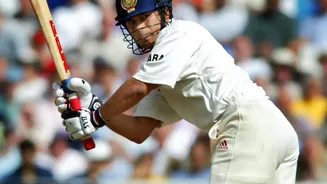
For a player who seemed to carry the weight of a billion expectations with his bat, the captain's armband proved to be a heavier burden. Tendulkar had two separate stints as India's captain, in 1996 and 1999, and by most accounts, this chapter is considered
a blemish on an otherwise glittering career. The statistics paint a stark picture: under his leadership, India won only four of 25 Test matches and 23 of 73 One-Day Internationals. But the numbers don't tell the whole story. He led during a tough transitional period for Indian cricket, often with a team heavily dependent on his own batting prowess. In his autobiography, Tendulkar revealed how the defeats deeply affected him personally, making it hard to switch off from the pressures of the job. He felt the role hampered his own game and, at times, he didn't receive the full support of selectors in building the team he wanted. It was a classic case of the star player not necessarily making the best leader, a reminder that genius in one domain doesn't always translate to another.
The Man with the Golden Arm
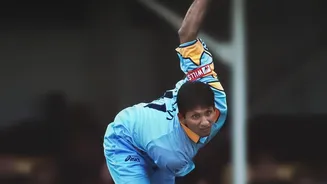
While his bat did most of the talking, Tendulkar’s bowling was a severely underrated part of his arsenal. He was far more than a part-timer; he was a partnership-breaker, a crafty bowler who could deliver off-spin, leg-spin, and medium-pace seamers with surprising effect. With 154 ODI wickets and 46 in Tests, he has a better bowling record than many might recall. In fact, he has more five-wicket hauls in ODIs (two) than some legendary bowlers. Perhaps the most iconic display of his bowling nerve came during the 1993 Hero Cup semi-final against South Africa. With the opposition needing just six runs to win from the final over, captain Mohammad Azharuddin took a massive gamble and threw the ball to a 20-year-old Tendulkar, who hadn't bowled a single ball in the match until that point. What followed was a masterclass in pressure bowling, as he conceded only three runs, securing a famous victory for India at a deafening Eden Gardens.
The Battle That Nearly Broke Him
For a man who seemed invincible, a career-threatening injury brought him to the brink. In 2004, Tendulkar was diagnosed with tennis elbow, a condition caused by repetitive stress that made even holding a bat excruciatingly painful. This wasn't just a minor setback; it was a period of immense physical and mental anguish that forced him to question his future in the sport. He revealed that after surgery in 2005, he was so weak he couldn't even lift his son's plastic bat. The pain and the long layoff led to a dip in form, prompting critics to write him off. However, this period of struggle also showcased his incredible resilience. Through a rigorous and painful rehabilitation process, Tendulkar fought his way back. Not only did he return to the field, but he also entered one of the most prolific phases of his career, a testament to his determination and deep love for the game. This comeback story is a crucial, humanizing chapter in the legend of the 'God of Cricket'.
The Quiet Mentor and Evolving Player
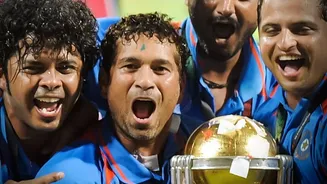
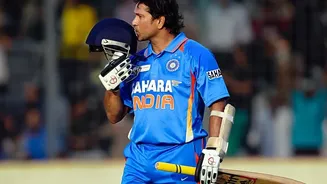
As his career progressed, Tendulkar’s role evolved. He wasn't just the team's primary run-scorer; he became a guiding figure in the dressing room. Having debuted as a teenager surrounded by senior players, he understood the importance of mentorship. Younger players who came into the team often spoke of his approachable nature and his willingness to share insights on technique and temperament. His leadership style may not have been suited to the captaincy, but his influence as a senior statesman was undeniable. Furthermore, the Tendulkar of the late 2000s was a different batsman from the explosive prodigy of the 1990s. After his battle with injuries, he adapted his game, relying more on timing, placement, and intellect rather than pure aggression. This evolution allowed him to prolong his career and achieve milestones many thought were impossible, including his long-awaited World Cup victory in 2011 and his 100th international century.