



Hyderabad's Crucial Role in Space Nutrition
Scientists at the Hyderabad-based ICMR-National Institute of Nutrition (NIN) are at the forefront of developing specialized food for India's astronauts. Their work is a crucial component of the Gaganyaan programme, which aims to send an Indian crew into
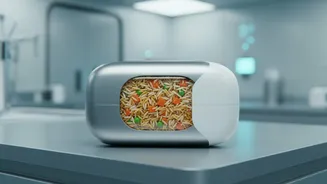
orbit. While the Mysuru-based Defence Food Research Laboratory (DFRL) has long been the primary hub for creating military and space-ready meals, NIN in Hyderabad is bringing its deep expertise in nutritional science to the mission. This collaboration involves designing foods that are not only culturally familiar but also meet the intense physiological demands of space travel. Recently, Hyderabad-based firm Ananth Technologies also revealed it is developing a smart tiffin box with sensors to carry the food, further cementing the city's contribution to this national endeavor.
The Science of a Zero-Gravity Meal
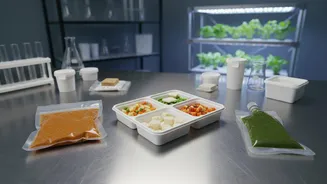
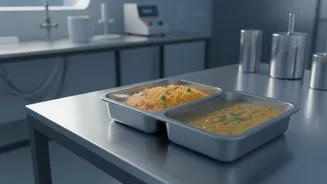
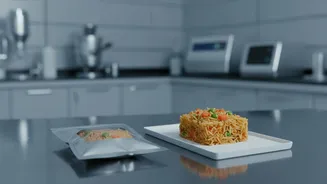
Creating food for space is far more complex than just packing a lunch. Every meal must be lightweight, compact, and have a long shelf life without refrigeration. The food must also be safe to eat in microgravity, which means no crumbs. Bread is out because floating crumbs could clog air vents or get into astronauts' eyes. Instead, foods are often prepared in semi-solid, dehydrated, or ready-to-eat forms that can be reconstituted with a little water. Scientists at NIN and DFRL are using advanced techniques like freeze-drying and retort processing to ensure the food is sterile, stable, and retains as much of its original taste and texture as possible.
A Taste of Home, Hundreds of Kilometres Up
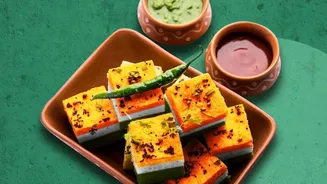
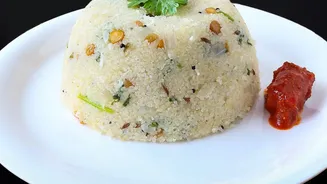
The proposed menu for Gaganyaan astronauts reads like a comforting Indian meal plan. It includes familiar dishes like khichdi, idli with sambar, vegetable biryani, chicken korma, mutton rolls, and even moong dal halwa. The inclusion of these dishes is not just about nutrition; it's about psychology. Providing familiar, culturally relevant food is considered essential for the well-being of astronauts on long and stressful missions, offering a taste of home to combat feelings of isolation. The meals are designed to be mildly spiced, but astronauts will have the option of adding extra spice from sachets.
Overcoming the Challenge of 'Space Blandness'
One of the peculiar challenges of eating in space is that food often tastes bland. In microgravity, bodily fluids shift upwards, leading to nasal congestion similar to having a cold on Earth. This stuffiness dulls the sense of smell, which is responsible for about 80% of our perception of flavor. To combat this, space food often needs to be more intensely flavored than its terrestrial counterpart. The nutritional profile is also meticulously planned. The meals developed by NIN will be rich in micronutrients, antioxidants, and Vitamin D, with controlled levels of sodium and fibre to support gut health and counteract the negative effects of space travel on the body, such as loss of bone density.
From the Lab to the Launchpad
Before any food makes it onto the Gaganyaan menu, it undergoes rigorous testing. This includes simulations that mimic the conditions of space. In one study, participants remain in a head-down tilted position for days to simulate microgravity's effects, performing all daily activities, including eating, to test the practicality of the food formulations. The process is incredibly strict; astronaut Shubhanshu Shukla recently noted that of an extensive Indian menu proposed for a mission to the ISS, only three dishes—two types of halwa and amras—passed the stringent and time-consuming qualification process. These lessons are proving invaluable as scientists in Hyderabad and Mysuru refine the menu for India's own historic mission, ensuring the nation's first astronauts are well-fed and ready for their journey.