




Understanding Desk-Driven Discomfort
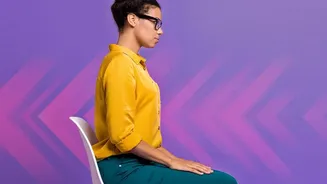
Modern work often forces us into prolonged static positions. When you sit for hours, your shoulders tend to round forward, your head drifts in front of your body, and your spine forms a C-shaped curve. This posture doesn't just look like slouching; it's
a pattern of muscle imbalance. The muscles in your chest and hip flexors tighten, while the muscles in your upper back become overstretched and weak. This can contribute to persistent neck pain, lower back issues, and general stiffness. Chair yoga is a powerful tool to interrupt this cycle by reintroducing gentle movement, improving circulation, and activating the muscles that support better posture.
Seated Cat-Cow for a Flexible Spine
One of the best ways to combat the rigidity of sitting is by mobilizing the spine. Sit tall on the edge of your chair with your feet flat on the floor and your hands on your knees. On an inhale, gently arch your back, lift your chest, and look slightly upward, drawing your shoulder blades together; this is the 'Cow' position. As you exhale, round your spine, tuck your chin to your chest, and pull your belly button inward, feeling a stretch between your shoulder blades. This is the 'Cat' position. Flow between these two poses for 8-10 breaths, matching your movement to your breath to gently awaken and massage the spine.
Neck Rolls to Release Tension
Neck tension is a hallmark of desk work. To relieve it, sit up straight and gently drop your right ear toward your right shoulder, holding for 15-30 seconds. Be careful not to force the stretch; simply let the weight of your head do the work. Slowly roll your chin down to your chest, pause, and then continue to your left side, bringing your left ear toward your left shoulder. Repeat this gentle arc several times, breathing deeply to help release the tight muscles along the sides and back of your neck. Avoid rolling your head all the way back, as this can compress the cervical spine.
Seated Spinal Twist for Rotational Health
Twists are excellent for improving spinal mobility and relieving lower back tightness. Sit tall and place your right hand on the outside of your left knee. Place your left hand on the back or arm of the chair for support. As you inhale, lengthen your spine. As you exhale, gently twist your torso to the left, using your hands as light leverage. Look over your left shoulder if it's comfortable for your neck. Hold for three to five deep breaths, feeling the stretch through your spine. Slowly unwind and repeat on the other side.
Eagle Arms to Open the Shoulders
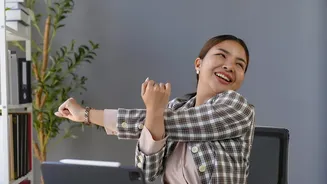
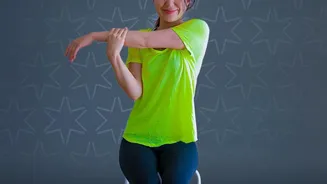
To counteract slumped shoulders, try the Eagle Arms stretch. Extend your arms straight out in front of you. Cross your right arm over your left, then bend your elbows. You can either press the backs of your hands together or wrap your right hand around to press your palms together. Lift your elbows to shoulder height while gently moving your hands away from your face. You should feel a deep stretch across your upper back and between your shoulder blades. Hold for 15-30 seconds, breathing into the space you're creating, then unwind and repeat with the left arm on top.
Creating a Sustainable Habit
The key to seeing lasting benefits from chair yoga is consistency. You don't need to block out an hour; even five minutes can make a difference. Try setting a reminder to stretch every hour or two. You could do one stretch every time you finish a task or get off a call. By integrating these small, mindful movements into your workday, you actively combat the physical stress of sitting. This not only improves your physical well-being but can also boost mental clarity and reduce stress, helping you feel more focused and productive.