




Freight Volumes on the Rise
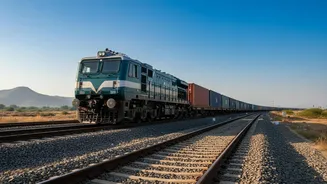
Indian Railways has been posting impressive numbers. In July 2026, freight loading saw a 9% year-on-year growth, with the national transporter moving 141.3 million tonnes of goods. This surge was driven by strong demand across key sectors, with commodities
like iron ore, coal, food grains, and fertilizers showing double-digit growth. This increased activity also led to a significant revenue boost, with freight earnings growing by 8% in July compared to the previous year, adding over ₹1,100 crore. On the surface, this looks like a straightforward success story: more goods moved means more revenue and a healthier economy. However, this growth puts immense pressure on the existing infrastructure.
A Network Stretched to Its Limits
The core of the issue is capacity. For years, India's rail network has been operating under severe strain. According to railway officials, many major routes are running at 150% to 180% of their designed capacity. This intense pressure comes from the mixed-traffic nature of the network, where thousands of passenger trains share tracks with slower, heavier freight trains. Freight accounts for about two-thirds of the Railways' revenue, making it financially critical, yet it often takes a backseat to passenger services, leading to delays and lower average speeds for goods trains. This congestion makes it difficult to add more freight services without impacting passenger schedules, creating a logistical bottleneck that hampers efficiency.
The Passenger vs. Freight Conundrum
The fundamental conflict on the rails is between passenger and freight needs. While passenger services are essential for mobility and social inclusivity, they are often heavily subsidized and a source of financial strain. Freight operations, on the other hand, are the financial engine of the railways. The government has an ambitious goal to increase the railways' share of national freight from the current 27% to over 40%. To achieve this, trains need to move faster and more reliably. Congested tracks are the single biggest obstacle. When demand from sectors like power (for coal) and agriculture (for fertilizers) surges, the network's limitations become glaringly obvious.
Dedicated Freight Corridors: The Game Changer?
The long-term solution is the creation of Dedicated Freight Corridors (DFCs)—separate, high-capacity railway lines built exclusively for transporting goods. The Western DFC and Eastern DFC are now largely operational, and the impact is already being seen. DFCCIL, the entity managing these corridors, reported its highest-ever monthly performance in July 2026, indicating a significant increase in efficiency and volume. These corridors allow for faster, heavier, and longer trains, decongesting the conventional network and freeing up capacity for more passenger trains. The government is already planning further expansion, including a new East-West DFC, signaling a clear strategy to segregate freight and passenger traffic.
Pricing as a Capacity Management Tool
This brings us back to freight pricing. While no single major freight rate increase has been announced in the immediate past, the pricing structure of Indian Railways is becoming increasingly dynamic. Any future price adjustments are not just about revenue; they are a tool to manage demand on a congested network. By adjusting rates, the Railways can influence traffic flow and incentivize off-peak usage. For businesses, this means the cost of logistics is becoming more variable. As seen across the logistics sector in late 2025 and early 2026, inflationary pressures and the need for infrastructure investment are leading to higher prices. Increased rail freight costs, whenever they occur, will inevitably ripple through the economy, affecting everything from raw material costs for manufacturing to the final price of consumer goods.