
The Core Allegation
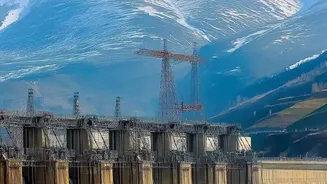
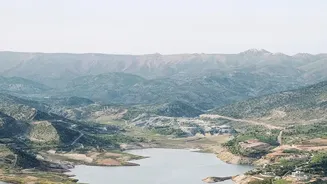
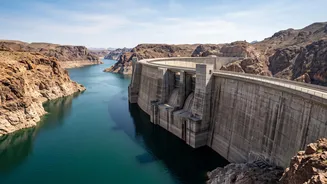
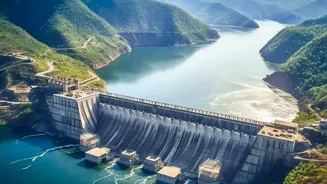
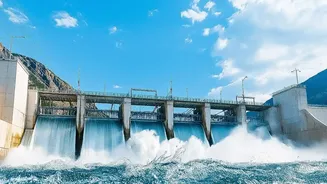
The report highlights a puzzling overlap between the locations of Iran's dams and its military sites. Water security experts noted that a map of Iran's 533 dams looked remarkably similar to a map of suspected military sites targeted in recent airstrikes.
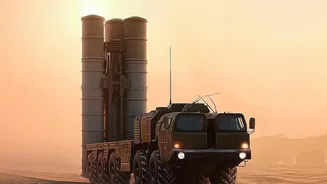
This has led to the theory that some of Iran's massive water infrastructure projects, which have often been criticized as environmentally and economically unsound, were built to provide a steady, independent supply of power and water to its so-called 'missile cities'. These sprawling underground complexes are designed to produce, store, and launch missiles and drones, and burying them deep under mountains is meant to protect them from surveillance and attack. An independent power and water source would give these strategic sites 'operational continuity', making them less dependent on the national grid.
A Contentious Hypothesis
It is important to note that the connection is speculative and not definitively proven. The New York Times itself stressed this, framing it as a hypothesis that could solve the riddle of why so many dams were built for no clear civilian reason. However, the suggestion has drawn sharp criticism. Some analysts argue that correlation does not equal causation; dams and military bases are both often built in mountainous areas for geographical reasons. Others point out that fewer than 50 of Iran's 500+ large dams actually have turbines installed to generate electricity, questioning the idea they were built as power sources for military bases. Critics, including some experts quoted in the original story, have warned that this kind of reporting could be used to justify future attacks on vital civilian infrastructure.
Iran's Official Reaction
Iranian officials have reacted angrily to the report, calling it a 'malicious campaign' to create a pretext for attacking the nation's infrastructure. Iran's Foreign Ministry spokesperson flatly rejected the allegations as baseless propaganda. The speaker of Iran's parliament, Mohammad Bagher Ghalibaf, took to social media to warn that if the proximity of a dam to a missile site makes it 'dual-use', then Iran would apply the same logic. He stated, 'Any dam, port, or power plant near a US or Israeli base is dual-use'. This response highlights the serious implications of blurring the lines between civilian and military targets and raises concerns about a potential expansion of conflict to critical infrastructure.
A Dual-Edged Sword
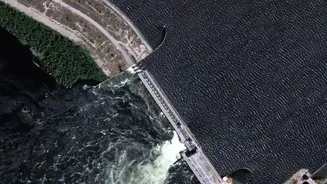
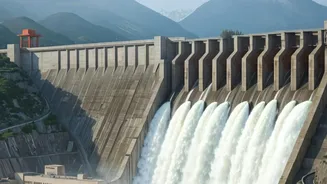
Regardless of the original intent, placing critical military assets near major dams creates a perilous situation. Dams like Karun-3 and Dez are massive structures responsible for hydroelectric power, flood control, and irrigation for millions. An attack on a nearby missile facility could inadvertently damage a dam, leading to a catastrophic failure. The destruction of a major dam would trigger immense humanitarian and environmental disasters, including mass flooding, displacement of populations, and the loss of power and agriculture. This creates a strategic dilemma: the dams could be seen as providing a 'human shield' for the missile bases, making any potential adversary hesitate to strike for fear of causing a civilian catastrophe. This use of civilian sites for military cover appears to be part of a documented strategy by Iran's Revolutionary Guards.
A History of Suspicion
The report also revisits the 2018 arrests of several Iranian environmental activists on charges of espionage. The investigation raises the possibility that these conservationists, during their fieldwork in nature preserves, may have unknowingly come close to classified military sites located nearby. This could explain the extreme sensitivity of authorities to their presence in these areas. The suggestion that their arrests were linked to accidental discovery, rather than actual spying, adds another troubling layer to the story, potentially lending credibility to the very security suspicions used against them.