


What Did NASA's Probe Actually Find?
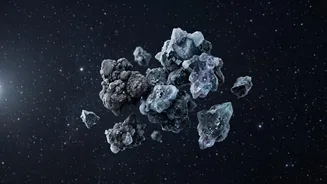
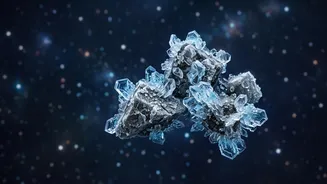
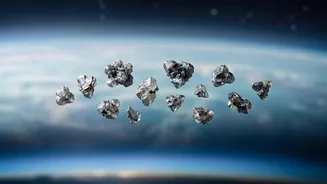
NASA's New Horizons spacecraft, famous for its 2015 flyby of Pluto, has detected surprisingly high levels of dust in the Kuiper Belt. This isn't just any dust; it's the frozen, microscopic debris left over from collisions between the icy bodies that populate
this distant region. According to scientific models, the amount of dust should have started decreasing as New Horizons travelled further from the Sun. Instead, between 45 and 55 times the distance from the Earth to the Sun, the spacecraft's dust counter found more particles than anticipated. This unexpected reading suggests that our map of the solar system might need a significant update. The findings, published in 'The Astrophysical Journal Letters', point to one of two possibilities: either the Kuiper Belt is far more extensive than previously believed, or there could be a second, undiscovered belt even farther out.
A Quick Tour of the Kuiper Belt
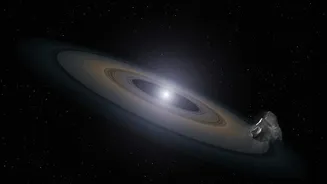
To understand why this is a big deal, it helps to know what the Kuiper Belt is. Think of it as a massive, donut-shaped zone of icy objects circling the Sun beyond the orbit of Neptune. It’s similar to the asteroid belt between Mars and Jupiter, but it is vastly larger—about 20 times as wide and up to 200 times more massive. This region is home to countless 'planetesimals', which are ancient remnants from the solar system's formation that never quite came together to form planets. Its most famous resident is the dwarf planet Pluto, but it also contains other dwarf planets like Haumea and Makemake, along with hundreds of thousands of icy bodies larger than 100 kilometres across. Essentially, it's a deep-freeze repository of the solar system's primordial building blocks.
How Do You Measure Dust Billions of Kilometres Away?
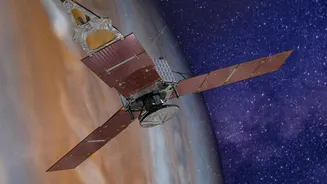
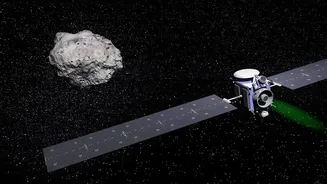
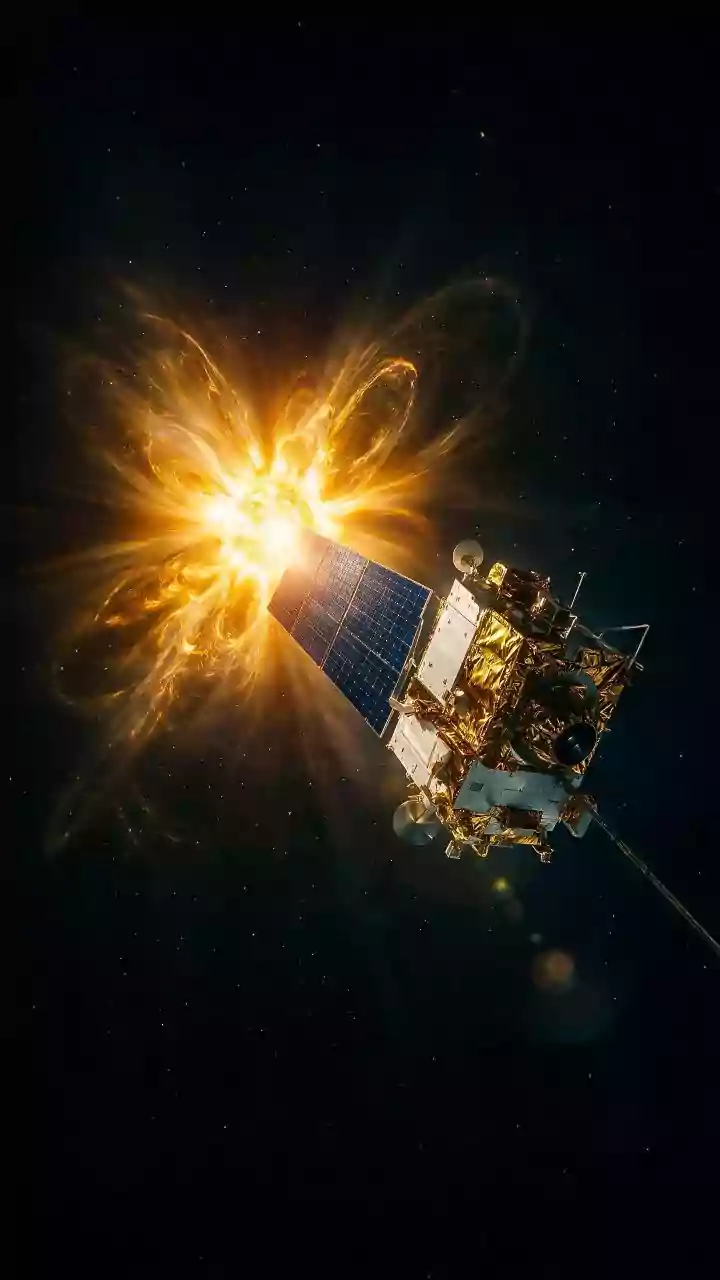
Detecting individual dust grains so far from Earth is a remarkable feat of engineering. New Horizons is equipped with an instrument called the Venetia Burney Student Dust Counter (SDC). Uniquely, it was designed and built by students at the University of Colorado Boulder. The SDC is essentially a set of detectors mounted on the outside of the spacecraft. As New Horizons speeds through space at over 50,000 kilometres per hour, it constantly runs into microscopic dust particles. When a grain of dust hits one of the detector panels, it creates a tiny electrical signal. By measuring these impacts, scientists can determine the size and quantity of the dust particles along the spacecraft's path. As the only spacecraft ever to operate and collect data directly within the Kuiper Belt, New Horizons provides a unique, on-the-ground perspective that telescopes on Earth cannot match.
Why This Ancient Dust Matters
This isn't just a matter of cosmic housekeeping. The dust in the Kuiper Belt is generated when larger Kuiper Belt Objects (KBOs) collide with each other, or when they are peppered by even smaller particles from outside the solar system. Because these KBOs are relics from over 4.5 billion years ago, the dust they produce is like a fossil record. Studying its distribution helps scientists understand the composition and structure of this ancient region. The higher-than-expected dust density suggests there are more objects out there colliding and creating debris than our models accounted for. This discovery is consistent with recent telescopic observations that have also spotted KBOs beyond the belt's previously assumed boundary of 50 astronomical units (50 times the Earth-Sun distance), hinting the belt may actually extend to 80 AU or more.