





The Hidden Cost of 'Free' AI
When students use mainstream, cloud-based AI tools, their conversations aren't private. Every prompt—whether it's a draft of a personal essay, a sensitive research question, or a block of experimental code—is sent to a server owned by a large tech company.
This data is frequently stored and used to train future versions of the AI model, effectively making student work part of the product. This raises significant privacy concerns. For one, it creates a detailed, permanent profile of a student's academic journey and intellectual curiosities. Secondly, this data is vulnerable to breaches and can be shared with third-party vendors, a risk many are unwilling to take with their personal and academic information. Once the information is absorbed by the model, it can be nearly impossible to delete.
A New Generation of Open AI
In response, a growing number of tech-savvy students are turning to an alternative: open-weights AI models. Unlike proprietary or 'closed' models like those from major tech giants, open-weights models have their parameters—the core files that determine the AI's behavior—publicly available for anyone to download. Examples include models from the Llama, Mistral, and Gemma families. The key difference is control. Instead of sending data to an external server, a user can run the model entirely on their own hardware. This is analogous to the difference between using a web-based word processor versus running a software application installed directly on your computer. The data never leaves the user's device, offering complete privacy and data sovereignty.
The Laptop as a Personal AI Hub
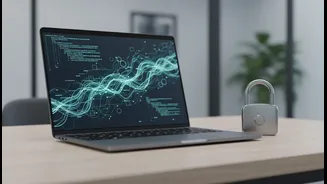
Just a few years ago, running a powerful AI model required a server farm. Today, it can be done on a modern laptop. This shift is possible due to two key developments: the release of highly capable but smaller models, and the increasing power of consumer-grade hardware, particularly laptops with dedicated GPUs or efficient processors like Apple's M-series chips. For students, this means their laptop can become a self-contained AI powerhouse. They can get help with homework, analyze research data, and write code without their academic work ever touching the internet. Tools like Ollama and LM Studio have made the process of downloading and running these models surprisingly straightforward, often taking just a few minutes to set up.
More Control, New Challenges
The move to local AI is not without its trade-offs. For starters, running these models requires a certain level of technical comfort. While frontier cloud models from major providers often still hold an edge in raw reasoning power for the most complex tasks, open-weight models are now incredibly capable for a wide range of academic and creative work. Performance is another consideration. While local models can be fast, they are limited by the laptop's hardware, and sustained use can drain the battery and generate heat. However, for a generation of students who are increasingly aware of their digital footprint, these challenges are often a small price to pay for the ultimate benefit: complete control and privacy over their own data. This trend signifies a broader shift toward digital autonomy, where users are actively seeking tools that serve them, not just the companies that create them.