
Putting Safety First: The Latest Tests
Before astronauts can launch, ISRO must ensure their journey is safe from start to finish. Recent tests in July 2026 focused on three crucial moments of the mission that are beyond the astronauts' control. The first was the Crew Module Uprighting System
(CMUS), which uses inflatable bags to ensure the capsule floats upright after splashing down in the ocean, even in rough seas. The second test validated the clean separation of the umbilical cord connecting the Crew Module, where astronauts sit, to the Service Module, which supplies power and propulsion, a key step before re-entry. Finally, a third test confirmed the capsule's structure could withstand the force of the apex cover being jettisoned to deploy the parachutes. These successful trials prove the reliability of systems designed to protect the crew during the most dangerous phases of their return to Earth.
Why These Mockups Matter
In spaceflight, there are no small details. Each of these tests simulates a worst-case scenario to ensure the hardware can handle extreme stress. For instance, the apex cover test applied loads about 1.75 times higher than what is expected during an actual flight. By proving these systems work flawlessly on the ground in simulated conditions, ISRO gains the confidence that the technology is 'human-rated'—reliable enough to carry people. This meticulous, phase-by-phase validation is fundamental to the Gaganyaan programme's philosophy, where astronaut safety is the absolute highest priority. It's this unseen, rigorous testing that forms the backbone of the entire human spaceflight effort, moving the mission from the drawing board to the launchpad.
Building a Complete Safety Net
These recent validations are part of a much larger safety and qualification campaign. ISRO has already conducted successful Integrated Air Drop Tests (IADT) to test the complex parachute sequence that slows the capsule for a safe landing. Another major success was the Test Vehicle Abort Mission (TV-D1), which proved the Crew Escape System could safely pull the astronauts away from the rocket in case of a launch emergency. In addition to the hardware, the entire mission infrastructure is being upgraded. This includes a new Crew Access Arm at the launch pad and emergency escape systems, ensuring safety protocols are in place for every step of the process. Even the astronaut training is mission-specific, preparing the selected crew for the unique conditions of the Gaganyaan flight.
The Road Ahead: Robots First, Humans Next
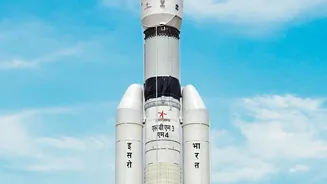
With these ground tests complete, the next major milestone is the first of several uncrewed test flights. The first mission, G1, is expected in late 2026. This flight will not have a human crew but will instead carry 'Vyommitra', a sophisticated half-humanoid robot developed by ISRO. Vyommitra will simulate human functions, monitoring life support systems, environmental controls, and overall cabin conditions to provide crucial data on how the spacecraft performs in the harsh environment of space. Only after a series of successful uncrewed flights that validate every system—from launch to splashdown—will ISRO proceed with the first historic crewed mission, currently targeted for 2027.