


The Land Where Clouds Don't Go
Every year, from June to September, the monsoon sweeps across the Indian subcontinent, bringing life-giving rain but also putting a temporary halt to many outdoor activities. Treks are washed out, mountain passes become treacherous, and the constant downpour
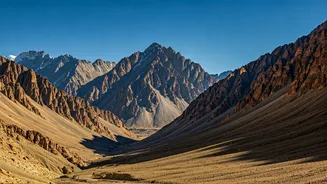
can dampen even the most adventurous spirit. Yet, tucked away behind the formidable peaks of the Great Himalayas lies Ladakh, a region that seems to operate on its own weather schedule. While the rest of India is reaching for umbrellas, Ladakh is basking in bright, sunny days, making it the de facto capital for monsoon-season adventure.
The Science of a Dry Paradise
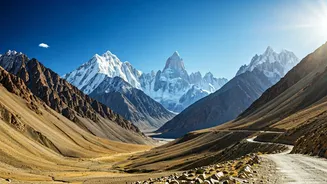
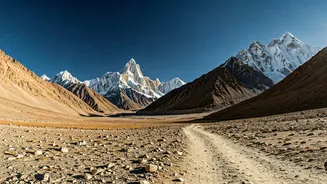
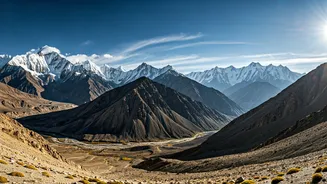
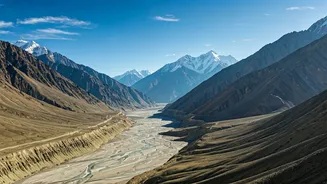
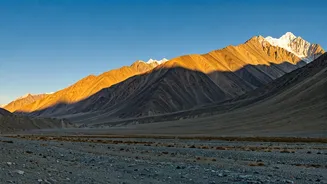
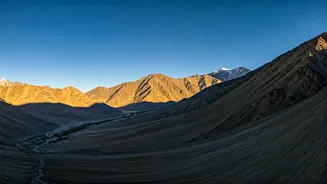
The secret to Ladakh’s sunny disposition is a simple geographical phenomenon: the rain shadow effect. The towering Himalayan and Karakoram mountain ranges act as a colossal barrier. As moisture-laden monsoon clouds travel north from the Indian Ocean, they are forced to rise by these mountains. In doing so, they cool, condense, and release all their precipitation on the southern, windward slopes. By the time the clouds cross over the peaks to the other side—where Ladakh is located—they have exhausted their moisture. The result is a high-altitude cold desert, characterized by an arid landscape, minimal rainfall, and stark, breathtaking beauty. This makes the Indian monsoon months the absolute best time to visit, with clear skies and comfortable daytime temperatures ideal for exploring.
An Adventure Playground Awaits
With the weather on your side, Ladakh transforms into a vast playground for backpackers and thrill-seekers. Trekking is the primary draw. Classic routes like the Markha Valley trek, often called the 'tea house trek' for its welcoming homestays, offer a stunning journey through remote villages, deep gorges, and past ancient monasteries. For those seeking a greater challenge, the trails around Stok and the high passes of the Zanskar region provide unparalleled views and a true test of endurance. Beyond hiking, the winding mountain roads are a paradise for motorcyclists and cyclists. The journey to Khardung La, one of the world's highest motorable passes, is a rite of passage. Whitewater rafting on the Zanskar and Indus rivers offers another adrenaline-pumping perspective of the dramatic canyons.
Beyond the Thrills: Culture and Acclimatisation
Adventure in Ladakh is invariably intertwined with its rich Tibetan-Buddhist culture. The trails are dotted with gompas (monasteries) perched precariously on cliffsides, such as Thiksey, Hemis, and Diskit. These cultural hubs provide a serene counterpoint to the physical exertion of trekking or biking. However, it's crucial to respect the altitude. Leh, the main town, sits at over 11,500 feet. The biggest mistake a traveller can make is rushing their itinerary. Plan to spend at least two to three days acclimatising in Leh before undertaking any strenuous activity. Drink plenty of water, avoid alcohol initially, and listen to your body. 'Dry' does not mean warm at night, so pack layers—thermal wear, a fleece jacket, and a windbreaker are essential, along with robust sun protection for the intense high-altitude sun.