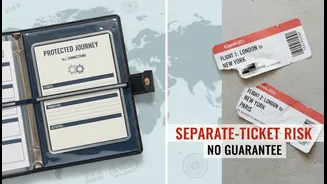









What is a Self-Transfer?
A self-transfer, sometimes called a 'hacker fare', is when you book separate tickets for each leg of your journey instead of a single, continuous itinerary. For example, instead of booking one ticket from Delhi to Toronto with a layover in Amsterdam,
you would book one flight from Delhi to Amsterdam and a second, separate flight from Amsterdam to Toronto. Unlike traditional connecting flights where the airline manages your connection and transfers your luggage, a self-transfer puts you in complete control. This means you are responsible for everything in between your flights.
The Upside: Significant Savings
The main appeal of self-transfer fares is the potential for a much lower overall price. By mixing and matching airlines, especially by combining major international carriers with budget airlines, you can unlock routes and prices that aren't typically offered in a single booking. This is because you are piecing together the most affordable individual flights, rather than relying on airline partnership agreements which often come at a premium. For price-conscious travellers, building your own itinerary can slash the cost of a long-haul journey, leaving more money for the destination itself.
The Downside: Navigating the Risks
This financial reward comes with significant responsibility. The biggest risk with a self-transfer is a missed connection. If your first flight is delayed or cancelled and you miss your second flight, the second airline has no obligation to help you. You would be considered a 'no-show' and would likely have to purchase a new, last-minute ticket at your own expense. This single factor is the most crucial trade-off: in exchange for a lower upfront cost, you give up the airline's protection that comes with a standard connecting ticket.
The Baggage and Bureaucracy Burden
Another major consideration is luggage. With self-transfers, your bags will not be automatically checked through to your final destination. You must collect your checked luggage from the baggage carousel, go through immigration and customs to officially enter the country, check in for your next flight, drop your bags again, and go back through security. This process can be time-consuming and stressful. It also means you must have the correct visa for the transit country, as you will be officially entering it, even if just for a few hours.
A Checklist for Smart Self-Transfers
Despite the risks, self-transfers can be a fantastic option if you are prepared. The key is flexibility. Only attempt a self-transfer if your schedule is not tight. First, build a long layover into your itinerary; experts recommend a buffer of at least three to six hours, or even more for international connections. Second, whenever possible, travel with only a carry-on bag. This eliminates the entire process of reclaiming and re-checking luggage, saving immense time and stress. Third, research your connection airport beforehand to understand the layout and typical transfer times. Finally, check visa requirements for your transit country meticulously. Some booking sites offer protection plans for an extra fee, which may be worth considering for peace of mind.