

As Jaipur prepares to celebrate its 300th anniversary in 2027, its architectural brilliance takes centre stage. This isn't just a city of palaces; it's a UNESCO World Heritage site built on a visionary blueprint, making it a must-visit for any traveller.
A City Born From a Blueprint
Jaipur’s story begins in 1727, when Maharaja Sawai Jai Singh II decided to move his capital from the cramped, hilly terrain of Amer. He envisioned a new city on the plains, one designed for trade, growth, and cosmic harmony. Under the guidance of architect Vidyadhar Bhattacharya, Jaipur became one of India’s first planned cities, conceived in a single phase. Its design is a masterclass in ancient Indian architectural science, or 'Vastu Shastra'. The city was laid out on a grid of nine squares, representing the nine planets of Vedic astrology. Broad, 111-foot-wide streets intersect at perfect right angles, with main roads running east to west to align with the sun's path. This grid-iron plan, an interchange of Hindu, Mughal, and Western ideas, was revolutionary for its time and remains remarkably intact today.
The Enduring Allure of the 'Pink City'
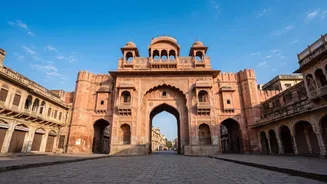
While the city's planning was deliberate, its famous colour was a gesture of hospitality. In 1876, to welcome Albert Edward, the Prince of Wales, Maharaja Sawai Ram Singh II ordered the city to be painted a terracotta pink, a colour traditionally associated with welcoming guests. The Prince reportedly nicknamed it the 'Pink City', and the name has defined its identity ever since. The Queen of Jaipur was so taken with the new look that the Maharaja passed a law in 1877 making it mandatory for buildings in the old city to be painted 'Jaipur Pink'. This unified facade not only gives the city its unique, romantic hue but also highlights the uniformity and order of its original architectural vision.
Monuments of Genius and Grandeur
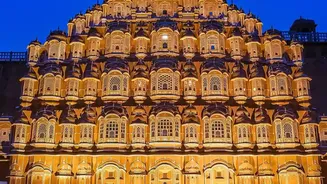
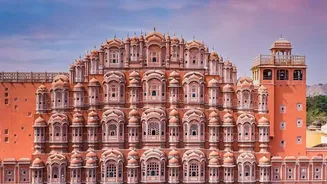
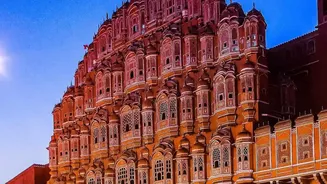
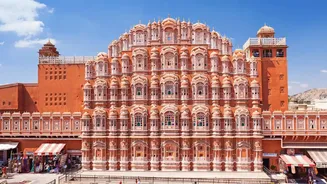
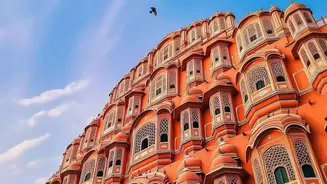
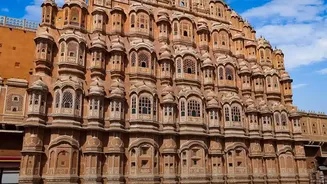
The Hawa Mahal, or 'Palace of Winds', is perhaps Jaipur’s most iconic structure. Built in 1799 from pink sandstone, its five-storey facade features 953 intricately latticed windows, designed so that the royal women could observe street festivities without being seen. A short walk away is the City Palace, a sprawling complex of courtyards, gardens, and buildings that has been the home of Jaipur's royal family since 1732. Its architecture is a seamless blend of Rajput, Mughal, and European styles. Nearby, the Jantar Mantar observatory, another UNESCO World Heritage site, stands as a testament to Sawai Jai Singh II’s passion for astronomy. It contains 14 giant astronomical instruments, including the world's largest stone sundial, which is accurate to within two seconds.
Forts, Havelis, and Hidden Gems
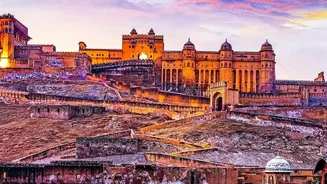
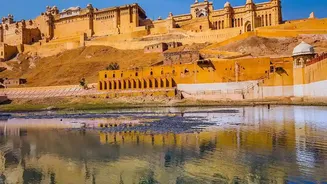
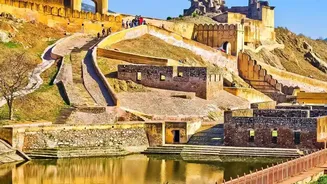
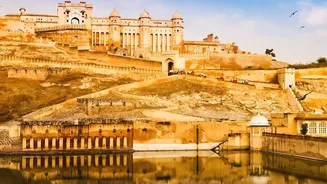
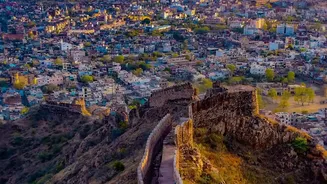
Guarding the city from the surrounding Aravalli Hills are the formidable trio of forts: Amer, Jaigarh, and Nahargarh. Amer Fort, a stunning fusion of Hindu and Mughal styles, is an opulent palace complex of red sandstone and marble. Jaigarh Fort was built to protect Amer and houses the world's largest cannon on wheels. But to truly understand Jaipur's architectural soul, one must explore its living heritage. The walled city is filled with hundreds of 'havelis'—traditional mansions built by nobles and merchants, featuring internal courtyards, ornate balconies, and detailed frescoes. Beyond the grand palaces, seek out stepwells like Panna Meena Ka Kund, an architectural marvel of symmetrical stairs designed for water harvesting. These lesser-known sites offer a quieter, more intimate glimpse into the city's design philosophy.
Planning Your Architectural Pilgrimage
With the 300th anniversary approaching in 2027,
the Rajasthan government is planning year--long celebrations to mark the milestone.
Recently,
National Geographic even named Jaipur in its 'Best of the World 2027'
list,
citing the upcoming anniversary.
The best time to visit is between November and March when the weather is ideal for exploring.
To truly appreciate the city's layout,
consider a guided heritage walk through the old city's bazaars and alleys.
Explore Johari Bazaar for its jewellery and Tripolia Bazaar for its lac bangles,
all while admiring the uniform shop fronts envisioned centuries ago.
For a deeper understanding of the monuments,
hiring a knowledgeable local guide can reveal hidden stories and architectural details,
like the 'Magic Flower'
carving in Amer Fort,
that most visitors miss.