





The Billion-Dollar Prediction
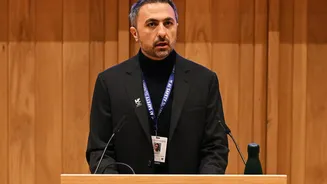
During a roadshow for his company's IPO, Dario Amodei, the CEO of AI firm Anthropic, made a bold declaration: 'Cancer, Alzheimer's, heart disease, mental illness — these will be relics of the past in, I think, less than a decade'. He argued that AI could
compress what would have been 50 to 100 years of medical progress into just five to ten years, ushering in an 'age of miracles'. This isn't just a fleeting comment; Amodei's company is actively investing in this vision, acquiring a drug development startup and partnering with pharmaceutical giants like Bristol Myers Squibb to accelerate research using its AI models. The prediction, however, has been met with significant pushback from medical professionals and biotech executives, who call the timeline 'impossible' and question whether Amodei is misleading the public to generate hype for his company's public offering.
How AI Is Already Changing the Game
Beyond the futuristic claims, AI is already a powerful tool in oncology today. For years, machine learning models have been enhancing cancer care, primarily in diagnostics and imaging. AI-powered software helps radiologists detect breast cancers on mammograms with greater accuracy and assists pathologists in analyzing tissue samples. The US FDA has already approved numerous AI devices for use in oncology, such as GI Genius, which aids in finding potentially cancerous lesions during a colonoscopy. But its role is expanding rapidly. AI is now being used to design better and more personalized treatments. For example, it can analyze the vast genetic data of a patient's tumor to predict which therapies will be most effective, a cornerstone of precision medicine.
The Engine of Discovery: AI in Research
The true revolution, and the basis for Amodei's optimism, lies in drug discovery. Traditionally, finding a new drug is a slow, expensive process of trial and error, with a success rate of less than 10%. AI promises to change this fundamentally. Advanced systems can sift through immense biological datasets to identify new potential drug targets that were previously invisible to human researchers. A prime example is AlphaFold, a groundbreaking AI from Google DeepMind that can predict the 3D structure of proteins. Since a protein's shape determines its function, this technology allows scientists to understand diseases better and design drugs to interact with specific targets much faster. Anthropic's own collaborations have shown similar promise, redesigning parts of a cell therapy to make it more effective at killing tumour cells in lab tests.
Hope Meets Reality: The Hurdles Ahead
While AI can dramatically speed up the initial discovery phase, it can't sidestep the biggest bottleneck in medicine: human biology and regulation. Identifying a promising drug candidate is only the first step. That candidate must then go through years of rigorous clinical trials to prove it is safe and effective in people. AI cannot shorten the time needed to observe the longterm effects and potential side effects of a new treatment. Furthermore, there are significant data challenges. AI models are only as good as the data they are trained on, and highquality medical data is often fragmented, inconsistent, and siloed within different institutions, making it difficult to use effectively. Bias in the data can also lead to AI tools that work well for some populations but not others, raising serious ethical concerns.
A Decade of Miracles or a Decade of Progress?
So, will cancer be a 'relic of the past' by 2036? The consensus among medical experts is that this is highly unlikely. Cancer is not a single disease but hundreds of complex diseases, each requiring a different approach. However, Amodei's audacious prediction isn't entirely without merit. It highlights the exponential pace of technological advancement and its potential to transform medicine. The next decade is unlikely to bring a single 'cure for cancer', but it will almost certainly bring an unprecedented wave of progress. We can expect to see AIdriven breakthroughs in early detection through liquid biopsies, more effective personalized vaccines, and a pipeline of new, precisely targeted drugs. While the finish line Amodei points to may be further away than he suggests, AI is undoubtedly putting medical research on a much faster track to get there.