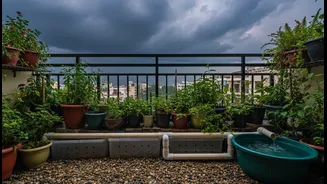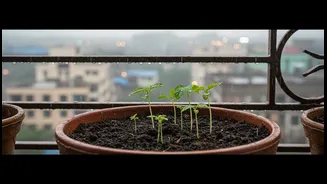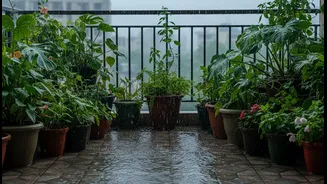




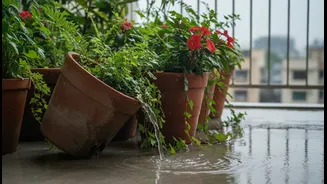


Why Drainage Is the Monsoon Gardener's Top Priority
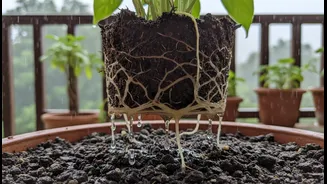
Plant roots need oxygen to survive just as much as they need water. When soil in a pot becomes saturated from heavy rain, the tiny air pockets that roots rely on fill with water. This suffocates the roots, leading to a condition called root rot. The signs
are often misleading; a plant might wilt as if it's thirsty, or its leaves may turn yellow and fall off. You might also notice a foul, musty smell from the soil or a mushy base on the plant's stem. During the monsoon, preventing this waterlogging isn't just helpful—it's essential for plant survival. The goal is to create an environment where excess water can escape quickly, allowing roots to breathe even during a downpour.
Start With the Right Foundation: Pots and Soil
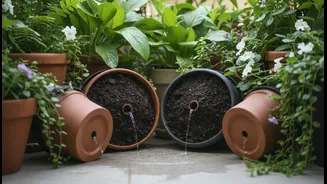
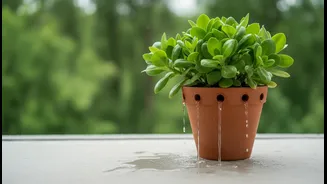
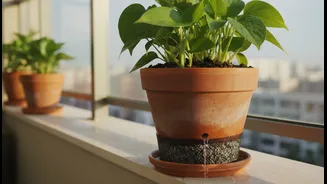
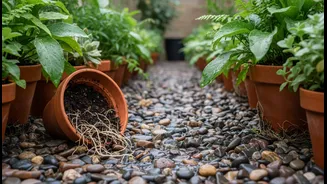
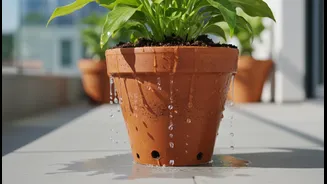
Success begins before you even plant. First, ensure every pot has at least one drainage hole at the bottom; more is better for larger containers. Terracotta or unglazed clay pots are excellent for the monsoon as their porous nature allows excess moisture to evaporate through the sides. Next, use a proper potting mix, not heavy garden soil. Garden soil compacts easily in pots, ruining drainage. A good monsoon potting mix should be light and airy. Create your own by combining equal parts garden soil, compost, and a material that improves drainage, like cocopeat or coarse river sand. Perlite is another fantastic additive for creating air pockets and preventing compaction. Contrary to old advice, do not add a layer of gravel or broken pot shards to the bottom; this can actually hinder drainage by creating a perched water table that keeps the root zone wetter.
Elevate Your Pots for Better Airflow
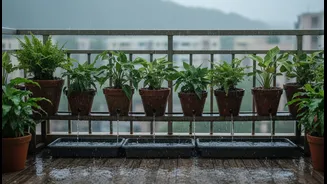
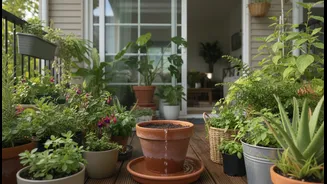
One of the simplest and most effective tricks is to lift your pots off the ground. When a pot sits flat on a balcony floor or patio, the drainage hole can easily get blocked by mud or simply be unable to drain effectively. By raising the pot just an inch or two, you create a crucial air gap that allows water to escape freely and improves air circulation around the base. You don't need fancy equipment; a few bricks, flat stones, bottle caps, or purpose-made 'pot feet' will do the job perfectly. After heavy rain, it’s also a good practice to empty any water that has collected in the saucer beneath the pot, as letting a plant stand in water is a direct path to root rot.
Maintain and Monitor Your Soil
Constant rain can cause the top layer of soil to become compacted, forming a crust that prevents both water and air from penetrating properly. To combat this, gently aerate the soil every few weeks. Use a small tool like a chopstick or a skewer to carefully poke several deep holes into the soil, being mindful to avoid the main root ball. This simple action creates channels for air to reach the roots and helps trapped water drain away. It’s also wise to adjust your watering schedule. Don't stick to a routine; instead, check the soil by hand. If the top inch or two feels dry, it's time to water. If it's still moist from the rain, leave it be.
When to Intervene During Heavy Downpours
During periods of exceptionally heavy or prolonged rain, even well-draining pots can become overwhelmed. If you have succulents, cacti, or other plants that prefer dry conditions, consider moving them to a covered spot like a porch or under an awning until the worst of the rain passes. For very large, heavy pots that can't be moved, you can gently tip them at an angle for a few hours after a storm to help excess water run out. You can also add a 2-3 cm layer of dry material like coco coir on top of the soil to help absorb some of the surface moisture. These small interventions can make a big difference in preventing the soil from staying saturated for too long.