





The Importance of the Smoke Point
Every Indian home cook understands the signature sizzle of a tadka or the high heat required for perfectly crisp pakoras. These cooking methods demand a fat that can withstand high temperatures without breaking down. This is where the 'smoke point' becomes
crucial. It is the temperature at which an oil or fat stops shimmering and starts to smoke. When a fat exceeds its smoke point, it begins to degrade, creating harmful compounds called free radicals and an unpleasant burnt taste that can ruin a dish. Using a fat with a high smoke point is essential for preserving both the flavour and nutritional integrity of your food, especially in high-temperature cooking.
The Case for Traditional Ghee
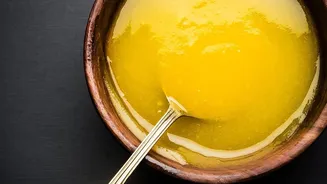
For generations, ghee has been the gold standard in Indian kitchens, and for good reason. With an impressively high smoke point of around 250°C (485°F), it is exceptionally stable for searing, frying, and roasting. The clarification process that turns butter into ghee removes the milk solids and water, which are the components that would otherwise burn at lower temperatures. Beyond its heat stability, ghee is a nutritional powerhouse, rich in fat-soluble vitamins like A, D, E, and K. It also contains butyric acid, a short-chain fatty acid known for its anti-inflammatory properties that support gut health. Today, this tradition is evolving with the rise of infused ghee, where herbs and spices are added during preparation, combining ghee’s cooking benefits with the therapeutic properties of botanicals.
The Cold-Pressed Oil Revolution
In recent years, cold-pressed oils have gained immense popularity among health-conscious consumers. Unlike refined oils, which use heat and chemical solvents that can strip away nutrients, cold-pressed oils are extracted mechanically at low temperatures. This gentle process helps retain the oil’s natural flavour, aroma, and, most importantly, its antioxidants and vitamins. For Indian cooking, several cold-pressed options stand out. Cold-pressed mustard oil, a staple in northern and eastern India, boasts a pungent flavour and a high smoke point of about 250°C, making it excellent for deep frying. Cold-pressed groundnut oil, with its milder, nutty taste, is also a fantastic choice for high-heat cooking, with a smoke point of around 230°C. In South India, coconut oil remains a beloved option for frying and curries.
A Head-to-Head Heat Matchup
When it comes to handling the high heat of Indian cooking, both ghee and certain cold-pressed oils perform exceptionally well. Ghee and cold-pressed mustard oil are neck-and-neck, both with smoke points around a stable 250°C. Cold-pressed groundnut oil is also a strong contender at 230°C. However, it's important to distinguish between refined and unrefined oils. While refined oils generally have higher smoke points due to processing, unrefined cold-pressed oils offer more nutrients. Some unrefined oils, like certain versions of groundnut or coconut oil, may have lower smoke points (around 160-175°C), making them better suited for sautéing rather than deep frying. The key is to match the oil not just to the cuisine, but to the specific cooking temperature required.
Beyond Smoke Point: Stability Is Key
The conversation is now shifting from just the smoke point to a more nuanced concept: oxidative stability. This refers to how well a fat’s chemical structure resists breaking down under heat. Fats that are high in saturated and monounsaturated fatty acids, like ghee, are chemically very stable and less prone to oxidation when heated. In contrast, oils high in polyunsaturated fatty acids (PUFAs), found in many common vegetable and seed oils, have less stable structures. These can start to degrade and form harmful compounds even before they reach their visible smoke point. This is why many are re-evaluating their choices, looking not just for a high smoke point but for a fat that remains stable and safe at the molecular level throughout the cooking process.