


Meet the Distant World of Quaoar
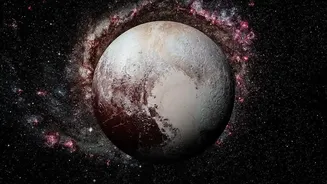
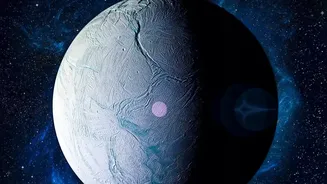
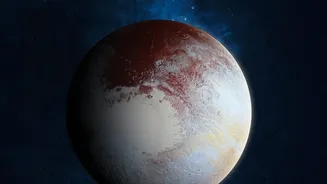
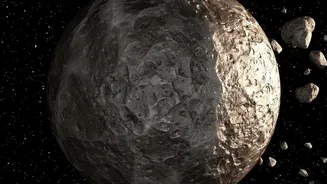
The dwarf planet in question is 50000 Quaoar, a small world discovered in 2002 by astronomers Michael Brown and Chad Trujillo. Orbiting the sun in the remote Kuiper Belt, it’s about half the size of Pluto and takes nearly 288 Earth years to complete one
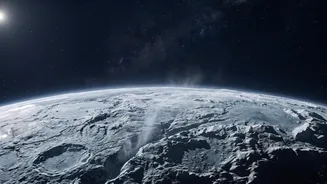
trip around the sun. Like its neighbors, Quaoar is incredibly cold, with surface temperatures hovering just above absolute zero. Because of its small size and extreme distance from the sun, the prevailing scientific assumption was that Quaoar, like many similar objects, would be geologically inert—a frozen, inactive ball of ice and rock. Any internal heat from its formation should have radiated away billions of years ago.
Why Scientists Expected a 'Static' World
The logic was simple: geology needs energy. On Earth, that energy comes from a hot, molten core and the decay of radioactive elements, driving volcanism and plate tectonics. For smaller worlds, this internal heat is lost to space much more quickly. Scientists believed that a body as small and old as Quaoar would have long ago become a solid, frozen relic, incapable of any significant geological activity. Its history was thought to be written only by impacts from other objects, not by any internal turmoil. This picture of a quiet, static world was the standard model for most small bodies in the outer solar system.
The Clues Pointing to an Active Past
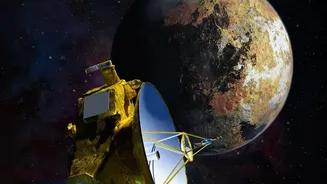
The first hints that Quaoar might be more complex came from observations of its surface. Astronomers detected crystalline water ice, a form of ice that shouldn't last long in the harsh environment of space. Cosmic radiation should degrade it into an amorphous state over relatively short astronomical timescales. Its presence suggested something was refreshing the surface from below. More recent observations, including data from the James Webb Space Telescope, have bolstered this idea, revealing compounds like frozen methane and ethane on its surface. These volatile materials would be lost to space over time unless they were being replenished from Quaoar’s interior.
Volcanoes of Ice, Not Fire
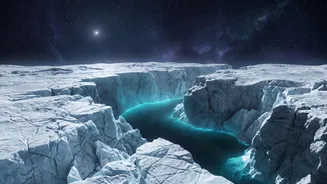
The most likely explanation for these surface features is a phenomenon known as cryovolcanism—or ice volcanoes. Instead of erupting molten rock, a cryovolcano erupts a slurry of liquid water, ammonia, methane, or other volatiles from beneath the icy crust. The energy for this activity on a small world like Quaoar would likely come from the slow decay of radioactive elements within its rocky core, generating just enough heat to maintain a slushy or liquid subsurface layer. This 'cryomagma' could then be forced to the surface through fractures in the ice shell, resurfacing the dwarf planet and leaving behind the tell-tale signs of crystalline ice and other frozen gases that scientists have observed.
Rewriting the Rules for Icy Worlds
The discovery of a potentially active past on Quaoar is significant because it challenges our understanding of where and how geological processes can occur. It suggests that even small, isolated worlds in the freezing outer reaches of the solar system can generate and retain enough internal heat to power geological activity for long periods. This finding joins similar evidence from other dwarf planets like Ceres and Pluto, painting a new picture of the Kuiper Belt not as a cosmic graveyard, but as a region of potentially dynamic worlds. This forces scientists to rethink the conditions needed for a planetary body to be 'active,' with implications for how planets form and evolve, and even the potential for subsurface liquid water oceans on worlds we once dismissed as frozen wastelands.