








Know Your Airline's Rules
Before you pack a single item, check the cabin baggage allowance for the airline you're flying. For most domestic Indian carriers like IndiGo, SpiceJet, and Akasa Air, the free cabin allowance is generally one bag of up to 7 kg. Air India also typically
allows one cabin bag of 7-8 kg for domestic economy class. The dimensions are also crucial, usually around 55 cm x 35 cm x 25 cm, but can vary. Don't guess; a quick visit to the airline's website will give you the exact weight and size limits you need to work within. This is your most important rule, as no packing hack can overcome being over the limit at the check-in counter.
Create a 'Capsule Wardrobe'
A four-day trip is the perfect occasion to implement a 'capsule wardrobe'. The idea is to choose a few versatile pieces of clothing that can be mixed and matched to create multiple outfits. Start with a neutral colour palette (like black, navy, beige, or white) for your main items, such as trousers and a jacket, and add pops of colour with your tops or accessories. A simple formula for a four-day trip could be the '5-4-3-2-1' method: five tops, four bottoms, three pairs of shoes, and so on, adjusted for a shorter trip. For four days, consider two bottoms (like one pair of jeans and one pair of comfortable linen trousers), four tops that work with both bottoms, one light jacket or cardigan, and two pairs of shoes. Every item should be wearable in at least two different combinations.
Master the Art of Rolling
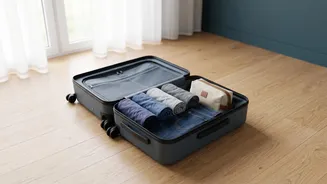
This is one of the most classic packing tips for a reason: it works. Rolling your clothes tightly, especially items made from cotton or synthetic fabrics like t-shirts, trousers, and dresses, saves a surprising amount of space compared to folding them flat. Rolled clothes can be packed into the corners and gaps of your suitcase more efficiently, creating a dense, compact bundle. This method also has the added benefit of minimising hard creases, meaning you'll spend less time worrying about wrinkled clothes when you arrive at your destination. For items that don't roll well, like blazers or structured jackets, fold them carefully and place them on top.
Embrace Packing Cubes
Packing cubes are a traveller's best friend. These small, zippered fabric containers help you compartmentalise your luggage, keeping different categories of items separate and organised. You can use one cube for tops, one for bottoms, and one for undergarments. This not only keeps your suitcase tidy but also helps compress your clothing, squeezing out excess air to free up more space. When you arrive, you can transfer the cubes directly into the hotel drawers, making unpacking a breeze. For an extra space-saving boost, consider compression packing cubes, which have an extra zipper that expels even more air.
Go Solid with Your Toiletries
Liquids are bulky, heavy, and subject to restrictions in cabin baggage. The solution is to switch to solid toiletries. You can now find solid bars for almost everything: shampoo, conditioner, body wash, and even perfume and moisturiser. There are also toothpaste tablets, which are a great alternative to traditional tubes. These solid options are not only lighter and more compact, but they also eliminate the risk of spills and leaks in your bag. This single switch can free up significant space and weight, helping you stay well under that 7 kg limit.
Wear Your Heaviest Items
This is a simple but highly effective strategy. Your bulkiest items—be it a pair of boots, a denim jacket, a hoodie, or your heaviest pair of trousers—should be worn on the plane, not packed in your bag. An airplane cabin can be cool, so wearing a jacket or sweater is often practical anyway. This hack is especially useful for shoes, as a single pair of sneakers or boots can take up a large portion of your limited cabin bag space. Plan your travel day outfit around your heaviest pieces to maximise the space left in your suitcase for everything else.