




Why Sitting Is the New Sabotage
Your body is an adaptation machine. It moulds itself to the positions you hold most often. For millions of professionals, that position is sitting at a desk. This prolonged posture causes specific muscles to shorten and tighten while others become overstretched
and weak. Key problem areas for desk workers include the hip flexors, which are held in a constantly flexed state, and the upper back, which rounds forward. This can lead to a cascade of issues, from lower back pain to restricted shoulder mobility and even neck tension. Over time, this becomes your body's default setting, resulting in chronic stiffness and discomfort.
Enter the Foam Roller
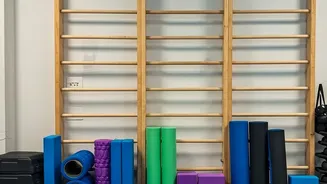
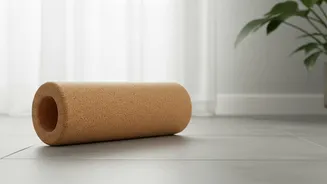
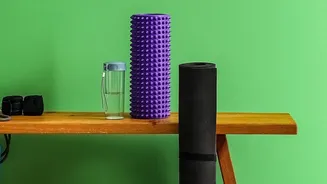
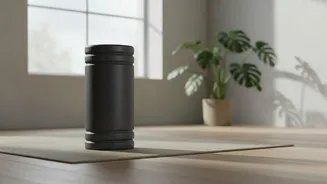
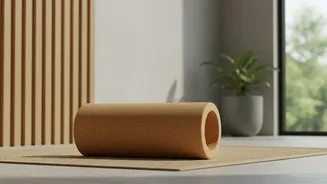
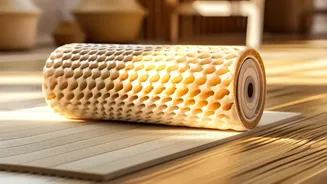
A foam roller is a cylindrical tool made of compressed foam that allows you to perform self-myofascial release (SMR), a form of self-massage. By using your body weight to apply pressure to specific muscle groups, you can help release tension, break up knots, and alleviate soreness. Think of it as a deep-tissue massage you can give yourself. The pressure helps increase blood flow to the muscles and fascia (the connective tissue surrounding them), which delivers more oxygen and nutrients for repair while flushing out waste products. Research shows that regular foam rolling can improve flexibility by up to 10%, enough to make a noticeable difference in how you feel.
Drill 1: Mobilise the Upper Back
The upper back is often cited as the highest-impact area for desk workers. To release this tension, lie on your back with the foam roller positioned horizontally across your mid-back, just below the shoulder blades. Bend your knees with your feet flat on the floor. Cross your arms over your chest or place your hands behind your head for support. Lift your hips slightly and use your legs to slowly roll your body up and down, moving the roller from your mid-back to the base of your neck. Pause on any particularly stiff or tender spots for 15-20 seconds. Avoid rolling your lower back.
Drill 2: Unlock the Hips and Glutes
Tight hips are a direct result of sitting. When hip flexors shorten, they can inhibit your glutes from firing properly, often leading to compensation and pain elsewhere. To target the glutes, sit on top of the foam roller with your knees bent. Cross your right ankle over your left knee in a figure-four position. Lean your weight onto your right hip and roll slowly back and forth over the muscle. For the hip flexors, lie face-down and place the roller under the crease of one hip. Supporting yourself on your forearms, make small movements to roll the area, holding on tender spots.
Drill 3: Release the Hamstrings and Calves
Though they may feel stretched while you sit, hamstrings are often held in a shortened position that can contribute to lower back pain. To roll them, sit with one leg extended, the roller placed under your hamstring. Use your hands for support behind you and lift your hips. Roll from just above the knee to just below the glute. To increase pressure, cross your other leg on top. For the calves, position the roller under one calf and cross the other leg over it. Roll from the ankle to below the knee, rotating your leg to hit the inner and outer parts of the muscle.
Best Practices for Effective Rolling
To get the most out of your routine, move slowly. Fast, aggressive rolling can be less effective and may cause bruising. When you find a tender spot or trigger point, pause on it for 20-30 seconds and breathe deeply to help the muscle relax. Avoid rolling directly over joints or bones. A five-minute session a couple of times a day can be more beneficial than one long, intense session. If you're new to foam rolling, start with a softer, lower-density roller and expect some discomfort, but stop if you feel sharp pain.