



What Is the Harvest Moon?
The Harvest Moon is not a different type of moon, but rather a name given to the full moon that occurs nearest to the autumnal equinox, which marks the start of autumn in the Northern Hemisphere. For 2026, that special full moon falls on Saturday, September
26. The name is rooted in agriculture and history. Before electricity, farmers relied on bright moonlight to extend their working day, allowing them to harvest their crops late into the evening. This extra illumination was crucial during the busy harvest season, making this particular full moon a welcome and celebrated event. Other traditional names for September's full moon include the Corn Moon and the Barley Moon, further tying it to the season's agricultural bounty.
A Moon with a Special Trick
What truly sets the Harvest Moon apart is a unique celestial quirk related to its rising time. Throughout most of the year, the moon rises about 50 minutes later each night. But for several evenings around the Harvest Moon, this delay shrinks dramatically. The moon will rise only 20 to 30 minutes later each successive night. This happens because the moon's orbital path makes a very shallow angle with the eastern horizon during this time of year. The result is a series of bright, moonlit evenings right after sunset, which is the very phenomenon that gave our ancestors those precious extra hours of light for the harvest. It creates the feeling of having several full moon nights in a row, making it a perfect and reliable skywatching opportunity.
When and Where to Look
The key date is Saturday, September 26, 2026. While the moon technically reaches its peak fullness in the afternoon for those in North America, the real show begins at sunset. Find a spot with a clear, unobstructed view of the eastern horizon and simply look up as dusk settles in. You don’t need any special equipment like binoculars or a telescope to enjoy the view; the Harvest Moon is a magnificent sight for the naked eye. For the best experience, try to get away from the glare of city lights. The darker your surroundings, the more brilliant the moon will appear against the deepening twilight sky. The moon will appear nearly full on the nights immediately before and after September 26 as well, so you have a few chances to catch it.
That Famous Golden Glow
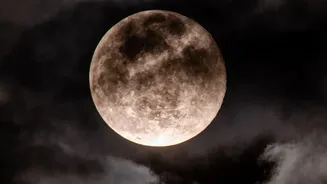
One of the most enchanting features of the Harvest Moon is its often-photographed, deep golden-orange color as it climbs above the horizon. This isn't unique to the Harvest Moon, but it's especially prominent. The color comes from a process called Rayleigh scattering. When the moon is low in the sky, its light has to travel through more of Earth’s atmosphere to reach your eyes. The atmosphere scatters shorter, blue wavelengths of light, allowing the longer, reddish-orange wavelengths to pass through, giving the moon its warm hue. You may also notice that the moon looks enormous when it's near the horizon. This is a famous trick of the mind known as the 'Moon Illusion.' Your brain perceives the moon as larger when it has foreground objects like trees or buildings to compare it with. The moon isn't actually bigger, but the effect is powerful and adds to the spectacle.
Look for a Celestial Neighbor
While you're admiring the moon, you’ll have another celestial object to spot. The planet Saturn will be visible in the sky, appearing as a bright, star-like point of light not far from the lunar disk. The steady, golden glow of Saturn will provide a beautiful contrast to the brilliant light of the Harvest Moon. Finding both in the sky at once adds an extra layer of wonder to the evening. This pairing offers a great chance to appreciate the scale and beauty of our solar system from your own backyard. As the moon rises higher into the constellation Pisces, its orange glow will fade to a more familiar bright white, but its planetary companion will remain a steadfast point of light for much of the night.