




Bengaluru: India's Dark Store Capital
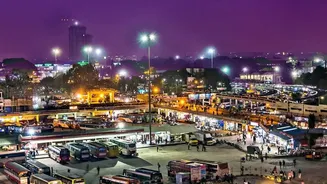
Bengaluru has more quick-commerce dark stores than any other city in India. As of mid-2026, the city was home to over 629 of these mini-warehouses, representing more than 11% of the national total. Five major players—Blinkit, Zepto, Swiggy Instamart,
BigBasket, and Flipkart Minutes—are locked in a tight race for market dominance. The competition is so intense that in many neighbourhoods, multiple platforms have stores serving the same few square kilometres. This high concentration is fuelled by Bengaluru's unique demographics: a massive population of tech professionals and apartment-dwelling residents with high disposable incomes and a strong appetite for convenience. Platforms are betting big that blanketing the city with stores is the key to winning the 10-minute delivery war.
What Exactly Is a 'Dark Store'?
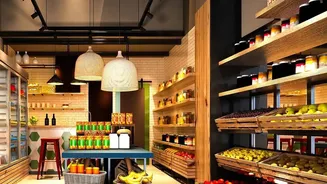
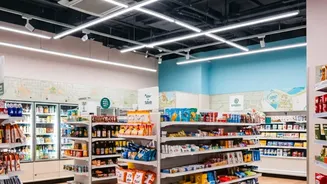
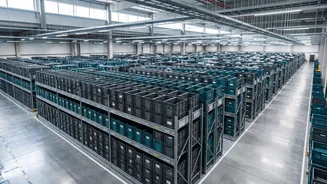
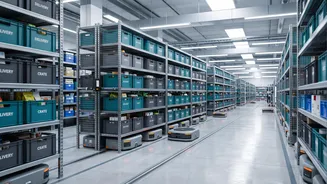
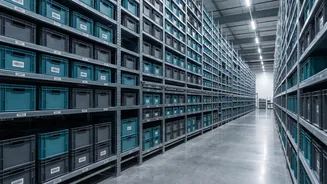
A dark store is essentially a small warehouse closed to the public, designed exclusively for fulfilling online orders. They get their name because they are 'dark' to shoppers—no customers, no displays, and no cashiers. Ranging from 2,500 to 5,000 square feet, each dark store is strategically placed within a dense residential area to serve a tight delivery radius of just a few kilometres. Inside, shelves are arranged not for browsing but for speed, allowing pickers to gather items for an order in under two minutes. This hyper-local, efficiency-focused model is the engine that makes 10-minute delivery physically possible.
The Race for Real Estate: Why Store Count Matters
In the world of quick commerce, speed is everything, and speed depends on proximity. The closer a dark store is to the customer, the faster the delivery. This simple logic is why companies like Blinkit and Zepto are in a frantic race to open as many stores as possible. Having a high density of dark stores creates a powerful competitive moat. It increases brand visibility, expands the serviceable area, and makes it harder for rivals to gain a foothold. For consumers, it means more choice and faster service. For platforms, the goal is to be the default app for every grocery run, and having a store around every corner is a direct path to achieving that status. This aggressive expansion is the most visible sign of competition, often grabbing headlines and seen as a proxy for market leadership.
Why More Stores Isn't the Whole Story
While expanding the store network is crucial, simply counting locations gives a misleading picture of success. Each dark store comes with significant fixed costs: rent for a prime urban location, staff salaries for pickers and managers, electricity, and technology subscriptions. These costs can run into several lakhs per month for a single store. If a store doesn't handle enough orders to cover these expenses, it becomes a financial drain, burning through investor cash with every delivery. This is the central challenge of the quick-commerce model: the pressure to be everywhere at once can lead to a network of underperforming, unprofitable stores. Recent data shows that platforms have started closing stores in areas where too many competitors overlap, a sign that the industry is shifting its focus from blind expansion to operational efficiency.
The Real Metric: Order Volume and Unit Economics
The true measure of a dark store's health is its order volume, or 'order density'. A profitable store is one that processes a high number of orders per day, maximising the efficiency of its staff and delivery riders. Analysts estimate a typical dark store in a major Indian city needs to process around 2,850 orders per month just to break even on its variable and fixed costs. Success isn't just about having a store; it's about making sure that store is constantly busy. This is where 'unit economics' becomes critical—ensuring that each individual order contributes positively to covering costs. This involves optimising everything from the cost of goods and delivery fees to advertising revenue from brands. A company with fewer, but highly productive, stores can be far more profitable than a rival with a larger but less efficient network.
What This Means for the Future of Your Groceries
For customers in Bengaluru, the intense competition has meant unparalleled convenience. However, the industry's pivot from growth-at-all-costs to a focus on profitability will likely bring changes. We may see further market consolidation, as companies with weaker unit economics are acquired or forced to scale back. Platforms are also expanding beyond basic groceries into higher-margin categories like beauty products and electronics to improve the average value of each order. Ultimately, the companies that will survive and thrive will be those that master the delicate balance between expanding their physical footprint and ensuring each location is a lean, efficient, and profitable operation. The race for store count is just the first lap; the marathon for sustainable profit has just begun.