







The Policy Shift That Opened the Sector
The catalyst for this transformation was a series of government reforms starting in 2020, culminating in the Indian Space Policy 2023. These policies were designed to open the sector to private enterprise, encouraging startups and established companies
to participate in activities once exclusively handled by ISRO. A key element was the creation of the Indian National Space Promotion and Authorisation Centre (IN-SPACe). IN-SPACe acts as a single-window agency to facilitate, authorise, and promote the activities of private companies in the space domain. This move aims to boost India's share of the global space economy from its current 2-3% to a projected $44 billion by 2033. The goal isn't to diminish ISRO's role but to allow it to focus on advanced research, deep-space exploration, and strategic missions, while private players handle more routine manufacturing and services.
Meet the New Constellation of Companies
Since the sector opened up, the number of Indian space-tech startups has surged from a handful in 2020 to over 450. These companies are active across the entire space value chain. Firms like Skyroot Aerospace and Agnikul Cosmos are developing their own launch vehicles to send small satellites into orbit. Skyroot made history by launching India's first privately developed rocket, Vikram-S, in 2022. Agnikul is notable for its 3D-printed rocket engines. Other companies like Pixxel are building constellations of hyperspectral imaging satellites for data analytics, while Dhruva Space offers modular satellite platforms. These startups are attracting significant investment, with funding reaching a record $200 million in 2025. This influx of capital is what allows them to scale their operations and, crucially, their hiring.
A New Universe of Job Roles
The growth of the private space sector is creating a demand for a much wider range of skills than ever before. While aerospace engineers remain central, the new ecosystem requires specialists in many other fields. Satellite data analyst is one of the fastest-growing roles, with experts needed to interpret data for sectors like agriculture, insurance, and urban planning. There's also a high demand for software engineers to work on everything from flight control systems to AI-powered analytics platforms. Other emerging careers include mission operations specialists, space robotics engineers, remote sensing and GIS experts, and even professionals in space law and policy. Private companies are offering competitive salaries, with entry-level engineering roles ranging from ₹10 lakh to ₹25 lakh per annum, to attract top talent.
ISRO's Evolving Role and the Talent Shift
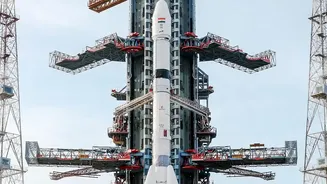
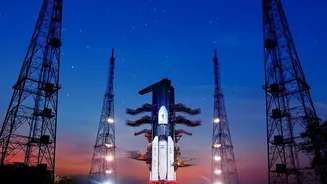
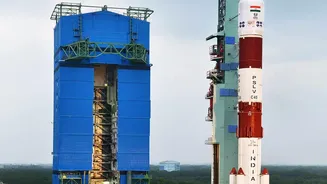
The rise of the private sector doesn't mean ISRO is becoming obsolete. Instead, it is transitioning into a mentor and R&D powerhouse. It will focus on strategic national projects like the Gaganyaan human spaceflight mission and deep space exploration, while transferring mature technologies like the Polar Satellite Launch Vehicle (PSLV) to industry for production. This has, however, led to a new challenge: a migration of experienced talent from ISRO to private startups. While this poses a short-term problem for the government agency, it also strengthens the domestic private ecosystem, as seasoned experts bring invaluable experience to these newer companies. In response to employee concerns, ISRO has clarified that it will not be privatised and that its core functions in advanced research will remain intact.