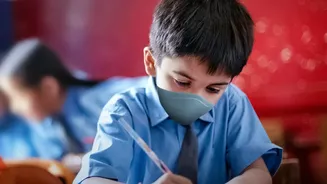








An Annual Emergency Goes Digital
Delhi's battle with severe air quality is an annual ordeal. Each winter, a combination of crop burning, vehicular emissions, and weather patterns pushes the Air Quality Index (AQI) into the 'severe' and 'hazardous' categories. In response, authorities
implement the Graded Response Action Plan (GRAP), which includes shutting down schools to protect children from the toxic air. What began as 'pollution breaks' has now, post-pandemic, morphed into a predictable shift to online and hybrid classes. As of early November 2026, schools in Delhi and surrounding NCR cities like Noida and Ghaziabad have moved younger students to hybrid or fully online models to minimize their exposure.
The Shrinking World of a Child
While the shift to online learning is a necessary safety measure, it comes at a significant cost to a child's psychological health. The mandate to stay indoors means children are robbed of essential physical activity, social interaction with peers, and the simple joys of outdoor play. This confinement can breed feelings of isolation and claustrophobia. An 11-year-old athlete and singer from Gurugram described the experience as 'very isolating' and 'claustrophobic', noting how it impacts both her sports and singing practice. Health experts warn that this prolonged indoor time, with reduced exposure to sunlight and green spaces, is a significant contributor to psychological stress.
From Playgrounds to Screens
When outdoor activities are restricted, children invariably turn to screens for entertainment and education. This increased dependence on digital devices is a major concern for child development specialists. Studies have consistently shown a correlation between excessive screen time and mental health issues in children, including anxiety, depression, and behavioural problems. Dr. Syed Hubbe Ali, a health specialist at UNICEF, explains that when children can't go outside, they often get caught in a cycle of screen dependence, seeking the dopamine rush from social media and online content. This can lead to anxiety when online interactions don't meet expectations and can disrupt focus, sleep, and appetite.
The Direct Impact of Pollution on Mental Health
The link between air pollution and mental health is not just circumstantial; it's physiological. A survey conducted in Delhi-NCR during the peak pollution months of late 2025 and early 2026 found that nearly 77% of children felt anxious, irritated, or distressed due to the poor air quality. Experts suggest that pollutants can affect neurodevelopmental growth, impacting memory and learning. Some doctors point to emerging research suggesting pollutants may damage the barrier between the blood and the brain, allowing harmful particles to enter and cause mood swings, irritability, and cognitive fog. At a dedicated pollution clinic in a Delhi hospital, psychiatrists are seeing a steady rise in patients, including children, reporting heightened anxiety and depression triggered or worsened by bad air.
What Can Parents Do?
While the larger environmental problem requires systemic solutions, parents can take steps to mitigate the impact on their children. Establishing a structured daily routine that separates school time from leisure time is crucial. Integrating indoor physical activities, board games, and creative hobbies can help break the monotony and reduce screen dependence. Open communication is key; parents should encourage children to talk about their feelings of frustration or sadness. For families with the means, air purifiers can improve indoor air quality, but experts note this is not a solution available to all. Above all, parents are advised to watch for signs of distress, such as changes in sleep or eating habits, increased irritability, or social withdrawal, and seek professional help if concerns persist.