



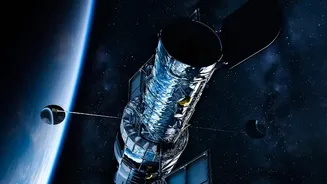
A Slow Fall Back to Earth
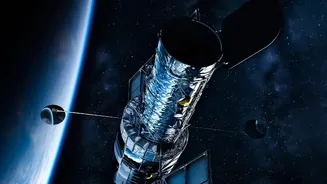
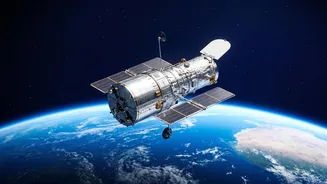
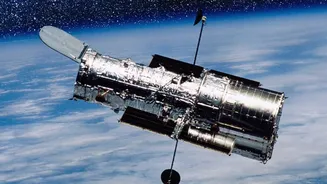
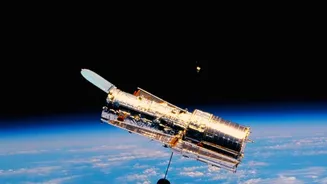
Like any object in low-Earth orbit, the Hubble Space Telescope is in a constant battle with gravity and the planet's thin upper atmosphere. With no propulsion system of its own, atmospheric drag has been slowly pulling the 11,000-kilogram observatory
downward ever since its last service mission in 2009. Its orbit has decayed from a high of over 600 kilometers after its launch in 1990 to under 500 kilometers today. Without intervention, NASA projects the telescope will re-enter the atmosphere sometime in the mid-2030s, ending its historic journey. The last time Hubble got a lift was from the Space Shuttle Columbia in 2002, but with the shuttle fleet long since retired, a new solution is required.
The Call for a Commercial Rescue
Recognizing the urgency, NASA issued a formal Request for Information (RFI) on October 29, 2026, opening the door for private companies to propose solutions. This isn't a contract for a mission but rather a market study to see what is technically and financially feasible. The agency has laid out three main options: capture Hubble and boost it to a more stable orbit of at least 600 kilometers; service the telescope to improve its performance; or, as a last resort, guide it to a safe, controlled deorbit over the ocean. Companies have until November 30 to submit their ideas, which must detail the spacecraft, launch vehicle, mission operations, and any potential crew involvement.
A New Era of Public-Private Partnership
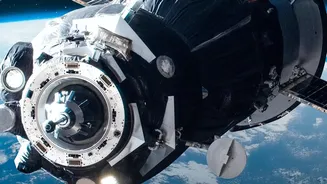
This move marks a significant shift in how NASA approaches space asset management. In the past, servicing Hubble was the exclusive domain of government-led Space Shuttle missions. Today, the agency is leveraging the booming commercial space sector, which has developed new capabilities for in-orbit servicing. The idea of a private Hubble mission gained prominence in 2022 when billionaire and now-NASA Administrator Jared Isaacman proposed a plan with SpaceX to use a Crew Dragon capsule to visit the telescope as part of his Polaris Program. While NASA initially decided against that specific proposal in 2024, citing risks, this new, broader RFI signals a renewed interest in finding a commercial partner.
More Than Just a Boost
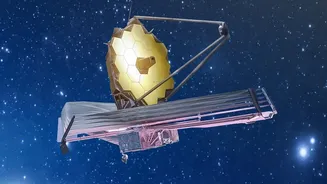
A successful commercial mission would do more than just save Hubble; it would set a major precedent. It would effectively prove the business case for a new in_orbit servicing industry, covering everything from satellite refueling and repair to space debris removal. A reboost could add another 15 to 25 years to Hubble's life, allowing it to continue its unique observations in visible and ultraviolet light, which are a crucial complement to newer infrared observatories like the James Webb Space Telescope. For a fraction of the cost of designing and launching a replacement, a commercial partner could help preserve an invaluable scientific tool.