




Your Beginner's Stargazing Kit
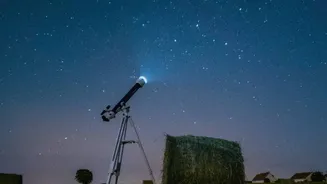
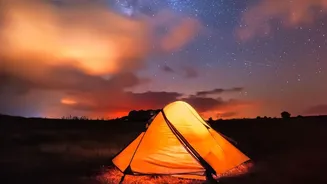
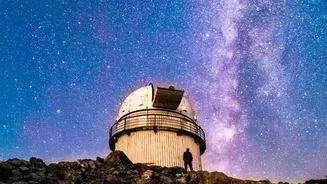
You don't need expensive equipment to start your stargazing journey. The most important tools are your eyes and a bit of patience. First, find the darkest spot you can, away from bright city lights that cause light pollution. Even a local park or a terrace
with building-blocked streetlights can work. Give your eyes at least 20 minutes to fully adapt to the darkness; avoid looking at your phone screen during this time. A comfortable chair or a blanket to lie on will make the experience much more enjoyable. For identifying planets and constellations, a simple stargazing app on your smartphone can be a huge help. Just be sure to switch it to 'night mode' to preserve your night vision.
Planet Watch: A Parade of Worlds
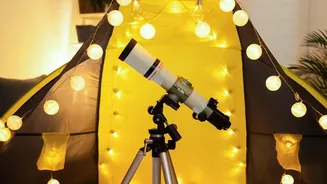
October 2026 is a fantastic month for planet spotting. The star of the show is Saturn, which reaches 'opposition' on October 4. This means Earth is directly between Saturn and the Sun, making the ringed planet appear at its brightest and largest for the year. It will be visible all night long, rising in the evening and setting at dawn. You can spot it as a steady, bright point of light. While its famous rings require a telescope, its golden glow is unmistakable to the naked eye. Early risers are in for a treat with Jupiter and Mars. Both planets will be visible in the pre-dawn sky. Jupiter, the largest planet in our solar system, will be exceptionally bright in the eastern sky before sunrise. Venus makes a brief appearance low on the western horizon just after sunset, but can be tricky to spot.
Catch a Shooting Star: Two Meteor Showers
October hosts two noteworthy meteor showers. First up are the Draconids, peaking on the night of October 8-9. This is a minor shower, but 2026 offers a prime viewing opportunity as the peak coincides with a nearly new moon, meaning dark skies. The best time to watch is in the evening, just after nightfall. Later in the month, look for the Orionids, which peak on the night of October 21-22. These meteors are debris left behind by the famous Halley's Comet. They are known for being fast and bright, with up to 15-20 meteors per hour possible under ideal conditions. A waxing gibbous moon will be present in the evening, but it will set after midnight, leaving the early morning hours dark for the best viewing.
Constellations and the Moon
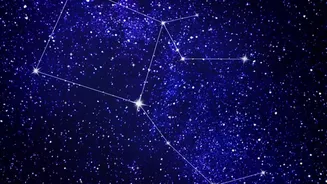
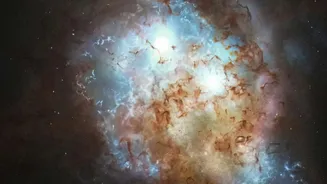
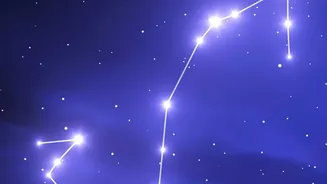
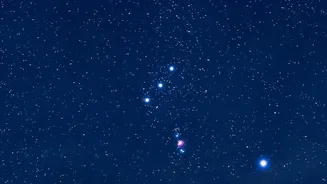
The moon itself is a beautiful object to observe and a useful marker. The New Moon on October 10 provides the darkest skies, ideal for spotting faint stars and galaxies. The Full Moon, known as the Hunter's Moon, rises on October 26. As for star patterns, look for the Great Square of Pegasus high in the sky. It's a large, easily recognizable square of four bright stars. From there, you can try to find the Andromeda Galaxy, which appears as a faint, fuzzy smudge on a very dark, moonless night. The iconic 'W' shape of Cassiopeia will also be high in the northeast. For those in South India, look towards the southern horizon to catch a glimpse of constellations not visible from further north.