





Beyond Just Digital Worksheets
For years, 'educational technology' often meant little more than digital versions of old-school textbooks and worksheets. You’d answer a question, and the program would tell you if you were right or wrong. But the new generation of interactive tutors
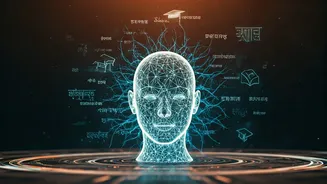
is fundamentally different. These aren't static programs; they are dynamic learning companions powered by artificial intelligence. They aim to replicate, and in some ways exceed, the benefits of a one-on-one human tutor by creating a truly personalized learning path for every single student. Instead of just marking answers, these systems analyse the entire learning process, making them less of a test and more of a conversation.
How They Read a Student's Mind
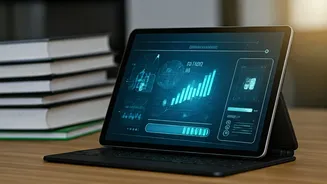
The magic is in the “real-time data.” As a student interacts with the software, the AI is constantly collecting and analysing information. This goes far beyond simply tracking correct and incorrect answers. It monitors the speed at which a student answers, identifying hesitation that might signal a lack of confidence. It recognises patterns in errors—for example, a student might consistently struggle with a specific type of mathematical problem or grammatical rule. Some advanced systems can even track mouse movements or, with permission, eye movements to see where a student's focus wavers. This stream of data allows the AI to build a detailed, evolving profile of the student's knowledge, strengths, and weaknesses. It knows not just *what* you don't know, but *how* you're struggling to learn it.
The Promise: A Custom Pace for Every Learner
The real breakthrough is what the AI does with this data. If the system detects that a student is breezing through a concept, it will accelerate the pace, introducing more challenging problems or moving on to the next topic to keep them engaged and prevent boredom. Conversely, if a student is struggling, the tutor immediately slows down. It might offer a simpler explanation, provide a step-by-step tutorial, or present a series of foundational questions to reinforce the underlying concept before re-introducing the more difficult problem. In a country like India, with large class sizes where it’s impossible for one teacher to provide constant individual attention, this technology holds immense promise. It can help bridge the gap, ensuring no student is left behind or held back.
The Teacher’s New Role
Does this mean human teachers are becoming obsolete? Far from it. Proponents argue that these AI tutors are best seen as powerful assistants, not replacements. By automating the repetitive tasks of drilling, practice, and basic concept explanation, the AI frees up the human teacher’s valuable time. Instead of spending hours explaining the same formula to 40 different students, a teacher can use the AI's data to quickly identify which students need the most help and what specific concepts they are struggling with. This allows them to focus on what humans do best: providing mentorship, fostering critical thinking, inspiring curiosity, and offering emotional support—aspects of education that an algorithm cannot replicate.
The Challenges We Can't Ignore
Despite the enormous potential, there are significant hurdles and ethical questions to consider. The most pressing is data privacy. These systems collect an unprecedented amount of data on how a child thinks and learns. Who owns this data? How is it protected? Could it be used to label or limit a child's future opportunities? There is also the risk of exacerbating the digital divide. If these premium tools are only available to those who can afford the best devices and fastest internet, we risk creating an even wider gap between the haves and the have-nots. Finally, we must be wary of algorithmic bias and the danger of over-reliance on a single, automated way of learning, potentially stifling creativity and diverse problem-solving skills.