



Beyond the Touchdown: The Instruments That Spoke
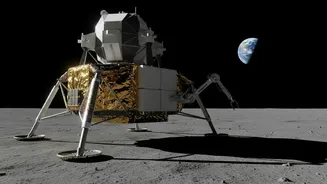
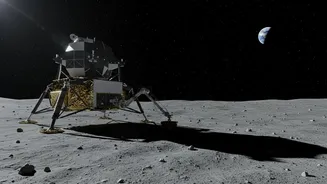
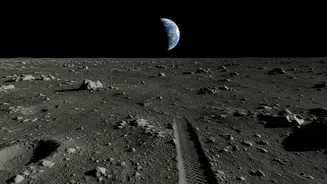
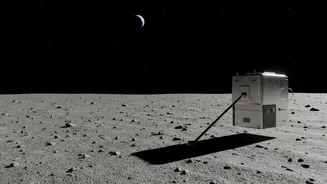
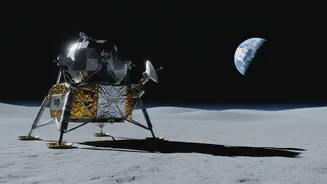
When the Vikram lander of the Chandrayaan-3 mission successfully touched down near the Moon's south pole in August 2023, it marked a monumental achievement for India. But the mission's true scientific value began moments after, as its suite of advanced
payloads started collecting the first-ever in-situ data from this unexplored region. Key instruments on the Vikram lander and the Pragyan rover were designed to answer fundamental questions. These included ChaSTE (Chandra’s Surface Thermophysical Experiment) to measure the topsoil's temperature and thermal properties; the Alpha Particle X-ray Spectrometer (APXS) to determine the elemental composition of the soil and rocks; and ILSA (Instrument for Lunar Seismic Activity) to listen for moonquakes. This wasn't just about planting a flag; it was about opening a new chapter in lunar science by providing 'ground truth' that orbiting satellites could never capture.
A Thermal Surprise and Elemental Clues
The initial findings sent back were stunning. The ChaSTE payload recorded a dramatic temperature difference of nearly 70 degrees Celsius between the lunar surface and just 10 centimetres below it. This was the first such thermal profile for the south pole, revealing that the lunar topsoil is a far more powerful thermal insulator than previously modelled. This single piece of data has profound implications, forcing engineers designing future habitats, rovers, and drilling equipment to rethink their strategies for managing extreme temperatures. Meanwhile, the APXS spectrometer delivered another surprise: the unambiguous confirmation of sulphur in the lunar soil, an element whose concentration was higher than anticipated. It also measured expected elements like aluminium, calcium, and iron. This detailed chemical makeup is not just an academic curiosity; it's a resource map for future missions hoping to 'live off the land' through In-Situ Resource Utilisation (ISRU).
Informing the Global Race to the Moon
The data, which ISRO has made publicly available to the global scientific community through its PRADAN portal, is directly influencing the next wave of lunar missions. NASA's Artemis program, which aims to land astronauts near the south pole, relies heavily on accurate models of the lunar environment. ISRO's ground truth on soil composition, thermal gradients, and plasma density provides an invaluable reality check, helping to refine landing site selection and equipment design. For instance, knowing the precise properties of the regolith (lunar soil) allows for the creation of high-fidelity simulants on Earth. In fact, data from Chandrayaan-3 has already been used to create a new lunar soil simulant to test hardware for future rovers, including one planned by the UAE. This means that before hardware is sent millions of kilometres into space, it is being tested against conditions first revealed by India's mission.
Confirming a Violent Past, Securing a Leading Future
The findings are also reshaping our fundamental understanding of the Moon's history. Analysis of the elemental data, particularly the presence of magnesium-rich minerals, strongly supports the Lunar Magma Ocean hypothesis—the theory that the Moon was once a sphere of molten rock. The composition at the landing site suggests that material from the Moon's primitive mantle was ejected during the formation of the massive South Pole-Aitken basin billions of years ago and scattered across the region. By providing this evidence, Chandrayaan-3 has turned its landing site into a prime location for accessing ancient materials from the Moon's interior. This scientific leadership has translated into geopolitical influence. India's role as a signatory of the Artemis Accords is now backed by unique and indispensable data, elevating its status from a participant to a crucial partner in collaborative space exploration. Recent reports even indicate NASA has invited ISRO to join its Moon Base program, a direct result of the capabilities demonstrated by Chandrayaan-3.