






The Big Question: Are My UPI Payments Now Chargeable?
Let's clear this up immediately: for the vast majority of users, UPI remains completely free. Person-to-person (P2P) transfers, like sending money to friends or family, have no new charges, regardless of the amount. Likewise, most of your daily payments
to merchants for small-ticket items like groceries or coffee will also remain free of any fee. The new charge, known as the Merchant Discount Rate (MDR), applies only under very specific circumstances that don't affect an estimated 96% of all merchant transactions.
What is MDR and Which Transactions Are Affected?
MDR, or Merchant Discount Rate, is a fee that merchants pay to payment processors for accepting digital payments. It is not a fee charged to the customer. The new UPI framework, which takes effect on October 15, 2026, introduces a 0.4% MDR on person-to-merchant (P2M) transactions above ₹2,000. This means if you pay a merchant ₹1,500 via UPI, there is no MDR. If you pay ₹3,000, the merchant's account will be subject to the 0.4% fee, which in this case would be ₹12. For very large transactions of ₹75,000 or more, the MDR is capped at a maximum of ₹300.
The 'PPI' Distinction You Need to Know
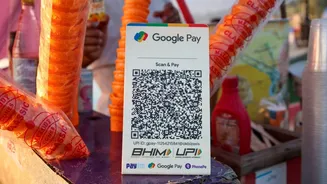
There is another existing rule that is important to understand. An interchange fee of up to 1.1% applies to merchant transactions above ₹2,000 when the payment is made using a Prepaid Payment Instrument (PPI), like a digital wallet or prepaid gift card, through a UPI QR code. This fee is paid by the merchant's bank to the PPI issuer (the wallet company). It does not apply if you are paying directly from your bank account. According to the National Payments Corporation of India (NPCI), over 99% of UPI transactions are made directly from bank accounts, making this a rare scenario for most users.
Who Is Exempt from the New MDR?
The framework has been designed to protect small businesses. Small merchants who receive up to ₹1 lakh per month through UPI QR codes are completely exempt from MDR, even on payments over ₹2,000. This category includes many neighbourhood shops, street vendors, and other small-scale entrepreneurs. Furthermore, essential sectors like railways, telecom, insurance, and fuel will attract a lower, flat MDR of just ₹5 for transactions above the ₹2,000 threshold, instead of the 0.4% rate. Recurring payments, like monthly bills and subscriptions, are also exempt.
Why Was This Change Introduced?
For years, UPI has operated on a zero-MDR model, which, while great for adoption, created questions about its long-term financial sustainability. The new, nominal MDR is designed to create a revenue stream for the payment ecosystem participants—including banks, payment service providers, and app providers. This income will be reinvested into strengthening the payment infrastructure, improving cybersecurity, fostering innovation, and ensuring the continued reliability of the UPI system. The government has clarified that no part of the MDR collection goes to the government itself.
Will Merchants Pass the Cost to Me?
Officially, merchants are not supposed to pass the MDR cost on to customers, and banks have been instructed to monitor this. The customer should only pay the price of the goods or services. While the NPCI's CEO has acknowledged a small risk that some merchants might try to pass on the fee, it's expected to be limited. Large businesses that already accept credit cards (which have much higher MDRs of 1.5% to 2.5%) are likely to simply absorb the lower 0.4% UPI fee as a cost of doing business.