





The Old Myth: Bigger is Better
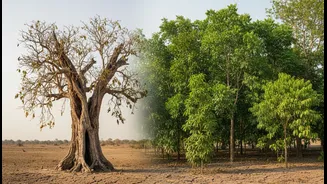
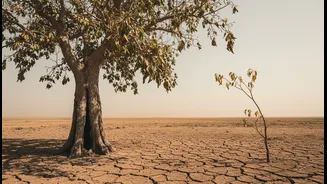
For a long time, the prevailing wisdom was that larger, older trees were more resilient to drought. The logic seemed sound: their vast root systems could tap into deeper water sources, and their thick trunks could store more water, giving them an advantage
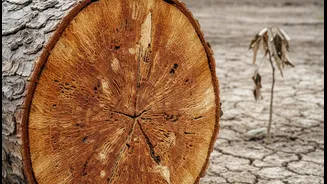
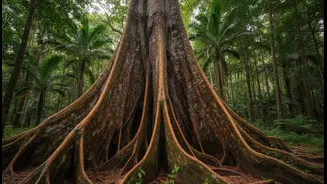
over smaller, younger competitors. This assumption often guided conservation efforts and forest management, focusing on the giants as the anchors of the ecosystem. However, a growing body of research is revealing a more complex and fascinating story. Recent studies, including one focusing on the towering dipterocarp trees of Southeast Asia, are challenging this size-centric view. Scientists found that despite the incredible challenge of pulling water hundreds of feet into the air, the tallest trees were not necessarily more stressed during a drought than their shorter neighbors. This surprising finding suggests that a tree's ability to withstand dry spells has less to do with its height and more to do with its internal design and survival strategy.
A Tree's Inner Plumbing
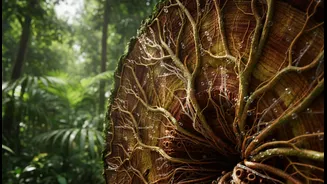
To understand drought resilience, we need to look at a tree's 'plumbing'—the network of tissues called xylem that transports water from the roots to the leaves. During a drought, tension builds in these water columns. If the tension becomes too great, air bubbles (embolisms) can form, blocking water flow in a process known as hydraulic failure. This is like a vapour lock in a fuel line and can be fatal for the tree. Initially, it was believed that the taller a tree, the greater the gravitational pull on the water, making it inherently more vulnerable to this failure. But new evidence shows that some of the world's tallest tropical trees have evolved incredibly efficient water transport systems, such as wider xylem vessels at the base, to counteract this. This allows them to move water efficiently over enormous distances, a key adaptation that size alone doesn't account for. This discovery forces a shift in focus from external dimensions to the internal, functional traits of each species.
It’s About Strategy, Not Stature
Instead of size, a tree's survival during a drought depends on its species-specific strategy. Think of it as a spectrum of risk tolerance. On one end are the 'cautious conservers' (isohydric species). These trees are quick to close their leaf pores, called stomata, at the first sign of water stress. This drastically reduces water loss but also shuts down photosynthesis, essentially putting the tree into a state of suspended animation. On the other end are the 'risk-takers' (anisohydric species), which keep their stomata open longer, continuing to photosynthesise but risking severe dehydration and hydraulic failure if the drought persists. Neither strategy is universally superior; their success depends on the nature of the drought and the local environment. A short, intense drought might favour the risk-takers, while a long, drawn-out one might be better weathered by the conservers.
The Traits That Truly Matter
So, what are these critical traits scientists are now examining? One of the most important is wood density. Species with denser wood tend to have narrower water-conducting vessels that are more resistant to forming air bubbles, making them more resilient to hydraulic failure. Other key characteristics include leaf properties, such as size, thickness, and waxy coatings, which influence how much water is lost to the air. The specific point at which a leaf wilts (known as the turgor loss point) is another crucial trait, indicating how well a plant can function with low water content. Even rooting depth is being re-evaluated not just as a function of size but as a specific genetic trait that varies between species. By comparing these functional traits, scientists can build a much more accurate picture of which species are truly at risk.
Implications for India's Forests
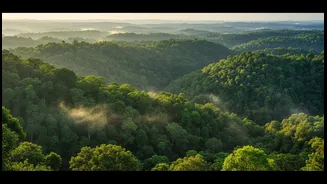
This new understanding has profound implications for managing India's diverse tropical forests, from the Western Ghats to the Eastern Himalayas. As climate change increases the frequency of extreme weather, knowing which tree species are most vulnerable is essential for effective conservation. Forest managers can use this trait-based approach to identify at-risk areas and prioritise the protection or planting of drought-resistant native species. For instance, in reforestation projects, selecting a mix of species with different drought-coping strategies—some conservers, some risk-takers—could create a more resilient forest overall, a kind of ecological insurance policy. This shift from a simple size-based assessment to a nuanced, trait-based one is the critical first step in future-proofing our invaluable forest ecosystems against the coming challenges.