





Nature's Living Seawall
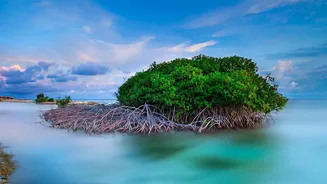
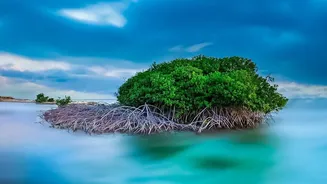
Mangrove forests are uniquely adapted to thrive in the challenging intertidal zone where land meets sea. Their complex, tangled root systems are engineering marvels, acting as a natural brake on the ocean's power. These dense roots anchor the trees in unstable
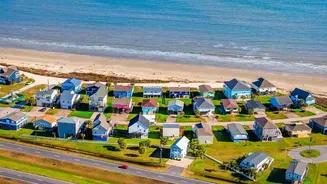
soil, trap sediment, and significantly reduce the energy of waves and storm surges before they can reach inland. Studies have shown that a healthy mangrove forest can reduce wave height and storm surge impact by a significant margin, serving as a living, self-repairing alternative to concrete embankments. In some cases, mangroves have proven more effective than artificial barriers, which can sometimes trap floodwaters inland, worsening the damage.
Lessons from the Storm
For many coastal communities, the impetus for action came from devastation. Cyclones like Aila in 2009 and Amphan in 2020 left a trail of destruction, but also a valuable lesson. In the Sundarbans, the world’s largest mangrove forest, areas with healthy mangrove cover consistently fare better. During Cyclone Amphan, 4,000 hectares of mangroves restored by communities in partnership with NGOs remained intact, acting as a formidable bio-shield and preserving crucial embankments from flooding and salination. Similarly, in Andhra Pradesh, memories of the 1977 Diviseema cyclone, which submerged dozens of unprotected villages, have spurred a generational commitment to mangrove restoration.
Power to the People
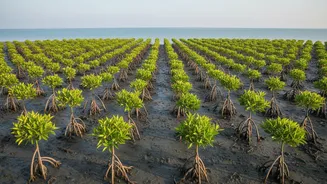
What makes these projects so effective is that they are driven from the ground up. In Odisha and Andhra Pradesh, under initiatives like the Enhancing Climate Resilience of India's Coastal Communities (ECRICC) project, local villagers are at the forefront of the effort. Women, in particular, have become powerful agents of change. In districts like Kendrapara, women-led Village Mangrove Councils have been established, improving sapling survival rates and managing nurseries. These community-led efforts involve planting native mangrove species specifically suited to local conditions and digging channels to restore tidal flow to degraded areas, which reduces soil salinity and allows the forests to regenerate. This participation not only restores the coastline but also provides vital employment and instills a deep sense of ownership over the new forests.
More Than Just Protection
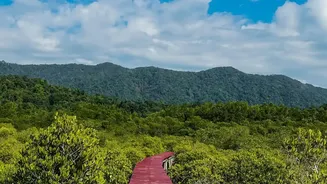
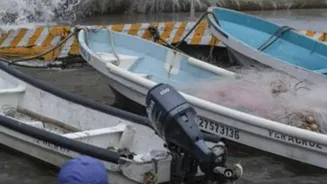
The benefits of mangrove restoration extend far beyond storm protection. These revitalised ecosystems act as crucial nurseries for fish, crabs, and shrimp, directly boosting the livelihoods of local fishing communities. Residents report increased fish catches and the return of biodiversity to areas that were previously barren. Mangroves are also incredibly effective carbon sinks, capturing and storing vast amounts of carbon dioxide, which helps combat climate change. Furthermore, these green belts improve water quality, prevent soil erosion, and are even becoming sites for eco-tourism, creating new economic opportunities for villagers.