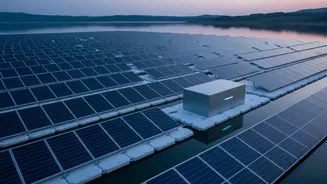







The Green Energy Timing Problem
India has rapidly become the world's third-largest solar market, with ambitious goals to run a significant portion of its economy on renewable energy. But this success has created a new challenge: a timing mismatch. Solar panels generate vast amounts
of electricity during the day, often more than the grid can absorb, while demand for power remains high into the evening after the sun has set. This forces grid operators to curtail, or waste, clean energy during the day and can lead to potential shortfalls at night. The solution is energy storage — giant batteries that can save the midday solar surplus and deploy it when it's needed most. The main obstacle has been cost, with lithium-ion batteries, the current market leader, being historically expensive.
Enter Zinc-Air: The Affordable Contender
This is where zinc-air batteries come in. Unlike their lithium-ion counterparts, which rely on costly and geographically concentrated materials like lithium and cobalt, zinc-air batteries use a simple, ingenious process. They generate electricity when zinc metal interacts with oxygen from the surrounding air. The primary ingredients, zinc and air, are abundant and inexpensive. Zinc is a common, recyclable metal, and India is one of the world's largest producers. This inherent cost advantage and material security make zinc-air technology a particularly attractive option for a country looking to build out its energy storage capacity affordably and sustainably.
The Indian Research Breakthroughs
While the basic concept isn't new, making zinc-air batteries rechargeable, efficient, and long-lasting has been a global challenge. Recent research from Indian institutions is tackling these problems head-on. Scientists at IIT Madras are developing both electrically rechargeable and mechanically rechargeable systems. In one model, used zinc cassettes could be swapped for fresh ones at a recharge station, similar to a petrol pump. IIT Madras has also partnered with Hindustan Zinc to develop a 1 kWh electrically rechargeable prototype, aiming to create a durable and cost-effective alternative to lithium-ion batteries. Separately, researchers at SASTRA University have developed a new, low-cost nanofluid electrolyte that significantly improves battery efficiency and reduces the corrosion that has historically plagued zinc batteries.
Why Cheaper Storage Changes Everything
The potential cost reduction is the most revolutionary aspect of this research. Battery storage auction tariffs in India have already fallen dramatically in recent years, making solar-plus-storage an increasingly competitive option against traditional power sources. Zinc-air technology promises to push those costs down even further. By avoiding expensive imported materials, India can leverage its domestic zinc resources and manufacturing capabilities, aligning with national initiatives like 'Make in India'. Lower storage costs would make it economically viable to build massive battery farms to stabilize the grid, prevent blackouts during heatwaves, and provide reliable power to homes and industries 24/7, all while using clean energy.
The Road from Lab to Grid
Despite the exciting progress, it's important to note that many of these zinc-air technologies are still in the prototype or development phase. Challenges remain in scaling up production and ensuring the batteries have the long cycle life and power output required for grid-scale applications. Issues like managing air flow, preventing electrode degradation, and optimizing the recharging process are active areas of research. The journey from a successful lab experiment to a commercial product installed across the country will require sustained investment, continued research, and supportive government policies. However, the path is becoming clearer.