



The Tyranny of the Rocket Equation
The core challenge is mass. Every kilogram sent to Mars requires exponentially more fuel to launch from Earth, land on the Red Planet, and then launch back off its surface. Robotic missions, like the planned Mars Sample Return (MSR), are designed to be
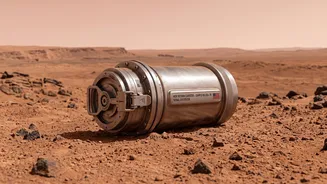
ruthlessly efficient. The Mars Ascent Vehicle (MAV) for MSR is a relatively small rocket tasked with lifting just a few kilograms of carefully selected rock and soil samples into orbit. A human mission, by contrast, must return a multi-ton capsule containing not just the astronauts, but all their life support equipment for the long journey home. This staggering difference in return payload mass creates a ripple effect, dramatically increasing the size, complexity, and cost of every other mission component.
Life Support: The Human Burden
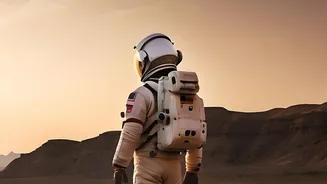
A robot doesn't need to breathe, eat, or drink. It is unfazed by the vacuum of space or the frigid Martian night. Humans, however, are fragile. A crewed mission to Mars could last up to three years, requiring hundreds of kilograms of water, oxygen, and food. This necessitates complex, heavy, and reliable closed-loop life support systems that can recycle air and water with near-perfect efficiency. These systems add immense weight and are a constant point of potential failure, something robotic missions simply don't contend with. Furthermore, astronauts need robust shielding from cosmic radiation, which adds even more mass to the return vehicle.
Lifting Off from Another World
Launching a rocket from Mars is a monumental undertaking that has never been done before. For a robotic sample return, the MAV can be pre-landed and relatively simple. For a human mission, the ascent vehicle must be large enough to carry the crew and their capsule to orbit. It must also be 'human-rated', meaning it requires extreme redundancy and safety features to protect the crew. This vehicle would either have to be landed fully fuelled, a feat of unprecedented scale, or fuelled on the surface of Mars itself. The latter option introduces another layer of complex engineering.
Living Off the Land: In-Situ Resource Utilization
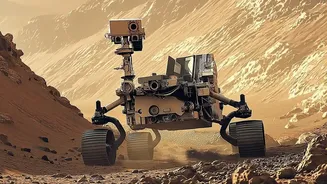
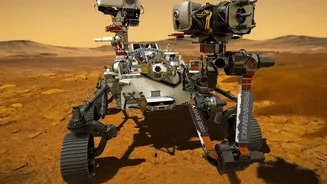
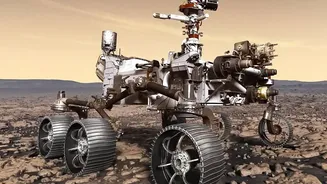
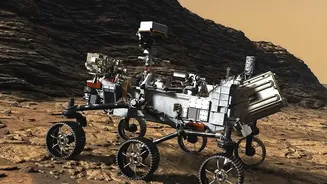
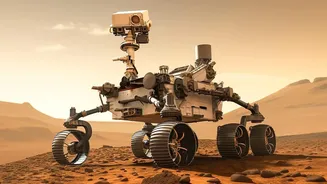
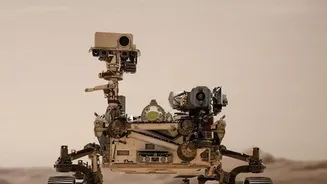
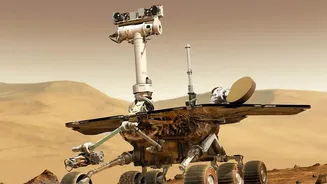
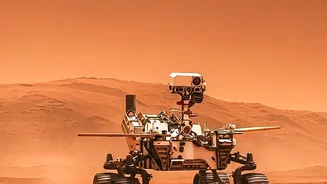
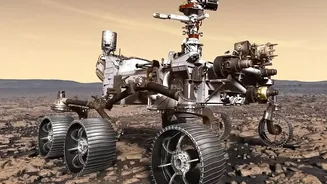
To avoid transporting tonnes of propellant from Earth, human missions will likely depend on In-Situ Resource Utilization (ISRU). This involves creating rocket fuel and oxygen from the Martian environment, primarily by processing carbon dioxide from its thin atmosphere. Experiments like MOXIE on the Perseverance rover have proven this is possible on a small scale. However, scaling this up to an industrial-level chemical plant that can produce enough propellant for a human ascent vehicle is a massive engineering challenge. This entire infrastructure must be sent to Mars and operate autonomously before the crew even arrives. Robotic missions, with their much smaller fuel needs, can largely bypass this complexity.
The Cost and Complexity Gulf
The engineering differences culminate in a staggering cost disparity. Robotic missions like Perseverance cost under $3 billion. The ambitious Mars Sample Return mission is estimated to cost around $10 billion. In contrast, estimates for a single crewed mission to Mars often range from $100 billion to over $500 billion. This difference isn't just about money; it reflects the orders of magnitude of increased complexity. A human return trip requires solving challenges in life support, radiation protection, large-scale propulsion, and ISRU that are simply not factors for a robotic one-way trip or even a small sample return.