




The Science of Baking
Unlike general cooking, which often allows for creative adjustments, baking is a form of chemistry. Each ingredient has a specific function, and their ratios are critical for the desired outcome. Flour provides structure, fats like butter add tenderness,
sugar contributes to browning and moisture, and leavening agents like baking powder create lift. When these ingredients are out of balance, the chemical reactions that produce a light, fluffy cake or a chewy cookie are disrupted. Too much flour can result in a tough, dry bake, while not enough can cause your creation to collapse or fail to hold its shape. This is why precision is not just a suggestion in baking; it's a requirement for predictable, delicious results every single time.
What is a Level Measure?
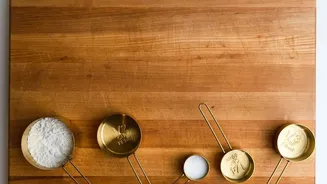
When a recipe calls for a “cup of flour,” it almost always means a level cup. This is a standard unit of volume, and the goal is to fill the measuring cup precisely to the rim, without any ingredient mounded on top or packed down inside. A heaping cup, where the ingredient piles above the rim, can add a significant amount of extra product, throwing off the delicate balance of your recipe. Using level measures ensures you are adding the amount of an ingredient the recipe developer intended. Dry measuring cups are designed specifically for this; they have a flat rim so you can scrape away the excess for a perfectly flat, level top.
The Flour Dilemma: Spoon, Don't Scoop
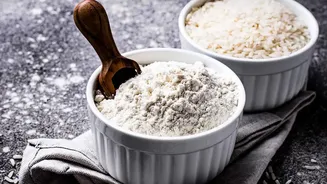
Flour is the most commonly mis-measured ingredient, primarily because it compacts easily. If you dip your measuring cup directly into the bag of flour, you're packing it down, and you can end up with 25% or even 50% more flour than the recipe requires. This is the fastest way to a dense, heavy, or crumbly result. The correct technique is the “spoon and level” method. First, fluff the flour in its container with a spoon or fork. Then, use the spoon to lightly transfer the flour into your dry measuring cup until it's overflowing. Finally, use the straight edge of a knife to sweep the excess flour back into the container, leaving you with a perfectly level cup. This simple change makes a world of difference in the final texture of your baked goods.
Measuring Other Common Ingredients
Different ingredients require slightly different techniques. For granulated sugar, you can generally scoop and level, as its crystals don't compact as much as flour. Brown sugar, however, is a different story. Because of its moisture content from molasses, recipes usually call for it to be “firmly packed.” This means you should press the sugar into the measuring cup to eliminate air pockets until it's level with the rim. When you turn it out, it should hold the shape of the cup. For liquids, always use a clear liquid measuring cup. Place it on a flat surface and bend down so your eyes are level with the measurement line to ensure an accurate reading.
The Ultimate Tool: A Kitchen Scale
While level volume measurements are a huge step toward consistency, the most accurate way to measure ingredients is by weight. Professional bakers and recipe developers rely on digital scales because weight is an absolute measure, whereas volume can be affected by factors like how tightly an ingredient is packed or even humidity. A cup of scooped flour can weigh significantly more than a cup of spooned and leveled flour, but 125 grams is always 125 grams. Many modern recipes now include gram measurements alongside cup measurements. Investing in a simple kitchen scale can eliminate all guesswork and is the single best tool for guaranteeing you get the same great results every time you bake.