


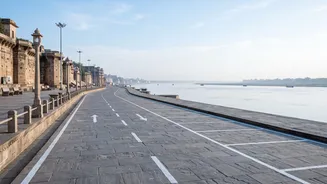

The Festival of the Gods
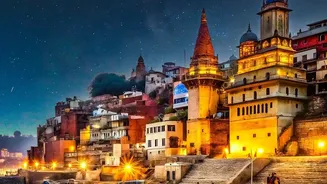
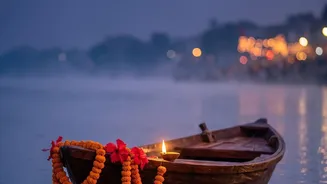
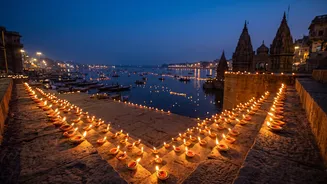
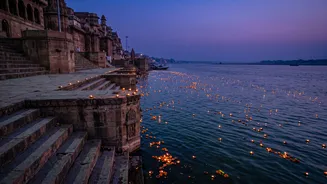
Dev Deepawali, celebrated on the full moon night of Kartik Purnima, is a festival steeped in mythology. It is believed to commemorate Lord Shiva's victory over the demon Tripurasura. Legend holds that on this night, the gods themselves descend to Earth
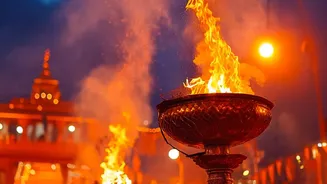
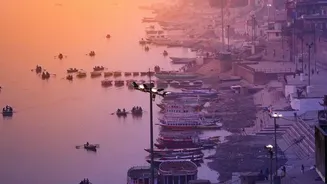
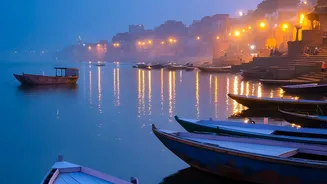
to bathe in the holy Ganga, and the city illuminates its riverfront to welcome them. The evening Ganga Aarti at ghats like Dashashwamedh becomes an elaborate, mesmerizing ceremony with thousands of pilgrims watching from the steps and from boats on the river. This ritual, with its synchronised chanting, large fire lamps, and incense, creates an atmosphere of intense devotion that sets the stage for the night's spiritual journey.
A Divine Connection: Ganga and Shiva
In Kashi, the River Ganga and Lord Shiva are inseparable. According to Hindu scriptures, the Ganga is a celestial river that descended to Earth. To cushion its powerful impact, Lord Shiva caught the river in his matted locks, allowing it to flow gently onto the plains. This mythological link establishes a profound connection: the river flows from the head of the deity. For a devotee, paying respects to one is incomplete without acknowledging the other. Worshipping the Ganga, personified as a mother goddess and a purifier of sins, is the first step. The pilgrimage naturally progresses towards her source, Lord Shiva, who resides in the city as its patron deity.
Completing the Spiritual Circuit
For pilgrims, the journey from the ghats to the Kashi Vishwanath Temple is not a separate activity but the culmination of a single, sacred act. After offering prayers and lighting diyas to Maa Ganga during the aarti, the next logical step is to seek the darshan (blessed sight) of Lord Vishwanath, the 'Lord of the Universe'. The temple is one of the twelve Jyotirlingas, the most sacred abodes of Shiva, making a visit here profoundly significant. Devotees believe that combining the Ganga snan (holy dip), aarti, and temple darshan completes a spiritual circuit, one that is thought to wash away sins and bring them closer to moksha, or liberation from the cycle of rebirth. The energy and devotion built up during the riverside ceremony are carried directly into the sanctum sanctorum.
From Crowded Lanes to an Open Corridor
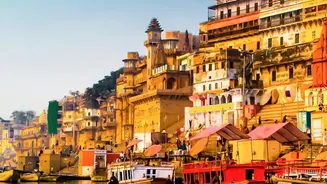
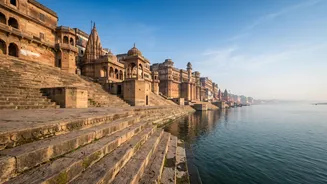
This tradition has been made significantly more accessible in recent years by the Kashi Vishwanath Corridor. Previously, devotees had to navigate a maze of narrow, congested lanes to get from the ghats to the temple. The corridor, a wide-open pathway, now directly connects the temple complex to the riverfront at Lalita Ghat and Dashashwamedh Ghat. This has transformed the pilgrimage, especially on a massively crowded night like Dev Deepawali. The project was designed with the specific intention of making it easier for pilgrims to take water from the Ganga and walk directly to the temple. This modern infrastructure has streamlined an ancient practice, allowing thousands to move seamlessly from the river's edge to any deity's door, reinforcing the deep-rooted connection between any two sacred sites.